Starting Solids in India: A Practical, Flexible Guide
Quick answer
WHO and India’s National Health Mission recommend introducing complementary foods at about 6 completed months while breastfeeding continues.12 “Complementary” matters: food is added alongside the baby’s established milk feeding; it does not need to replace milk feeds suddenly.
Start with small amounts of soft, thick, nutrient-dense food. Let the baby sit upright, stay with them throughout the meal, and respond to signs of hunger and fullness. Increase variety, texture and meal frequency gradually as eating skills develop. There is no single compulsory first food or day-by-day chart.
Before changing the plan, speak with the baby’s clinician if they were born preterm, have poor growth, severe eczema, a known food allergy, repeated coughing or choking, difficulty sitting or controlling the head, or a condition that affects feeding or swallowing.
Before the first meal: five checks
Use age and development together. Around 6 months, look for the baby being able to:
- sit upright with support and keep the head and neck steady;
- stay in a stable seated position for the whole feeding attempt;
- bring objects towards the mouth and reach for food;
- take food from a spoon or hand and move it backwards to swallow rather than repeatedly pushing all of it out; and
- show interest without being forced.
These are practical readiness observations, not a diagnostic test. Interest in an adult’s plate by itself is not enough, and one difficult first meal does not prove that the baby is not ready.
WHO’s six-month recommendation is a public-health recommendation and notes that some infants may benefit from earlier introduction.1 That exception should be an individual clinical decision, not an online shortcut. Do not start complementary foods before 4 months.3
A calm way to begin
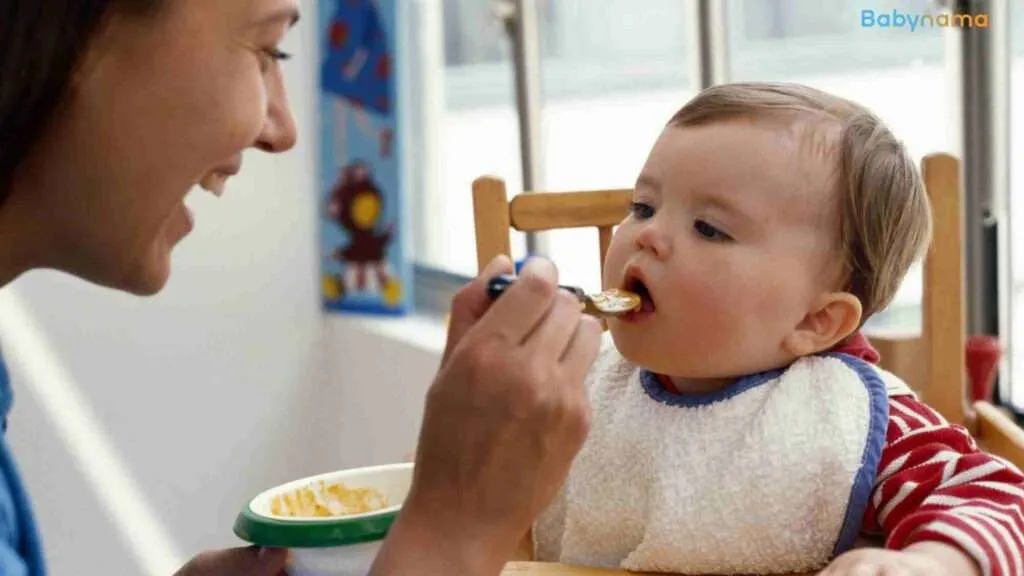
For the first attempts:
- choose a time when the baby is awake and comfortable;
- seat them upright in a secure high chair or other safe feeding seat;
- offer a small amount on a spoon or in a soft, graspable form suited to their skills;
- allow touching, smearing, spitting and refusal;
- stop when the baby closes the mouth, turns away, pushes food away or becomes distressed; and
- keep the baby’s usual breastfeeds or correctly prepared infant formula in place.
The purpose of the first week is practice, not finishing a bowl. Start small and build towards an age-appropriate rhythm. WHO describes 2–3 complementary meals per day at 6–8 months and 3–4 at 9–23 months, with 1–2 nutritious snacks as needed from 12 months.4 Those are population-level guideposts, not a reason to force a child to eat.
Build an Indian first meal
Avoid making cereal water, rice water or strained dal water the centre of the meal. India’s NHM guidance specifically favours thick porridge or well-mashed foods over watery preparations because the whole food carries more energy and nutrients.5
Choose one item from two or more columns and prepare it to a safe texture:
| Base | Protein, iron or zinc source | Vegetable or fruit | Energy and flavour |
|---|---|---|---|
| Rice, ragi, wheat, oats, jowar or soft idli | Mashed dal, beans, well-cooked egg, fish or meat if eaten, curd, tofu or paneer | Pumpkin, lauki, spinach, carrot, pear, banana or papaya | A small amount of oil or ghee; mild familiar spices |
Examples—not prescriptions:
- thick ragi porridge with mashed fruit and a protein-rich food elsewhere that day;
- soft rice-and-dal khichdi with mashed pumpkin and a little oil or ghee;
- well-cooked whole egg mashed into soft rice or another familiar food;
- mashed dal with a soft vegetable and rice;
- plain pasteurised curd with mashed fruit, if dairy has been introduced safely; or
- softly cooked fish or meat with rice and vegetables, if these are part of the family diet.
A vegetarian pattern can use varied pulses, beans, pasteurised dairy or tofu, grains or millets, vegetables, fruit, and smooth nut or seed pastes in age-safe forms. Because iron, vitamin B12 and other needs depend on the full diet and milk feeding, a clinician or pediatric dietitian should review an individual plan rather than relying on one “superfood.”
No food is “best” for every baby. Ragi, khichdi and banana can all fit, but none supplies everything a growing infant needs on its own.
Texture should progress with skill
Begin with a texture the baby can swallow safely, such as thick puree, mash or soft semi-solid food. Gradually move towards thicker mashes, soft lumps, minced family food and appropriately shaped finger foods as oral and hand skills develop.23
Use this as a direction of travel, not a deadline:
| Eating skill | Texture to explore | Examples |
|---|---|---|
| Learning to take food and swallow | Thick smooth puree, mash or soft semi-solid | Thick porridge, mashed dal, mashed vegetables |
| Managing thicker food and bringing food to mouth | Soft mash with small, easily crushed lumps; soft graspable pieces | Soft khichdi, mashed idli, ripe fruit |
| Chewing and self-feeding more confidently | Finely chopped or minced family foods and varied soft pieces | Soft rice-dal, cooked vegetables, egg |
Do not keep every food watery to make it “easy.” Do not jump to hard, round, sticky or slippery pieces simply because a calendar says finger foods should have started.
Choking prevention comes before feeding style
Spoon feeding, finger foods and a mixed approach can all be responsive. The safety rules do not change:
- seat the baby upright and use the restraint supplied with the high chair;
- stay within reach and watch throughout every meal;
- keep meals calm—do not feed while the child is lying down, walking, crawling, in a moving vehicle or distracted by play;
- cook food until soft and match its shape, size and texture to the child’s current skill;
- remove bones, hard pits and seeds;
- never offer whole or chopped nuts, whole grapes or cherry tomatoes, popcorn, hard raw vegetable or fruit pieces, spoonfuls or lumps of nut butter, or other hard, round, sticky or slippery choking hazards; and
- learn infant choking first aid from a qualified instructor before an emergency occurs.36
Gagging can be noisy and may involve coughing, retching or watery eyes. Choking may be quiet because the child cannot breathe, cry or cough effectively.6 If the child cannot breathe normally, treat it as an emergency: use the infant first-aid steps you were trained to perform and call India’s national emergency number 112 or the locally available ambulance service.7
Do not put a finger blindly into the baby’s mouth. Do not rely on an article as a substitute for practical first-aid training.
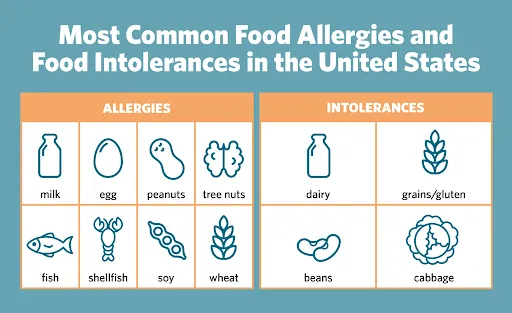
Introducing common allergenic foods
Once a baby is developmentally ready for complementary foods, routinely delaying foods such as well-cooked egg or infant-safe peanut is not supported by current guidance.8 The safest plan still depends on the baby’s risk and the food’s form.
For a baby without a known food allergy or severe eczema:
- introduce one common allergen at a time in a small amount and in a familiar, age-safe texture;
- use well-cooked whole egg rather than yolk-only advice;
- thin smooth peanut or other nut paste into food or water so it is not sticky—never use whole nuts, chopped nuts or a lump of nut butter;
- introduce pasteurised dairy, wheat, sesame, soy, fish or shellfish only in fully cooked, age-safe forms that suit the family’s diet; and
- if tolerated, keep the food in the usual diet rather than treating one taste as the entire introduction.
Start with a small amount of one allergenic food at a time when the baby is well, then keep tolerated foods in the diet regularly. A baby with severe or persistent eczema, a known egg or other food allergy, or a previous immediate food reaction needs an individual plan before peanut or another relevant allergen is introduced.8
Stop feeding the suspected food and seek medical advice for symptoms such as hives, new swelling, repeated vomiting or another immediate reaction. Difficulty breathing, swelling affecting the tongue or throat, collapse, unusual floppiness, or pale, grey or blue colour is an emergency. Follow the child’s existing allergy action plan if one has been prescribed and call 112 or the locally available ambulance service.
Foods and drinks to avoid or limit
| Item | Safer boundary |
|---|---|
| Honey | Do not give before 12 months, including in cooked food or home remedies, because of infant-botulism risk.9 |
| Whole nuts and other choking hazards | Avoid until the child can manage them safely; use only developmentally appropriate forms. |
| Added sugar, jaggery and sweet drinks | Do not add them to infant food. They displace nutrient-dense food and build unnecessary sweetness into the routine. |
| High-salt and highly processed foods | Avoid or limit; set aside the baby’s portion before heavily salting the family meal. |
| Unpasteurised milk products or juice | Do not offer; use safe water and pasteurised products. |
| Juice, tea, coffee and caffeinated drinks | Whole fruit and water are better choices; these drinks are unnecessary for infants. |
| Fish with high mercury exposure | Species and local advisories vary; choose lower-mercury fish and ask the baby’s clinician when unsure. |
Do not dilute infant formula, make formula at home, or add cereal or another food to a bottle. Follow the product’s preparation instructions exactly and use safe water.
Advice about replacing breast milk or formula with animal milk differs by age, feeding pattern and guideline context. Do not make that switch from a generic chart. Continued breastfeeding is supported to 2 years or beyond; families using other milk feeds should discuss the appropriate product and transition with their pediatrician.1
A flexible age guide
| Stage | Main job | Flexible food rhythm |
|---|---|---|
| Around 6–8 months | Learn to eat; explore varied thick mashes, soft foods and suitable finger foods | Build gradually towards 2–3 complementary meals per day |
| Around 9–11 months | Increase variety, texture and self-feeding; adapt more family foods | Around 3–4 meals per day, guided by appetite and milk feeding |
| Around 12–23 months | Join family meals with safe preparation; continue responsive feeding | Around 3–4 meals plus 1–2 nutritious snacks when needed |
Breastfeeding can continue on demand. Families using formula or another medically advised milk feed should follow the clinician’s plan and the product instructions. Do not use a fixed millilitre target from an article to judge breastfeeding adequacy.
Responsive feeding: the baby’s signals matter
WHO recommends responsive feeding for children 6–23 months.1 In practice:
- the caregiver chooses what suitable foods are offered, and when and where the meal happens;
- the baby decides whether to eat and how much;
- encourage patiently without chasing, distracting, bribing or forcing;
- allow time to touch and learn the food;
- repeat exposure without promising that a specific number of attempts will create acceptance; and
- look at growth, development and the overall pattern rather than judging one meal.
Refusal is information. It may mean the baby is full, tired, unwell, uncomfortable with the texture or still learning. Persistent difficulty needs assessment, not stronger pressure.
Food hygiene at home and daycare
India’s NHM guidance includes good hygiene and proper food handling among the core complementary-feeding principles.2
- Wash hands before preparing food and before feeding.
- Use safe water and clean utensils, bowls and cups.
- Cook eggs, meat and fish thoroughly unless a clinician gives a different instruction for a specific food.
- Refrigerate food promptly when it will be stored and reheat it thoroughly only once.
- Discard food left on the baby’s plate or contaminated by a used spoon; do not return it to the shared container.
- Tell every caregiver the same allergen, choking, texture and storage plan.
When to get help
Arrange a pediatric or feeding assessment if the baby:
- repeatedly coughs, splutters, has a wet-sounding voice or breathing change during meals;
- has recurrent choking, persistent vomiting, pain or marked distress with feeding;
- cannot manage any progression in texture;
- persistently refuses nearly all complementary foods;
- has feeding difficulty alongside poor growth, reduced urine, unusual sleepiness or developmental concern; or
- has constipation, diarrhoea or blood in stool that persists or is accompanied by illness.
Seek urgent medical help for breathing difficulty, a serious allergic reaction, choking that blocks breathing, severe lethargy, signs of dehydration or a child who appears seriously unwell.
Questions Indian parents ask
My baby is 5½ months and watches us eat. Should we start?
Interest alone does not settle the decision. WHO and NHM recommend complementary foods at about 6 completed months, with development considered as well.12 If there is a clinical reason to consider earlier feeding, ask the baby’s clinician rather than using a general article.
Is dal water a good first food?
Use the soft mashed dal rather than only the strained water. Thick, well-mashed food is more nutrient-dense than dal water or rice water.5 Adjust the texture so the baby can swallow it safely.
Should we wait three days after every food?
There is no need to let a rigid waiting rule prevent dietary variety or delay allergenic foods. Introducing one common allergen at a time can make a reaction easier to identify. A high-risk baby needs an individual introduction plan.
Can we add salt, jaggery, sugar or honey so the baby eats?
Do not use honey before 12 months.9 Avoid added sugar and jaggery, and keep sodium low by avoiding salty packaged foods and setting aside a family portion before heavy seasoning. Mild familiar spices can add flavour without sugar or excess salt.
How much water should we offer?
Small sips of safe water can be offered with meals once complementary feeding starts. Exact needs vary with milk intake, weather, food and illness, so avoid treating one internet volume as compulsory.
Is baby-led weaning better than spoon feeding?
Neither label guarantees nutrition, safety or responsive feeding. A mixed approach often fits Indian meals: the baby can self-feed suitable soft pieces while a caregiver offers khichdi, dal or porridge responsively by spoon. Safe preparation, supervision, nutrient density and the baby’s cues matter more than the label.
Where should we go next?
After the foundations on this page, use the seven-month food chart for a narrower next-stage example or the 6–12 month feeding rhythm for flexible meal-and-milk organisation. Use them as flexible examples alongside this guide.
This guide provides general information and does not replace individual feeding or medical advice.
Sources
Footnotes
-
World Health Organization. WHO guideline for complementary feeding of infants and young children 6–23 months of age. 2023. Accessed 2026-09-13. ↩ ↩2 ↩3 ↩4 ↩5
-
National Health Mission, Government of India. Facility Based Integrated Management of Neonatal and Childhood Illness: Participant Module. 2023; Chart 10.4. Accessed 2026-09-13. ↩ ↩2 ↩3 ↩4
-
US Centers for Disease Control and Prevention. When, What, and How to Introduce Solid Foods. Updated 2026-04-14. Accessed 2026-09-13. ↩ ↩2 ↩3
-
World Health Organization. Complementary feeding. Accessed 2026-09-13. ↩
-
National Health Mission, Government of India. Mother and Child Protection Card guidebook. Complementary-feeding section. Accessed 2026-09-13. ↩ ↩2
-
NHS. Choking and gagging on food. Accessed 2026-09-13. ↩ ↩2
-
Ministry of Home Affairs, Government of India. Emergency Response Support System. Pan-India 112 emergency-number overview. Accessed 2026-09-13. ↩
-
American Academy of Pediatrics. When to Introduce Egg, Peanut Butter & Other Common Food Allergens to a Baby. Updated 2025-06-12. Accessed 2026-09-13. ↩ ↩2
-
US Centers for Disease Control and Prevention. Foods and Drinks to Avoid or Limit. Updated 2026-04-14. Accessed 2026-09-13. ↩ ↩2