Quick Answer
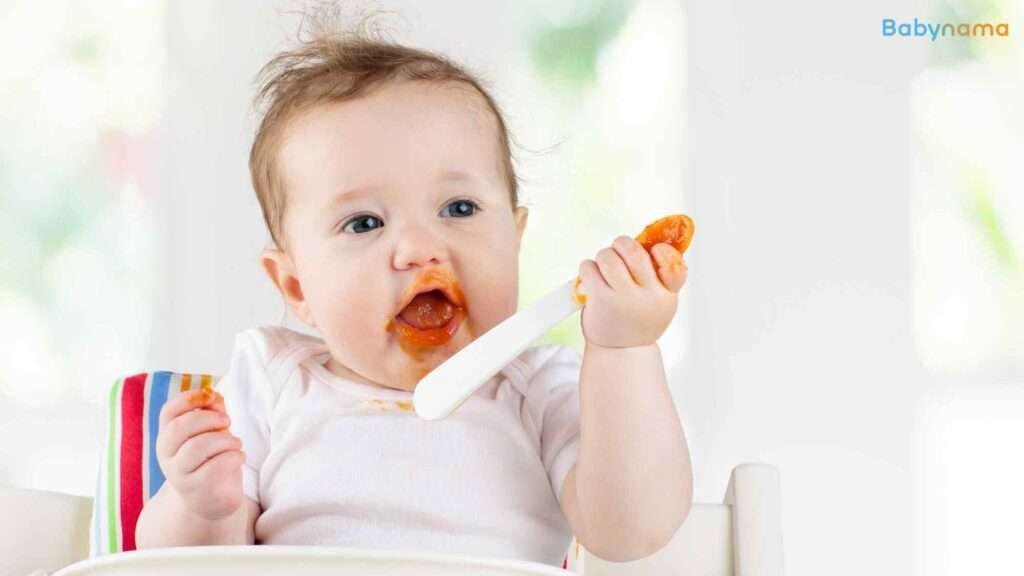
Start solid foods (weaning) at around 6 months of age - this is when your baby’s digestive system is ready and iron stores start depleting. Don’t worry if it feels overwhelming - most Indian families have been doing this for generations! The key is to continue breastmilk or formula as the primary nutrition while gradually introducing complementary foods.
When to Start Solids
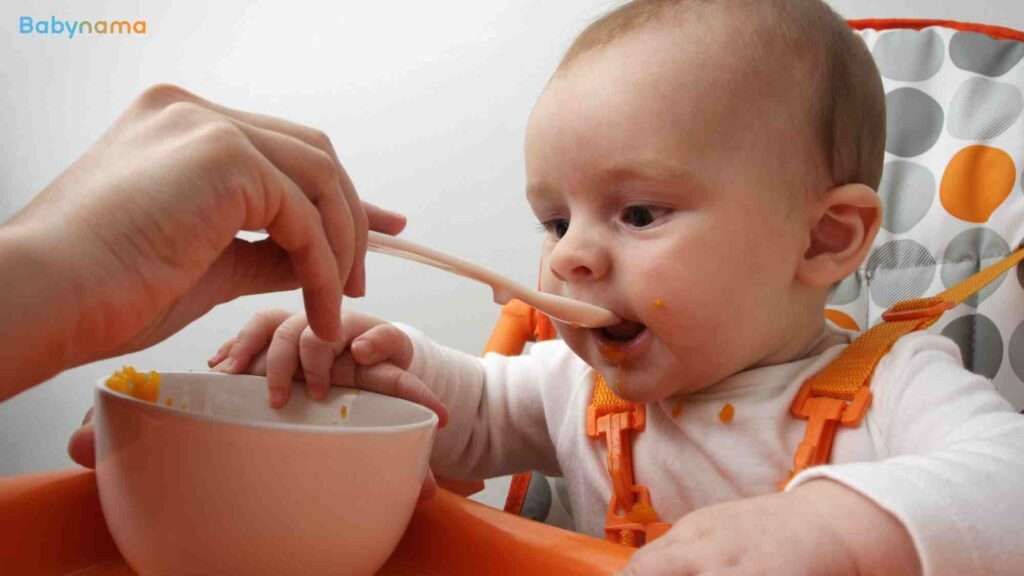
Signs Your Baby is Ready
Look for these readiness signs (usually around 6 months):
- Can sit with minimal support
- Good head and neck control
- Shows interest in food (watches you eat, reaches for food)
- Opens mouth when food approaches
- Can move food from front to back of mouth
- Lost tongue-thrust reflex (doesn’t automatically push food out)
Age Guidelines
| Age | Recommendation |
|---|---|
| Before 4 months | Not recommended — digestive system not ready |
| 4-6 months | Only if your doctor specifically advises |
| Around 6 months | Ideal time — most babies should start around 6 months, not 4 (WHO/IAP recommendation) |
| After 8-9 months | May have difficulty accepting textures |
First Foods for Indian Babies
Traditional Weaning Foods (6+ months)
| Food | How to Prepare | Why It’s Good |
|---|---|---|
| Ragi porridge | Mix with breastmilk/formula | Iron, calcium-rich |
| Dal ka paani | Strain cooked moong dal | Easy protein |
| Rice cereal | Soft cooked rice, mashed | Easy to digest |
| Banana | Mashed with fork | Natural sweetness |
| Sweet potato | Steam and mash | Vitamin A |
| Carrot | Steam and puree | Beta-carotene |
Week 1-2: Single Foods
Start with one food at a time:
- Day 1-3: Ragi porridge
- Day 4-6: Banana mash
- Day 7-9: Dal water
- Day 10-12: Rice cereal You can introduce new foods every 1–2 days. Space out the major allergens (egg, peanut/groundnut) a little more — one new allergen at a time — so you can spot any reaction. You don’t need to wait days between every ordinary vegetable or fruit (AAP).
Week 3-4: More Variety
- Vegetable purees (carrot, lauki, pumpkin)
- Fruit purees (apple, pear, papaya)
- Different dals (moong, masoor)
Month 2-3: Combinations
- Dal-rice khichdi
- Vegetable + rice combinations
- Fruit + cereal combinations
Texture Progression
| Month | Texture | Examples |
|---|---|---|
| 6-7 months | Smooth purees | Thin porridge, strained dal |
| 7-8 months | Thicker purees | Mashed khichdi with ghee |
| 8-9 months | Mashed with lumps | Soft idli pieces, mashed rice-dal |
| 9-10 months | Soft pieces | Soft roti bits, vegetable chunks |
| 10-12 months | Finger foods | Ragi dosa strips, soft fruit |
Formula and Breastmilk Continue
Milk Remains Primary
| Age | Milk Feeds | Solid Meals |
|---|---|---|
| 6 months | 5-6 feeds/day | 1 meal |
| 7-8 months | 4-5 feeds/day | 2 meals |
| 9-12 months | 3-4 feeds/day | 3 meals |
Daily milk: roughly 500–800 ml/day as a guide until 12 months (WHO/IAP complementary feeding range) — babies vary, so follow your baby’s cues rather than hitting an exact number.
Formula Options
If your baby is formula-fed, a stage-2 / follow-on formula is appropriate from 6 months. Choose based on your pediatrician’s guidance and your budget — there is no need to switch brands chasing a “better” one. Breast milk remains the preferred primary milk where possible.
Foods to Avoid Before 1 Year
| Food | Reason |
|---|---|
| Honey | Botulism risk |
| Salt | Harmful to kidneys |
| Sugar | Unhealthy habit |
| Cow’s milk (as main drink) | Hard to digest |
| Whole nuts | Choking hazard — whole nuts only; smooth nut/groundnut paste thinned into food is fine and encouraged (see below) |
| Fruit juice | High sugar |
Introducing Allergenic Foods
Current guidance has changed: common allergenic foods should be introduced early, from around 6 months, once your baby is taking a few first foods well — not delayed. Introducing them early actually reduces the risk of food allergy, especially in higher-risk babies (AAP 2019; LEAP/EAT trials).
In an Indian kitchen this means, from about 6 months:
- Well-cooked egg (fully cooked, mashed)
- Smooth peanut/groundnut paste, thinned into porridge or khichdi — never whole nuts
- Dahi/curd and other cooked dairy (cooked dairy in food is fine; cow’s milk as the main drink still waits until 12 months)
- Wheat/suji (e.g. soft suji porridge)
- Fish, well-cooked and deboned
Introduce one allergen at a time, earlier in the day, and watch your baby for a few days for any reaction. If your baby has severe eczema or an already-known food allergy, talk to your pediatrician about timing before you start these.
🚨 Watch for a severe allergic reaction (anaphylaxis). Call 112 (national emergency) or 108 (ambulance), or go straight to the nearest hospital, if after a food you see: difficulty or noisy breathing; swelling of the face, lips or tongue; widespread hives with vomiting; pale, grey or blue skin; floppiness or unresponsiveness; or a seizure. If an adrenaline auto-injector has been prescribed, use it first, then go. Do not wait for a clinic appointment.
Choking Safety — Read Before You Start
⚠️ Gagging is not choking. Gagging is noisy, the baby’s face stays pink, and the baby recovers on their own — it is normal and protective as your baby learns to eat. CHOKING is an emergency: the baby is silent, cannot cough, cry or breathe, or turns pale or blue.
If your baby is choking, act immediately — give infant back blows and chest thrusts and call 112 / 108 or go straight to the nearest hospital. Do not wait. Learn infant choking first aid before you start solids.
Every time your baby eats:
- Always supervise — never leave a baby alone with food.
- Keep your baby seated upright, not reclined, not in a car seat, not crawling around.
- Avoid choking-hazard forms: whole nuts, whole grapes, hard raw fruit/veg chunks, popcorn. Offer soft, mashed, or appropriately cut foods.
Tips for Success
- Feed when alert - Not too tired or hungry
- Add ghee - Helps nutrient absorption
- No forcing - Let baby guide quantity
- Expect mess - It’s part of learning!
- Eat together - Baby learns by watching
- One food at a time - Identify allergies easily
Common Mistakes to Avoid
- Starting before 4 months
- Replacing milk with solids too fast
- Adding salt or sugar
- Giving honey before 1 year
- Forcing baby to eat
- Only giving sweet foods
When to Consult a Doctor
- Baby refuses all solids for 3+ weeks after 6 months
- Poor or stalled weight gain
- Signs of food allergy (rash, vomiting, swelling) — but face/lip/tongue swelling, breathing difficulty, widespread hives or collapse is an emergency: call 112 / 108, see the anaphylaxis box above
- Baby shows no food interest by 8 months
Expert Insight: Fed is best. Where breastfeeding isn’t possible or isn’t enough, formula is a valid choice that provides good nutrition — what matters is that your baby is fed and growing.
FAQs
Q: My baby is 6 months and only wants breastmilk. Normal?
A: Yes! Many babies take time to accept solids. Keep offering without pressure. Continue breastmilk as primary nutrition. Try different times, textures, and let baby play with food. Most babies gradually accept solids.
Q: Can I give formula along with solids?
A: Absolutely! Formula continues as the main nutrition source until 12 months. Solids are complementary - they add to milk, not replace it.
Q: Which is better to start - fruits or vegetables?
A: Either is fine, but starting with vegetables may help baby accept less sweet flavors. Traditional Indian foods like ragi, dal, and khichdi are excellent choices.
This article was reviewed by a pediatrician. Last updated: February 2026
This article is general information for Indian parents, not a substitute for examination by your pediatrician. In an emergency, call 112 or 108.
Need personalized guidance? Book a consultation with our pediatricians or explore our Care Plans for 24/7 expert support!
Related Tools
Starting Solids? We Can Help!
Expert-guided nutrition plans for your baby.
Explore Nutrition Program