Last updated: January 2026
Quick Answer
At 1 year old, your baby’s growth depends on nutritious ghar ka khana (homemade food) that includes proteins, healthy fats, iron, and calcium-rich foods. There’s no magic formula for ideal weight and height - every child grows at their own pace based on genetics and nutrition. This guide covers the best Indian foods to support your 1-year-old’s growth and development.
Understanding Your 1-Year-Old’s Growth
Normal Weight and Height at 1 Year
| At 1 year (typical range) | Boys | Girls |
|---|---|---|
| Average Weight | 9-10 kg | 8.5-9.5 kg |
| Average Height | 74-76 cm | 72-74 cm |
Important: These are averages. Your child may be above or below and still be perfectly healthy! What matters most is that they’re growing consistently along THEIR growth curve.
Factors That Affect Growth
- Genetics (sabse important!) - Parents’ height matters most
- Nutrition - What baby eats
- Sleep - Growth hormone releases during sleep
- Physical activity - Movement helps development
- Health - Frequent illness can temporarily affect growth
Essential Nutrients for Growth
Protein (Height aur Weight Dono ke Liye)
Why it matters: Builds muscles, repairs tissues, supports growth
Indian Sources:
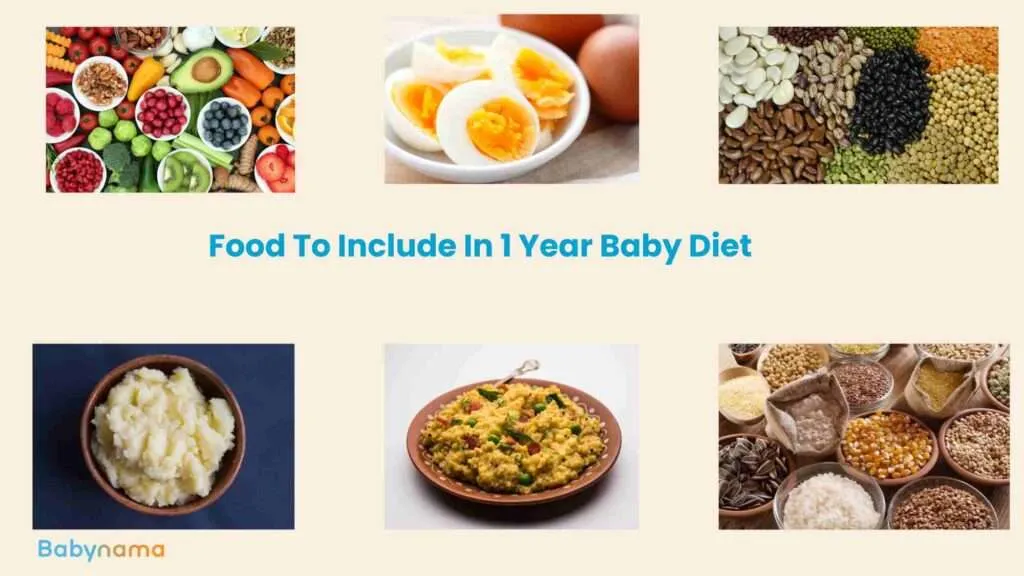
- Dal (all varieties - moong, masoor, toor, chana)
- Paneer (cubed or mashed)
- Curd/dahi
- Eggs (ande) - excellent first-year food
- Chicken (shredded) - if your family is non-vegetarian
- Besan (chickpea flour)
- Soybean (avoid if allergic)
Daily need: Roughly 13 grams of protein per day for a 1-year-old (ICMR-NIN). You don’t need to count grams — offering dal, dairy, egg, or pulses across the day usually covers it.
Healthy Fats (Brain aur Body Development)
Why it matters: Brain development, vitamin absorption, energy
Indian Sources:
- Ghee - add to everything! (dal, khichdi, roti)
- Coconut (fresh, milk, oil)
- Groundnuts (mungfali) - crushed/powdered
- Dry fruits (badam, akhrot) - powdered for safety
- Avocado (if available)
Tip: Don’t limit fat for babies - they need it!
Iron (Blood aur Brain ke Liye)
Why it matters: Prevents anemia, supports brain development
Indian Sources:
- Ragi (excellent for babies!)
- Green leafy vegetables (palak, methi)
- Dates (khajoor)
- Jaggery (gur) - small amounts
- Pomegranate (anar)
- Eggs
- Chicken/mutton Important: Give with Vitamin C foods (orange, tomato, amla) to improve iron absorption
Calcium (Strong Bones)
Why it matters: Building strong bones and teeth
Indian Sources:
- Milk and milk products (doodh, dahi, paneer)
- Ragi (finger millet)
- Sesame seeds (til)
- Green leafy vegetables
- Almonds (powdered)
Step-by-Step Guide: Building a Nutritious Diet
Step 1: Continue Milk (Breastmilk or Whole Milk)
- Maa ka doodh is still beneficial if you’re breastfeeding
- Can introduce whole cow’s milk after 1 year
- Milk: about 400-500 ml a day, a little less on days with curd or paneer
- Don’t replace meals with milk bottles
Step 2: Offer 3 Main Meals + 2 Snacks
Sample Daily Schedule:
| Time | Meal |
|---|---|
| 7:00 AM | Breakfast |
| 10:00 AM | Mid-morning snack |
| 12:30 PM | Lunch |
| 4:00 PM | Evening snack |
| 7:00 PM | Dinner |
| Bedtime | Milk (if needed) |
Step 3: Include These Power Foods Daily
Daily Must-Haves:
- 1 serving of dal/pulses
- 1-2 servings of vegetables
- 1-2 servings of fruits
- Cereal/grain at each meal
- Some healthy fat (ghee/oil)
- Milk/dairy
1-Year Baby Weight Gain Food Chart
Every food here is already on this page below; this is the same advice as a chart. The pattern that adds healthy weight is energy-dense, iron-rich, offered often: a spoon of ghee or nut powder in ordinary food does more than any special product. Nothing here replaces milk or a doctor’s growth check.
| Food | Why it helps weight and growth | How to give at 1 year | How often |
|---|---|---|---|
| Ghee (or oil) | Adds energy to dal, khichdi or roti without adding bulk | Half to one teaspoon stirred into each cooked meal | Every meal |
| Ragi porridge | Iron, calcium and calories in one bowl | Cook thick, add mashed banana and a little ghee | Daily, breakfast or snack |
| Khichdi with ghee | Rice + dal is a complete protein; ghee carries the energy | Soft, with a vegetable mashed in | Lunch or dinner most days |
| Egg | Complete protein, iron, fat, and vitamin D in one food | Well-cooked, mashed or soft-scrambled; whole egg is fine at 1 year | Daily if your family eats eggs |
| Paneer and curd | Protein, fat and calcium | Paneer in small soft cubes or mashed; curd with rice or fruit | Daily |
| Dal (moong, masoor, toor, chana) | Everyday protein and iron | Cooked soft, mashed whole (not strained dal water), a little ghee on top | Once or twice a day |
| Nut and seed powder (badam, akhrot, mungfali, til) | Concentrated fat and protein; safe once powdered | Half a teaspoon of powder stirred into porridge, dal or curd; never whole nuts | Daily |
| Banana and chiku | The more energy-dense fruits | Mashed or in soft pieces | One or two portions a day |
| Mango and papaya | Variety, vitamins A and C; less energy than banana | Mashed or in soft pieces | Some days |
| Sweet potato and potato | Filling, energy-dense starch | Boiled and mashed with ghee | A few times a week |
| Chicken or fish (if your family eats them) | Protein and well-absorbed iron | Shredded or minced, well cooked, no bones | A few times a week |
| Full-fat milk (as a drink) | Fat, protein, calcium | About 400-500 ml a day; give a little less milk on days your baby has curd or paneer. More dairy than that crowds out iron-rich food and can slow weight gain | Daily, capped |
Do not try to add weight with sugar, jaggery, honey-in-everything, biscuits, cerelac-type products or “weight gain” powders and tonics. They add sugar, not growth. If your baby’s weight has flattened on the WHO chart for two visits, or has crossed down a line, that is a pediatrician conversation, not a diet change.
Best Indian Foods for 1-Year-Old
Breakfast Ideas
- Ragi porridge with mashed banana - iron + calcium powerhouse
- Suji upma with vegetables - easy to eat
- Besan chilla - protein-rich, soft for babies
- Daliya with ghee - fiber and energy
- Idli with sambar (mashed) - fermented, nutritious
- Paratha (small pieces) with curd
Lunch/Dinner Ideas
- Khichdi with ghee - complete protein, easy to digest
- Dal chawal - everyday staple, balanced nutrition
- Vegetable pulao - rice with mixed vegetables
- Roti (small pieces soaked in dal) with sabzi
- Curd rice - probiotic, cooling
Snack Ideas
- Banana or chiku (sapodilla)
- Mashed papaya
- Boiled sweet potato
- Paneer cubes
- Idli fingers
- Homemade ragi cookies
- Makhana (puffed lotus seeds) - soften or break into small pieces
Choking safety: Whole nuts, whole grapes, and hard makhana are choking hazards under age 3. Always powder nuts, cut round foods lengthwise into small pieces, and soften hard snacks. Stay with your baby while they eat.
Power Combinations
- Ragi + banana + ghee = Iron + potassium + healthy fat
- Dal + rice = Complete protein
- Spinach + lemon = Iron + Vitamin C (better absorption)
- Curd + fruit = Calcium + vitamins
Tips for Success
- Ghar ka khana is best - Homemade food is healthier than packaged
- Be patient with picky eaters - Offer same food 10-15 times before giving up
- Family meals matter - Eat together when possible
- No force feeding - Let child decide how much to eat
- Limit juice and sugary drinks - Offer water and whole fruits instead
- Add ghee generously - Babies need healthy fats
Common Mistakes to Avoid
- Comparing with other babies - Every child’s growth is unique
- Over-relying on health drinks - Real food is better than Cerelac/Bournvita
- Giving adult portions - Baby’s stomach is small
- Too much milk, too little food - Milk should not replace meals
- Adding salt/sugar - Avoid until age 1, then minimal amounts
- Forcing baby to finish plate - Creates unhealthy relationship with food
- Skipping iron-rich foods - Iron deficiency is very common
When to Seek Help
Consult a pediatrician if:
- Baby has lost weight or not gained for 2-3 months
- Baby refuses most foods consistently
- Growth is falling off their personal curve
- Signs of nutritional deficiency (pale skin, brittle hair, delayed milestones)
- Baby seems constantly tired or unwell
- Severe picky eating affecting nutrition
Get growth check-ups:
- Every 3 months in first year
- Every 6 months after that
- Doctor will plot on growth chart and advise
Frequently Asked Questions
Q: Mera baby 1 saal ka hai lekin weight kam hai - kya karun?
A: First, check if baby is actually underweight by plotting on growth chart - many parents worry unnecessarily. If truly low, increase calorie-dense foods: add ghee to everything, offer dry fruit powder mixed in milk, give banana-peanut butter mash, include eggs daily if your family eats them. Don’t force-feed. Consult pediatrician if weight gain doesn’t improve.
Q: Health drinks like Cerelac/Pediasure dena chahiye?
A: Ghar ka khana is always better! Commercial products are convenient but not superior to homemade food. If you’re struggling with time, make batches of ragi powder, khichdi mix, or dalia in advance. Use commercial products only occasionally, not as meal replacements.
Q: Baby sirf doodh peeta hai, khana nahi khata - what to do?
A: This is common! Keep milk to about 400-500 ml a day, less on days with curd. Offer milk AFTER meals, not before. Make meal times fun and social. Don’t offer milk as snack - offer solid foods instead. Baby may fuss initially but will eat when hungry. Be consistent.
Q: Height badane ke liye kya khilayein?
A: Height is primarily genetic - food cannot make a child taller than their genetic potential. However, good nutrition ensures they reach their full potential. Focus on: protein (dal, eggs, paneer), calcium (milk, ragi), zinc (nuts, legumes), and vitamin D (sunlight exposure). Avoid “height-increasing” supplements.
Q: Non-veg nahi khilate - protein kaise milega?
A: Vegetarian diets can provide complete protein! Combine dal + rice, offer paneer, curd, besan items, soybean products. Include eggs if your family allows. Sprout legumes for better nutrition. Dry fruits and nuts (powdered) are also good protein sources.
This article was reviewed by Babynama Pediatricians. For concerns about your child’s growth, please consult your healthcare provider.
A note for Indian parents: This guidance follows IAP (Indian Academy of Pediatrics), WHO, and ICMR-NIN recommendations. Growth ranges are based on WHO Child Growth Standards. Every child grows differently — these are general guides, not a diagnosis. For any feeding or growth concern, your own pediatrician’s advice for your child comes first. If your baby ever has a choking episode, breathing difficulty, or a medical emergency, call 112 (national emergency) or 108 (ambulance) or go to the nearest hospital immediately.
Need personalized guidance? Book a consultation with our pediatricians or explore our Care Plans for 24/7 expert support!
Related Tools
Continue with this topic
A useful next step
Baby development milestones by ageSee movement, language, social and cognitive milestones from birth to 3 years.Have a question about your little one?
Join our free community for live Q&A with MD pediatricians — no cost to join.
Join the free community