Quick Answer
Don’t avoid foods out of fear - early introduction of allergenic foods actually REDUCES allergy risk! Research shows introducing common allergens from around 6 months is protective (NIAID/LEAP). True (food-challenge-proven) food allergy is uncommon — in Western countries it affects up to roughly 8% of children, and Indian data suggest the rate is actually much lower (under ~1%), though many children show sensitisation without a real clinical allergy. Most cases are manageable. This guide will help you introduce foods safely and recognize the difference between true allergies and sensitivities.
⚠️ High-risk babies need a doctor first. If your baby has severe eczema and/or a known egg allergy, talk to your pediatrician before the first peanut or egg. For these babies, introduction may be recommended earlier (around 4–6 months, not before 4 months), and some need allergy testing first. Don’t just introduce these allergens at home on your own.
Why This Happens (Allergy vs Sensitivity Samjhein)
Food Allergy (Khaane se allergy):
-
Immune system mistakenly attacks a food protein
-
Reaction happens within MINUTES to 2 hours
-
Can be mild (hives) to severe (anaphylaxis)
-
Needs immediate attention Food Sensitivity/Intolerance (Khaane se taklif):
-
Digestive system has trouble processing food
-
Reaction takes HOURS to days to appear
-
Usually causes tummy issues
-
Not life-threatening | Feature | Food Allergy | Food Sensitivity | | — | — | — | | Timing | Minutes to 2 hours | Hours to 3 days | | Cause | Immune system | Digestive system | | Severity | Can be life-threatening | Uncomfortable but not dangerous | | Symptoms | Hives, swelling, breathing issues | Gas, bloating, loose motions | | Detection | Easier (fast reaction) | Harder (delayed reaction) |
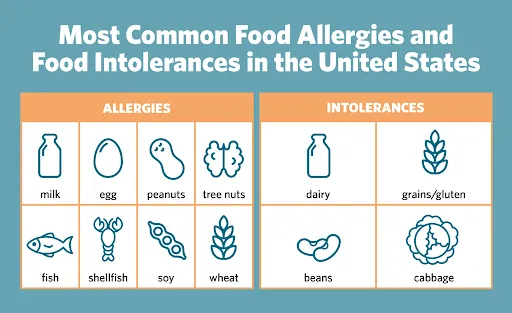
The “Big 8” Allergens
These 8 foods cause 90% of allergies in children:
| Food | Indian Context | When to Introduce |
|---|---|---|
| Milk/Dairy (Doodh) | Cow’s milk protein in formula | Dairy products from 6 months; whole milk after 1 year |
| Eggs (Ande) | Very common in Indian diet | From 6 months - start with well-cooked |
| Peanuts (Moongphali) | Common in chikki, groundnut chutney | Peanut butter/powder from 6 months |
| Tree Nuts (Dry fruits) | Badam, kaju, akhrot | Powdered/butter form from 6 months |
| Wheat (Gehun) | Roti, chapati, bread | From 6 months - start small |
| Soy (Soya) | Tofu, soy milk | From 6 months |
| Fish (Machli) | Common in coastal areas | From 6 months - well-cooked |
| Shellfish | Prawns, crab, lobster | Not a staple for most babies; fine well-cooked from 6 months — no need to deliberately delay |
When to Worry (Red Flags) - EMERGENCY
🚨 Call 112 (national emergency) or 108 (ambulance), or go straight to the nearest hospital, if you see: difficulty or noisy breathing; swelling of the face, lips or tongue; widespread hives with vomiting; pale, grey or blue skin; floppiness or unresponsiveness; or a seizure. These can be a severe allergic reaction (anaphylaxis). If an adrenaline auto-injector has been prescribed, use it first, then go. Do not wait for a clinic appointment.
Less urgent but needs doctor visit:
- Hives (chhapaki) that spread
- Persistent vomiting after new food
- Blood in stool after starting new food
- Severe eczema flare-up after eating
- Repeated symptoms with same food
What You Can Do
Introducing Allergenic Foods Safely
Step-by-Step Guide:
1. Start around 6 months
-
For most babies, start solids at around 6 months (not before 4 months)
-
Baby should have started some basic foods first
-
Introduce allergens when your baby is well — not during an illness or an active eczema flare
-
High-risk babies (severe eczema and/or egg allergy): see your pediatrician first — earlier introduction (around 4–6 months) and/or allergy testing may be advised before the first peanut or egg 2. Introduce ONE allergenic food at a time
-
Wait 3-5 days before introducing another
-
This helps identify which food caused any reaction 3. Start with small amounts
-
First exposure: 1/4 teaspoon
-
Increase gradually if no reaction
-
Mix with food baby already tolerates 4. Give in morning
-
Offer new foods early in day
-
Easier to monitor for reactions
-
Don’t give before bedtime 5. Continue giving regularly
-
Once introduced without reaction, keep giving 2-3 times per week
-
Regular exposure maintains tolerance
How to Introduce Specific Foods
| Food | How to Give (6+ months) |
|---|---|
| Egg | Well-cooked scrambled egg, start with 1/4 teaspoon yolk |
| Peanut | Thin peanut butter mixed in porridge (NOT whole peanuts - choking hazard!) |
| Wheat | Small piece of soft roti, daliya |
| Dairy | Dahi, paneer (not cow’s milk as main drink) |
| Fish | Soft, cooked, deboned fish mashed |
| Tree nuts | Almond powder in milk/porridge |
If Reaction Happens
Mild reaction (hives only, no breathing issues):
-
Stop the food
-
Note what was eaten and when
-
Antihistamine if prescribed
-
Watch for worsening
-
Call doctor for guidance Severe reaction:
-
Call 112 or 108, or rush to the nearest hospital immediately
-
Use an adrenaline auto-injector (EpiPen) first if one has been prescribed — then go
-
Most Indian families won’t have an auto-injector (they’re hard to get and expensive here), so emergency hospital care is the main fallback — don’t delay going
-
Keep child lying down
-
Don’t give anything by mouth
-
Don’t leave child alone
Managing Confirmed Allergies
If your child has diagnosed food allergy:
-
Read labels carefully - Allergens hidden in many foods
-
Inform caregivers - School, relatives, babysitters
-
Carry emergency medication - If prescribed (antihistamine, EpiPen)
-
Medical ID - Consider bracelet for older children
-
Regular follow-up - Many children outgrow allergies Common allergens in Indian packaged foods:
-
Milk: In biscuits, chocolates, bread
-
Wheat: Almost everywhere
-
Nuts: In sweets, chocolates
-
Soy: In processed foods
Frequently Asked Questions
Q: Family mein allergy hai. Kya mera baby ko bhi hogi?
A: Having allergies in the family increases risk but doesn’t guarantee allergy. Studies show EARLY introduction (not avoidance!) reduces risk even in high-risk babies — so don’t delay. But if your baby has severe eczema and/or a known egg allergy, talk to your pediatrician before the first peanut or egg. For these babies, introduction may be advised earlier (around 4–6 months) and some need allergy testing first — this is the one situation where you should not just introduce at home on your own. For other babies with a family history, introducing the first dose at home (not at a restaurant) and during the day, when you can watch your baby, is sensible.
Q: Baby ko rash aa gaya new food ke baad. Kya allergy hai?
A: Not necessarily! Rash around mouth from acidic foods (tomato, citrus) or contact irritation is common and NOT allergy. True allergic hives are raised, itchy, appear on body (not just mouth), and happen within 2 hours of eating. If hives spread, cause swelling, or baby seems unwell - that’s more concerning. Take photo and consult doctor.
Q: Kya breastfeeding se allergy prevention hoti hai?
A: Breastfeeding has many benefits, and you should continue breastfeeding when you start solids. There’s no reason to avoid allergenic foods in your own diet — but the evidence that what you eat while breastfeeding prevents your baby’s allergies is not conclusive. The clearest protection comes from introducing allergens to your baby directly from around 6 months.
Q: Bachcha 8 mahine ka hai, abhi tak anda nahi diya - kya late ho gaya?
A: No, not too late! Research shows introducing between 6-12 months is beneficial. Start now with well-cooked egg (small amount), watching for reaction. It’s better to introduce now than wait longer. The recommendation to wait till 1 year is outdated.
Q: Baby raat ko bahut jagta hai new food start karne ke baad. Allergy hai?
A: Probably not allergy - allergic reactions happen within 2 hours and cause specific symptoms (hives, vomiting, breathing issues). Night waking after new foods could be: normal sleep pattern change, tummy adjustment to new food, gas from new food, or coincidence. Give foods during day to monitor better. If baby has blood in stool or severe symptoms, then consult doctor.
This article was reviewed by Babynama Pediatricians. Last updated: February 2026.
This article is general information for Indian parents, not a substitute for examination by your pediatrician. In an emergency, call 112 or 108.
Starting solids or worried about food reactions? Babynama’s pediatricians can guide you through safe food introduction and help identify any allergies. Chat with us on WhatsApp!
Need personalized guidance? Book a consultation with our pediatricians or explore our Care Plans for 24/7 expert support!
Related Tools
Continue with this topic