
Quick Answer
Start solid foods (weaning/complementary feeding) at around 6 completed months, when your baby shows signs of readiness - not earlier unless your pediatrician has specifically advised it, and not later than 8-9 months. IAP and WHO both advise exclusive breastfeeding for the first 6 months. Breastmilk or standard infant formula continues to be the primary nutrition source until age 1 - solids are supplementary at first. Don’t worry if your baby eats very little initially; the first few months are about exploration and learning, not nutrition.
Two things matter most in the first weeks: make the food iron-rich, and make mealtimes safe. Both are covered below.

When to Start Solids: Signs of Readiness
Baby is Ready When They Can:
- Sit with minimal support - Good head and neck control
- Show interest in food - Watches you eat, reaches for food
- Open mouth when food approaches - Anticipates feeding
- Lost tongue-thrust reflex - Doesn’t push food out automatically
- Coordinate swallowing - Can move food to back of mouth
Age Guidelines
| Age | Recommendation |
|---|---|
| Before 6 months | Don’t start - IAP and WHO advise exclusive breastfeeding for the first 6 months |
| Before 6 months, on medical advice | Only if your own pediatrician has specifically advised it for your baby |
| Around 6 completed months | The right time - WHO/IAP recommendation |
| After 8-9 months | Late; babies may have difficulty accepting textures |
Important: Do not start solids before 6 months unless your pediatrician has told you to. Starting early does not help your baby sleep better or gain weight faster, and it displaces breastmilk at exactly the age your baby needs it most. Biscuits soaked in milk, cerelac at 4 months and doodh mein roti are common in Indian homes and all belong to the same mistake.
If your baby was born preterm, ask your pediatrician when to start. Readiness is judged on corrected age and developmental progress, not the date on the calendar.
Step-by-Step Guide to Starting Solids
Step 1: Prepare for Weaning
What you need:
-
Small bowl and spoon (silicone or soft plastic)
-
High chair or feeding seat
-
Bibs (lots of them!)
-
Patient mindset - this is messy business! Before the first feed:
-
Continue breastmilk/formula as usual
-
Choose a time when baby is alert but not too hungry
-
Morning or early afternoon works best
Step 2: First Foods (Day 1-7)
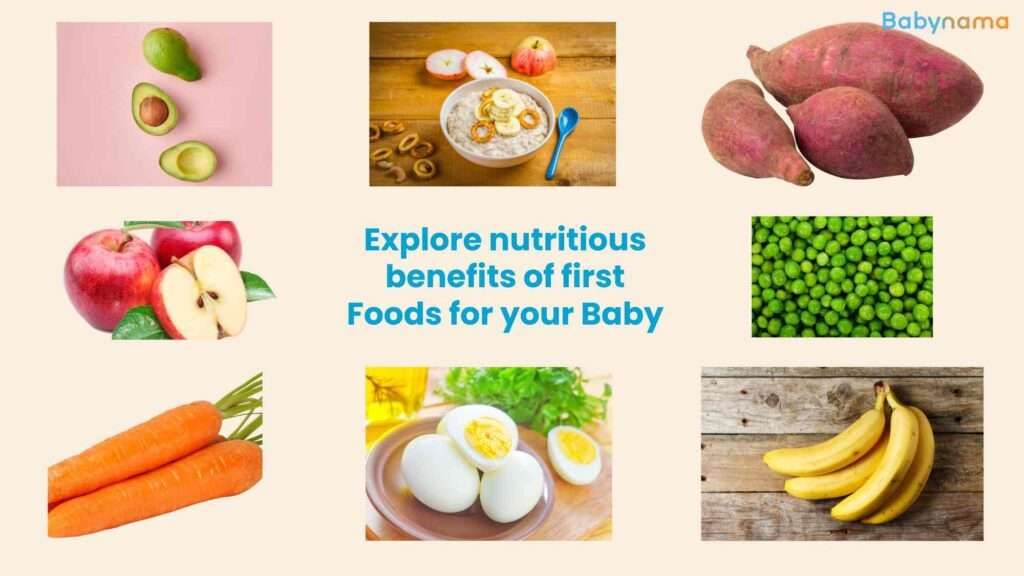
Start with single-ingredient purees:
| Food | Why It’s Good | How to Prepare |
|---|---|---|
| Ragi (nachni) | Iron-rich, Indian staple | Porridge with breastmilk/formula |
| Rice cereal | Easy to digest | Mix with breastmilk/formula |
| Banana | Natural sweetness, soft | Mash with fork |
| Sweet potato | Vitamin A, mild taste | Steam and mash |
| Moong dal | Iron and protein | Cook soft and mash the whole dal - not strained dal ka paani |
Day 1: Offer 1-2 teaspoons after a milk feed
Days 2-4: Same food, gradually increase to 2-3 teaspoons
Days 5-7: Watch for any reaction, then introduce new food
Make Iron the Priority, From the Very First Month
Your baby’s own iron stores run low at around 6 months, and that is the main reason solids start then. Anaemia is very common in Indian babies (NFHS-5 found 67% of children aged 6-59 months anaemic), so build the first meals around iron, not around fruit.
- Iron-rich options from 6 months: ragi (nachni), well-cooked and mashed dal (moong, masoor), rajma and chana mashed smooth, egg yolk and whole egg, and, if your family eats them, well-cooked minced meat, liver, chicken or fish.
- Pair plant iron with vitamin C in the same meal: a squeeze of lemon, amla, tomato or guava helps absorption.
- Don’t give tea or coffee to a baby at any age, and try not to give a large milk feed alongside a solid meal. Both reduce iron absorption.
- Palak is not the iron food it is reputed to be for babies - its oxalates block iron absorption. Use it for variety, not as your iron strategy.
- Dal ka paani is a low-energy trap. Strained dal water is mostly water. Mash the whole cooked dal instead so your baby actually gets the protein and iron.
- India’s Anemia Mukt Bharat programme recommends iron and folic acid syrup for children aged 6-59 months. Ask your pediatrician whether your baby needs it - don’t start iron on your own.
Step 3: Expand Variety (Week 2-4)
3-Day Wait Rule: Introduce one new food at a time and watch for 2-3 days before adding another, so you can spot any reaction. This spacing is for watching a new food — it is not a reason to delay common allergen foods like egg or peanut (see the section below). Dietary diversity matters: keep widening the range of foods steadily.
Foods to introduce:
- Vegetables: Carrot, lauki, pumpkin, spinach (palak)
- Fruits: Apple, pear, papaya, chiku
- Grains: Oats, suji, jowar
- Proteins: Moong dal, masoor dal
Introducing Common Allergens (don’t delay these)
Current WHO, IAP and AAP guidance is clear: common allergen foods should be introduced around 6 months — not delayed — once your baby is tolerating a couple of first foods. Holding them back or leaving them out actually raises the risk of food allergy.
Once your baby has comfortably taken 2-3 first foods (usually by around 6 months), deliberately offer:
- Well-cooked whole egg (yolk and white) — mashed or softly scrambled.
- Peanut — as smooth peanut butter thinned with breastmilk/formula or water, or peanut powder stirred into porridge/dal. Never give whole or chopped nuts (choking hazard).
- Other allergens as they fit your family’s diet: dahi/curd and other dairy in cooking, wheat (suji), fish (if non-veg), sesame (til).
How to introduce an allergen safely:
- One new allergen at a time, on a day your baby is well, at home, in the morning or early afternoon so you have daylight hours to watch them.
- Start with a tiny taste (about a quarter teaspoon). Wait 10-15 minutes, and if there is no reaction, give the rest of the small portion.
- Stay with your baby and watch for about 2 hours. Mild reactions usually appear within minutes to 2 hours.
- Wait at least 2-3 days before introducing the next new allergen.
- Once your baby tolerates it, keep it in the diet a few times a week. Tolerance is maintained by regular exposure, not by one successful try.
Watch for a reaction the first few times, but don’t let the 2-3 day spacing become a reason to keep these foods out altogether.
Talk to your pediatrician BEFORE introducing egg or peanut if your baby has moderate to severe eczema, an already-diagnosed food allergy, or a sibling or parent with a severe food allergy. Your doctor may advise allergy testing, or a first dose given under supervision. Don’t make that call on your own.
Never whole nuts, and never a thick spoonful of nut butter - both are choking hazards. Thin nut butter into porridge or dal, or use peanut powder.
If your baby reacts, see what a severe reaction looks like and what to do at the end of this guide.
Step 4: Increase Texture (Month 2-3)
Progress from:
- Thin purees (watery consistency)
- Thick purees (spoonable)
- Mashed foods (with soft lumps)
- Minced/chopped (by 8-9 months)
- Finger foods (soft, dissolvable)
Texture by month, with Indian examples:
| Month | Texture | Examples |
|---|---|---|
| 6-7 months | Smooth, thick purees | Thick ragi porridge, mashed whole moong dal, mashed banana |
| 7-8 months | Thicker purees | Mashed khichdi with ghee |
| 8-9 months | Mashed with soft lumps | Soft idli pieces, mashed rice-dal |
| 9-10 months | Soft pieces | Soft roti bits, well-cooked vegetable chunks |
| 10-12 months | Finger foods | Ragi dosa strips, soft fruit |
Step 5: Establish Meal Routine
By 7-8 months:
- 2-3 solid meals per day
- Continue 4-5 breastmilk/formula feeds
- Offer small sips of safe water with meals, in an open or free-flow cup rather than a bottle
Choking Safety (please read)
- Always stay with your baby while they eat — never leave them alone, and never prop a bottle.
- Have your baby sit upright in a high chair to eat, never lying back or in a moving car/walker.
- Never feed a baby who is lying down, crying, laughing, walking, being carried, or watching a screen. Feeding a crying baby on their back while distracting them with a phone is common, and it is a real risk of food going into the airway. A baby who does not want to eat should not be fed until they settle.
- Offer finger foods soft enough to squash between your fingers, cut into finger-length strips (easier to grip than small cubes) or, for round foods, quartered lengthwise — e.g. grapes and cherry tomatoes cut into quarters, not whole.
- Avoid hard, round, sticky or slippery choking hazards. In an Indian kitchen that means: whole nuts and peanuts, roasted chana and whole boiled channa, whole grapes, cherry tomatoes, popcorn, makhana, chikki, hard sweets, sev and namkeen, hard raw carrot or apple chunks, and large blobs of nut butter.
Know the difference between gagging and choking:
- Gagging is noisy. Your baby coughs and splutters, goes red, keeps making sounds, and recovers on their own. It is normal and protective, and it is part of learning to eat. Stay calm and let them clear it.
- Choking is quiet. Your baby is silent or has a weak cough, cannot breathe, cry or make a sound, and may go pale, grey or blue. This is an emergency.
If your baby is choking, act immediately: shout for help, call 112 or 108, and give infant back blows and chest thrusts. Two things to know before you ever need them:
- Never do abdominal thrusts (the Heimlich manoeuvre) on a baby under 1 year. It can injure the liver and spleen.
- Never put your finger into the mouth to sweep blindly. You will usually push the object further in. Only remove something you can clearly see and easily hook out.
Read the full step-by-step first aid here: Gagging vs Choking in Babies: The Difference & What to Do. Reading is not the same as training, so do a hands-on infant first-aid and CPR course as well.
Everyone who feeds your baby needs to know this, not just you. In a joint family that means grandparents, older siblings, and any household help who feeds the baby. Ideally, learn infant choking first aid before solids start.
Best First Foods for Indian Babies
Traditional Indian Weaning Foods
| Food | Benefits | Recipe Ideas |
|---|---|---|
| Ragi | High calcium and iron | Ragi porridge, ragi kanji |
| Rice + dal khichdi | Complete protein | Soft khichdi with ghee |
| Suji | Easy to digest | Suji halwa (no sugar) |
| Moong dal | Gentle protein and iron | Mashed whole dal, dal puree (not strained dal ka paani) |
| Seasonal vegetables | Vitamins, fiber | Steamed and mashed |
| Seasonal fruits | Natural sugars, vitamins | Fresh purees |
First Foods by Month
Month 6:
-
Ragi porridge
-
Rice cereal with breastmilk/formula
-
Banana mash
-
Mashed moong dal (whole dal, not dal ka paani)
-
Vegetable purees (carrot, lauki, potato) Month 7:
-
Khichdi (rice + dal)
-
Mixed vegetable purees
-
Fruit combinations
-
Suji upma (very soft)
-
Dahi (small amounts) Month 8:
-
Idli (mashed)
-
Dosa pieces (soft)
-
Paneer (mashed)
-
Finger foods beginning
Note on egg: Well-cooked whole egg (yolk and white) does not need to wait until month 8. It can be introduced from around 6 months as one of the early allergen foods — mash or scramble it soft. Introducing egg early and keeping it in the diet is actually protective against egg allergy (see “Introducing Common Allergens” below).
What About Formula and Breastmilk?
Breastmilk/Formula Remains Primary
| Age | Milk Feeds | Solid Meals |
|---|---|---|
| 6 months | 5-6 feeds/day | Start with 1, build to 2-3 by 8 months |
| 7-8 months | 4-5 feeds/day | 2-3 meals |
| 9-12 months | 3-4 feeds/day | 3 meals + 1-2 small snacks |
Milk stays a major part of your baby’s nutrition for the whole first year, but there is no single number to hit. If you are breastfeeding, keep feeding on demand and let your baby set the pace: don’t measure, and don’t add formula top-ups to reach a target. If your baby is formula-fed, NHS guidance is that most babies need around 600 ml a day at 7-9 months, falling to around 400 ml by 10-12 months as solids increase. Treat that as a rough range, not a target - milk intake should fall as solid meals rise. If you are unsure whether your baby is getting enough, the answer is in weight gain and wet nappies, not in millilitres.
On meal frequency, IAP and WHO IYCF guidance is 2-3 meals a day at 6-8 months, and 3-4 meals plus 1-2 snacks from 9 months. If anything, the common Indian risk at this age is too little food, not too much: don’t be slower than this ramp.
If You Are Using Formula
Any standard infant formula appropriate for your baby’s age is fine — there is no need to pick a particular brand. Choose one in consultation with your pediatrician.
You do not need to “switch” formulas at 6 months. Standard (Stage 1) infant formula can continue right through the first year. Follow-on or “Stage 2” formulas are not nutritionally required, so there’s no need to change unless your pediatrician advises it for a specific reason.
Tips for Success
- Timing matters - Feed when baby is alert, not overtired or starving
- Patience is key - May take 10-15 tries to accept new food
- No forcing - Let baby guide quantity
- Add ghee - 1/4 teaspoon adds healthy fat and helps absorption
- Eat together - Babies learn by watching family eat
- Stay calm with mess - It’s part of learning!
- Tell everyone who feeds the baby - In most Indian homes the person reading this is not the only person in the kitchen. Grandparents, older siblings and household help all need the same rules, or they won’t hold.
Food Hygiene and Diarrhoea Warning Signs
The months when solids start are the riskiest window for diarrhoea in Indian babies: new foods, new hands, warm weather. Most of it is preventable.
- Cook fresh and feed within about 2 hours in warm weather. Don’t keep leftovers for the next feed.
- Wash your hands and your baby’s hands before every meal, and wash bowls, spoons and cutting boards properly.
- Wash fruit and vegetables in safe water, and peel where you can.
- Use boiled and cooled or filtered water for drinking and for mixing food.
See a doctor the same day if you see: loose stools or vomiting with fewer wet nappies, no tears when crying, a sunken soft spot (fontanelle), a dry mouth, unusual sleepiness, or blood in the stool.
Meanwhile: keep breastfeeding, and start ORS. Your doctor will usually add zinc for 14 days (IAP and WHO recommend it alongside ORS). Do not give anti-diarrhoeal medicines to a baby.
Foods to Avoid Before 1 Year
| Food | Reason |
|---|---|
| Honey | Risk of infant botulism (see below) |
| Cow’s or buffalo milk as the main drink | Low in iron; a common cause of anaemia (see below) |
| Salt | Kidneys can’t process |
| Sugar | Creates sweet preference |
| Whole nuts | Choking hazard |
| Fruit juices, packaged drinks, glucose water, sherbet, soft drinks | High sugar, low nutrition, displaces milk and food |
| Tea and coffee | Blocks iron absorption |
| Processed foods | Preservatives, additives |
No Honey Before Your Baby Turns 1
No honey before 1 year - not even a small taste, not in porridge, and not as ghutti. Honey can carry spores that cause infant botulism, a rare but serious illness. This applies to raw, organic and branded honey alike. After 12 months it is safe, but it still counts as added sugar.
This one matters because “no added sugar” is often heard as “so use honey, it’s natural.” It isn’t, not this year. Say it out loud to whoever else feeds your baby.
Cow’s and Buffalo Milk: Not the Main Drink Before 1 Year
Dahi (curd), paneer and cheese in small amounts are fine from 6 months, and so is a little milk used to cook porridge. But cow’s or buffalo milk should not become your baby’s main drink before 12 months. It is low in iron and can cause small amounts of gut blood loss, which is a common cause of anaemia in Indian babies.
Breastmilk or infant formula stays the main milk until 1 year. If formula is not an option for your family, don’t switch on your own - talk to your pediatrician, who can advise on full-fat animal milk with the right iron cover. Switching to gaay ka doodh at 6-7 months is one of the commonest feeding mistakes at this stage.
Water and Other Drinks
Small sips of safe (boiled and cooled, or filtered) water with meals from 6 months are fine and helpful. Offer it in an open or free-flow cup, not a bottle - it is better for teeth and for learning to drink. Your baby doesn’t need large volumes of water; milk still covers their fluid needs.
Common Mistakes to Avoid
- Starting too early (before 6 months) - Displaces breastmilk and doesn’t help sleep or weight
- Starting too late (after 8-9 months) - May resist textures
- Replacing milk feeds too quickly - Milk is still primary nutrition
- Switching to cow’s or buffalo milk as the main drink - Not before 12 months
- Giving dal ka paani instead of mashed dal - Mostly water, very little energy or iron
- Building meals around fruit instead of iron - Iron is the whole reason solids start at 6 months
- Adding salt/sugar - Harmful for baby’s kidneys and health
- Forcing feeds, or feeding a crying baby lying down - Creates a negative association with food, and risks choking
- Giving honey - Risk of infant botulism, at any amount, in any form
- Too many new foods at once - Can’t identify allergies
- Only sweet foods first - Creates preference, harder to accept vegetables
Dealing with Picky Eaters
Remember: Some pickiness is normal and developmental!
Strategies:
- Offer rejected food again after few days
- Mix new foods with accepted foods
- Let baby self-feed finger foods
- Make mealtimes pleasant, not pressured
- Eat together as family when possible
- Offer variety but don’t overwhelm
When to Consult a Doctor
See your pediatrician if:
- Baby refuses all solids for more than 3-4 weeks after turning 6 months
- After any significant choking episode, even if your baby seems completely fine afterwards
- Loose stools or vomiting with fewer wet nappies, unusual sleepiness, or blood in the stool (same day)
- Mild signs of food allergy (book a review, and stop that food):
- Rash or hives
- Vomiting
- Diarrhea
- Poor weight gain despite adequate feeding
- Baby shows no interest in food by 8 months
- You’re unsure about baby’s readiness
🚨 Call 112 (national emergency) or 108 (ambulance), or go straight to the nearest hospital, if you see: difficulty or noisy breathing; swelling of the face, lips or tongue; widespread hives with vomiting; pale, grey or blue skin; floppiness or unresponsiveness; or a seizure. These can be a severe allergic reaction (anaphylaxis). Do not wait for a clinic appointment.
While you are getting help:
- If an adrenaline auto-injector has been prescribed for your baby, use it first, into the outer thigh, straight through clothing if needed, then go. Most families in India will not have one. Don’t waste time looking for one - go straight to the nearest hospital with an emergency department.
- Keep your baby lying flat, on their side if they are vomiting, or upright only if breathing is the main problem. Do not sit or stand them up, and do not walk them around.
- Do not give an antihistamine syrup and wait to see what happens, and do not try to make your baby vomit. Neither of these treats anaphylaxis.
- Go to hospital even if your baby seems to recover. Symptoms can come back a few hours later.
Expert Insight: Breastmilk is recommended up to 6 months and alongside solids to 1 year and beyond. Where formula is needed, it is a safe and valid choice — there is no room for guilt. Fed is best.
FAQs
Q: My baby is 5.5 months and very interested in food. Can I start early?
A: Interest in food is not the same as readiness - babies watch and reach for everything at this age. IAP and WHO advise exclusive breastfeeding to 6 months, so the default answer is to wait. If your pediatrician has examined your baby and specifically advises starting a little earlier, follow that. Don’t make the call on your own, and don’t let “she seems ready” become 4 or 5 months.
Q: Baby only wants breastmilk and spits out all food. Is this normal?
A: Yes, very normal! Breastmilk is familiar and comforting. Keep offering solids without pressure. Try different times of day, different textures, and let baby play with food. Most babies gradually accept solids. If refusal continues beyond 3-4 weeks, consult your pediatrician.
Q: Should I reduce formula when starting solids?
A: Not immediately. For the first month of solids, continue the same formula feeds. As your baby eats more solids (by 8-9 months), milk intake naturally falls - that is meant to happen. There is no daily millilitre target to hit; see the milk section above for the rough ranges and why weight gain and wet nappies are the better measure. Milk still provides most of the nutrition that early solids can’t yet replace.
Q: Can I give store-bought baby food or should I make fresh?
A: Homemade is preferred - it’s fresher, cheaper, and you control ingredients. However, good-quality store-bought foods (Nestle Cerelac, Slurrp Farm, etc.) can be convenient occasionally. Check labels for no added salt/sugar. Avoid relying on them daily.
Q: My mother-in-law wants to give janam ghutti and cerelac at 3 months. How do I handle this?
A: This is a common concern! Explain that medical guidelines have changed - starting solids before 6 months increases risk of allergies, digestive problems, and infections. Share that WHO, IAP (Indian Academy of Pediatrics), and your doctor recommend waiting until 6 months. You can involve your pediatrician in the discussion if needed.
One specific point worth making gently: janam ghutti is often given with honey, and honey is not safe before 12 months in any amount or any form. That is not a matter of tradition versus modern advice - it is the botulism risk explained above.
Q: Which is better to start with - fruits or vegetables?
A: Either is fine, but starting with vegetables and savoury foods may help your baby accept less sweet flavours later. Traditional Indian first foods like ragi, mashed dal and khichdi are excellent choices, and they carry the iron that fruit does not.
Q: What if baby has constipation after starting solids?
A: Some constipation is common when starting solids. Try: offering water between feeds, giving fiber-rich foods (papaya, prunes, pear), avoiding too much banana/apple, ensuring adequate breastmilk/formula, and gentle tummy massage. If constipation persists, consult your pediatrician.
This article was reviewed by Babynama Pediatricians. Last updated: August 2026.
Sources
- World Health Organization. Guideline for complementary feeding of infants and young children 6-23 months of age (2023). Recommendation 3: introduce complementary foods at 6 months (180 days) while continuing to breastfeed (strong). Recommendation 2a: for non-breastfed infants 6-11 months, either milk formula or animal milk can be fed (conditional). Recommendation 4a: animal source foods including eggs daily. Recommendations 5a-c: no foods high in sugar, salt or trans fat, no sugar-sweetened beverages, no non-sugar sweeteners. https://www.ncbi.nlm.nih.gov/books/NBK596423/
- Indian Academy of Pediatrics. Infant and Young Child Feeding Guidelines, 2016. Indian Pediatrics 2016;53:703-713: exclusive breastfeeding to 6 completed months; 2-3 meals a day at 6-8 months and 3-4 meals plus 1-2 snacks at 9-23 months. https://indianpediatrics.net/aug2016/aug-703-713.htm
- National Family Health Survey (NFHS-5), 2019-21, India fact sheet: 67.1% of children aged 6-59 months anaemic.
- Ministry of Health and Family Welfare, Anemia Mukt Bharat: 1 ml IFA syrup (20 mg elemental iron + 100 mcg folic acid) biweekly for children 6-59 months. https://nhm.gov.in/index1.php?lang=1&level=3&sublinkid=1448&lid=797
- NHS Start for Life, What to feed your baby, 7 to 9 months (around 600 ml of formula a day) and 10 to 12 months (around 400 ml). https://www.nhs.uk/start-for-life/baby/weaning/what-to-feed-your-baby/7-to-9-months/ ; NHS: cows’ milk not as a main drink before 12 months, sips of water from a cup from 6 months, no juice needed under 12 months.
- Indian Academy of Pediatrics / WHO / UNICEF guidance on acute diarrhoea in children: low-osmolarity ORS, continued feeding, and zinc for 14 days (10 mg/day under 6 months, 20 mg/day from 6 months).
- Centers for Disease Control and Prevention. Botulism Prevention: “Do not feed honey to a child who is younger than 1 year old.” https://www.cdc.gov/botulism/prevention/index.html
- Resuscitation Council UK. Emergency treatment of anaphylaxis: guidelines for healthcare providers (2021), summarised in Whyte AF, Soar J, Dodd A, et al. Clin Med 2022;22(4):332-339: intramuscular adrenaline into the anterolateral thigh; patient positioning; antihistamines and steroids not part of initial treatment; observation for biphasic reactions.
- NIAID Addendum Guidelines for the Prevention of Peanut Allergy in the United States (2017), https://www.niaid.nih.gov/sites/default/files/addendum-peanut-allergy-prevention-guidelines.pdf , and the LEAP trial (Du Toit G, et al. N Engl J Med 2015;372:803-813): early, sustained introduction of peanut; medical assessment first for infants with severe eczema and/or egg allergy.
- American Academy of Pediatrics, HealthyChildren.org: “When to Introduce Egg, Peanut Butter and Other Common Food Allergens.”
This article is general information for Indian parents, not a substitute for examination by your pediatrician. In an emergency, call 112 or 108.
Need personalized guidance? Book a consultation with our pediatricians or explore our Care Plans for 24/7 expert support!
Related Reading
Related Tools
Continue with this topic