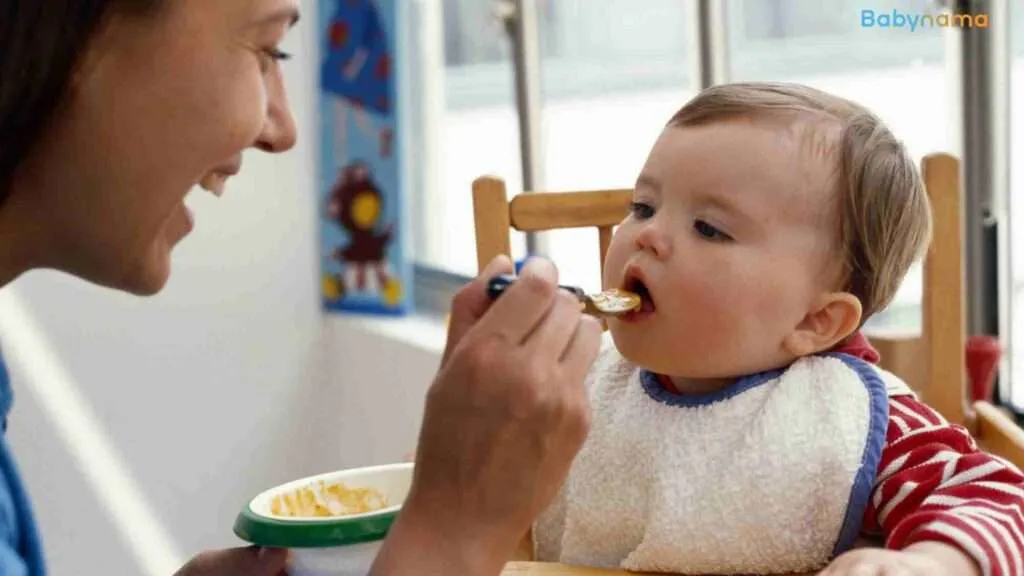
Quick Answer: Your 7-month-old needs 3 solid meals plus 2 small snacks daily, along with continued breastfeeding (maa ka doodh) or formula. Start with single-ingredient purees, then gradually introduce khichdi, dal, ragi porridge, and mashed seasonal fruits. Breast milk or formula (700-900ml) should still be the primary nutrition source. Every baby is different - some will eat more, some less. Don’t worry if your baby doesn’t finish every meal!
Sample Daily Routine for 7-Month-Old
| Time | Activity |
|---|---|
| 6:00-7:00 AM | Wake up, breastfeed/formula |
| 8:00-8:30 AM | Breakfast (solid food) |
| 9:00-10:30 AM | Morning nap (1-2 hours) |
| 11:00 AM | Breastfeed/formula |
| 12:30-1:00 PM | Lunch (solid food) |
| 1:30-3:30 PM | Afternoon nap (1-2 hours) |
| 3:30 PM | Breastfeed/formula + small snack |
| 5:30-6:00 PM | Dinner (solid food) |
| 6:30 PM | Bath time, play |
| 7:30 PM | Bedtime breastfeed/formula |
| 8:00 PM | Sleep |
| Night | 1-2 night feeds as needed |
Reassurance: This is a sample routine. Your baby’s schedule may differ - that’s perfectly fine and common.
Best Foods for 7-Month-Old Babies
Indian Traditional Foods (Tried & Tested!)
| Food Category | Options | How to Prepare |
|---|---|---|
| Cereals/Grains | Rice, ragi (nachni), oats, suji, daliya | Cook soft, mash smooth |
| Pulses/Lentils | Moong dal, masoor dal, toor dal | Pressure cook, strain for dal water initially |
| Vegetables | Lauki, tori, carrot, potato, sweet potato, pumpkin | Steam and mash |
| Fruits | Banana, apple, chikoo, papaya, pear, mango | Mash ripe fruits or steam and puree |
| First Khichdi | Rice + moong dal + ghee | Pressure cook soft, mash with ghee |
Protein Sources (After 7 Months)
| Food | How to Give |
|---|---|
| Egg yolk | Boil egg, give only yolk (mashed) |
| Paneer | Soft, mashed or grated |
| Curd/Dahi | Plain, unflavored homemade curd |
| Cheese | Pasteurized, soft varieties |
4-Week Diet Chart for 7-Month-Old
Week 1: Simple Beginnings
| Day | Breakfast | Lunch | Dinner |
|---|---|---|---|
| Mon | Rice cereal | Carrot puree | Dal water + rice |
| Tue | Ragi porridge | Lauki puree | Moong dal khichdi |
| Wed | Suji halwa | Sweet potato mash | Rice cereal |
| Thu | Banana mash | Pumpkin puree | Dal water + rice |
| Fri | Apple puree | Carrot puree | Ragi porridge |
| Sat | Rice cereal | Moong dal khichdi | Lauki puree |
| Sun | Chikoo mash | Potato mash | Dal water + rice |
Week 2: Adding Variety
| Day | Breakfast | Lunch | Dinner |
|---|---|---|---|
| Mon | Ragi porridge + banana | Khichdi with ghee | Carrot-potato mash |
| Tue | Suji kheer | Dal + rice | Pear puree |
| Wed | Apple-banana mash | Lauki khichdi | Rice cereal |
| Thu | Oats porridge | Pumpkin-dal | Chikoo puree |
| Fri | Rice cereal | Potato-carrot mash | Moong dal khichdi |
| Sat | Banana + ragi | Mixed veg puree | Dal water + rice |
| Sun | Suji upma (soft) | Khichdi | Apple puree |
Week 3: More Textures
| Day | Breakfast | Lunch | Dinner |
|---|---|---|---|
| Mon | Ragi + apple | Khichdi + curd | Mashed banana |
| Tue | Daliya porridge | Potato-lauki | Rice + dal |
| Wed | Suji halwa | Egg yolk + rice | Papaya mash |
| Thu | Oats + banana | Paneer + vegetable mash | Ragi porridge |
| Fri | Rice cereal | Khichdi | Carrot-pumpkin |
| Sat | Apple-pear puree | Dal + rice + curd | Suji kheer |
| Sun | Ragi porridge | Mixed veg khichdi | Chikoo mash |
Week 4: Expanding Palate
| Day | Breakfast | Lunch | Dinner |
|---|---|---|---|
| Mon | Idli (mashed) + sambar | Khichdi + ghee | Banana-apple |
| Tue | Ragi dosa (soft) | Curd rice | Sweet potato mash |
| Wed | Suji upma | Egg yolk + vegetable | Daliya porridge |
| Thu | Oats + seasonal fruit | Paneer-potato mash | Rice + dal |
| Fri | Rice cereal + banana | Khichdi + curd | Pumpkin puree |
| Sat | Poha (mashed, soft) | Vegetable dal | Ragi porridge |
| Sun | Dosa (soft) + dal | Mixed veg rice | Fruit puree |
Portion Sizes for 7-Month-Old
| Meal Type | Amount |
|---|---|
| Each solid meal | 2-4 tablespoons (starting), up to 1/4 cup |
| Daily breast milk/formula | 700-900 ml total |
| Water | Few sips with meals (in sippy cup) |
Remember: Your baby’s stomach is the size of their fist. Small portions are enough!
Easy Indian Recipes for 7-Month-Old
1. Simple Moong Dal Khichdi
Ingredients: 1 tbsp rice, 1 tbsp moong dal, pinch of turmeric, water
Method:
- Wash rice and dal, soak for 30 minutes
- Pressure cook with 1 cup water and turmeric (3-4 whistles)
- Mash well until smooth
- Add a drop of ghee while serving
2. Ragi Porridge (Ragi Kanji)
Ingredients: 1 tbsp ragi flour, 1/2 cup water, 1/2 cup milk (breast milk/formula/cow’s milk)
Method:
- Mix ragi flour with water to make smooth paste
- Cook on low heat, stirring continuously
- Add milk and cook for 2-3 minutes
- Cool and serve (can add mashed banana or jaggery for sweetness)
3. Apple-Carrot Puree
Ingredients: 1 small apple, 1 small carrot
Method:
- Peel and chop apple and carrot
- Steam until soft (10-15 minutes)
- Blend or mash to smooth consistency
- Serve warm
4. Curd Rice (Thayir Sadam)
Ingredients: 2 tbsp cooked rice, 2 tbsp fresh curd
Method:
- Mash rice well
- Mix with fresh curd
- Serve at room temperature

Golden Rules for Feeding
Do’s
- Wait 3 days between new foods - To identify any allergies
- One new food at a time - Don’t introduce multiple foods together
- Add ghee - Healthy fat for brain development
- Offer water - Small sips in sippy cup with meals
- Make mealtimes happy - No force feeding
- Sit with baby - Never leave baby alone while eating
Don’ts
| Avoid | Reason |
|---|---|
| Honey | Risk of botulism until 1 year |
| Salt | Harmful for baby’s kidneys |
| Sugar | Develops unhealthy taste preferences |
| Cow’s milk as main drink | Not nutritionally complete, give as curd/paneer |
| Whole nuts | Choking hazard |
| Spicy food | Baby’s tummy can’t handle it yet |
| Fruit juice | Too much sugar, give whole fruit instead |
Signs Baby is Ready for More Texture
Around 7-8 months, watch for:

- Chewing motions (even without teeth)
- Picking up food with fingers
- Interest in your food
- Less tongue-thrust reflex When you see these signs, gradually move from smooth purees to mashed and lumpy textures.
Troubleshooting Common Issues
| Problem | Solution |
|---|---|
| Baby refuses new food | Try again after 3-5 days, may need 10-15 tries |
| Constipation | Add more vegetables, prunes, water |
| Loose stools | Keep feeding normally + breast milk; offer Electral/WHO-ORS for fluids. See a doctor if there’s blood, persistent vomiting, fewer wet nappies, or it lasts beyond a day |
| Gagging | Common while learning - don’t panic, but supervise |
| Eating less some days | Common - appetite varies day to day |
| Only wants breast/bottle | Keep offering solids without pressure |
When to Seek Help
Consult Your Pediatrician If:
- Baby consistently refuses all solids after 8 months
- Weight gain is poor
- Severe vomiting or diarrhea after eating
- Rashes, swelling, or breathing issues (allergy signs)
- Baby gags or chokes frequently
- No interest in any food textures
🚨 Emergency - act immediately if you see:
- Swelling of lips, face, tongue or throat, hives spreading over the body, sudden vomiting, or any difficulty breathing or wheezing after a food (signs of a severe allergic reaction / anaphylaxis)
- Choking that does not clear, or baby goes limp, pale or blue
🚨 Call 112 (national emergency) or 108 (ambulance) / go to the nearest hospital. If an adrenaline auto-injector has been prescribed for your baby, use it first. Any fever of 100.4°F (38°C) or higher in a baby under 3 months also needs same-day medical review - do not medicate and wait at home.
Frequently Asked Questions
Q: My baby only wants breast milk and refuses solids. What should I do?
A: This is very common at 7 months. Keep offering solids without pressure. Try different textures and flavors. Offer solids when baby is slightly hungry (not starving or full). It may take weeks - be patient!
Q: How many times should I breastfeed now that solids have started?
A: Continue breastfeeding 4-6 times daily. Breast milk is still the main nutrition source. Solids are complementary at this age, not a replacement.
Q: Can I give my baby non-vegetarian food?
A: Yes! Start with egg yolk, then soft-cooked chicken or fish (boneless, mashed) after 7-8 months. Introduce one at a time with 3-day gap.
Q: Baby gags on food - is this normal?
A: Gagging is normal and different from choking. Gagging is baby’s protective reflex while learning to eat. Stay calm, supervise closely, but don’t stop offering appropriate textures.
Q: Should I add salt or sugar to make food tastier?
A: NO. Baby’s taste buds are developing and don’t need added flavors. Salt harms kidneys; sugar creates unhealthy preferences. Use natural flavors like fruit purees for sweetness.
Q: My baby has no teeth - can they eat solids?
A: Yes! Babies don’t need teeth to eat soft solids. They mash food with their gums. Offer age-appropriate textures - soft, mashable foods.
Q: Is homemade food better than Cerelac?
A: Yes, homemade food is preferred. It’s fresher, has no preservatives, and helps baby get used to family foods. Cerelac can be used occasionally for convenience, but shouldn’t replace homemade meals.
Q: How much water should I give?
A: A small amount - roughly 60-120 ml (about half to one cup) spread across the day - is enough at this age. Offer a few sips from a katori or sippy cup during and after meals. Breast milk/formula still provides most of your baby’s hydration.
Q: Can I add ghee to baby’s food?
A: Yes! Ghee is excellent for babies. It provides healthy fats for brain development. Add 1/4 to 1/2 teaspoon to khichdi, dal, or vegetables.
Key Takeaways
- Breast milk/formula first - Still the primary nutrition source at 7 months
- 3 meals + 2 snacks - Gradually build up to this
- Indian foods are perfect - Khichdi, dal, ragi are nutritious and easy
- 3-day rule - Wait between new foods to check for allergies
- No pressure - Let baby enjoy food at their pace
- Add ghee - Healthy fat for growing brain
- Every baby is different - Don’t compare with other babies
This article was reviewed by Babynama Pediatricians. Last updated: January 2026
Need personalized guidance? Book a consultation with our pediatricians or explore our Care Plans for 24/7 expert support!
Related Tools
General information for Indian parents, not a substitute for your pediatrician. In an emergency, call 112 or 108.
Continue with this topic