Quick Answer
A chalazion (aankh par gaanth) is a common, usually benign bump on the eyelid that often resolves on its own. It’s caused by a blocked oil gland and is not contagious. While it may look concerning, most chalazions improve with simple warm compress treatment over 2-4 weeks. They’re more common in children over 2 years, but can occur at any age.
What is a Chalazion?
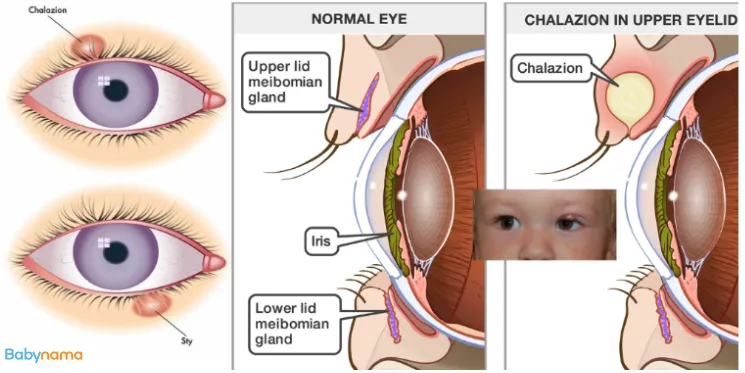
A chalazion is a small, painless lump or bump on the eyelid caused by a blocked oil gland (meibomian gland). These glands produce oil that keeps tears from evaporating too quickly.
Key Facts:
- Usually painless (unlike a stye which is painful)
- Slow-growing over days to weeks
- Not caused by infection (though can become infected)
- NOT contagious - your child can go to school
- Can occur on upper or lower eyelid
- May appear on one or both eyes Chalazion vs Stye - What’s the Difference?
| Feature | Chalazion | Stye (Hordeolum) |
|---|---|---|
| Pain | Usually painless | Painful |
| Location | Inner eyelid | Edge of eyelid |
| Cause | Blocked oil gland | Bacterial infection |
| Growth | Slow | Quick (1-2 days) |
| Appearance | Firm, round lump | Red, pus-filled bump |
| Contagious | No | No |
What Causes Chalazion in Children?
Main Cause:
Blockage of the meibomian (oil) glands in the eyelid. When the oil can’t drain, it backs up and forms a lump.
Risk Factors:
- Previous chalazion or stye (tendency to recur)
- Chronic eyelid inflammation (blepharitis)
- Skin conditions like seborrheic dermatitis
- Rosacea (more common in adults)
- Touching or rubbing eyes frequently
- Poor eyelid hygiene
- Thick, sluggish oil gland secretions In Babies and Toddlers:
Chalazions are less common in very young children. If your infant has an eyelid bump, it may be:
- Milia (tiny white bumps, harmless)
- Blocked tear duct (usually near nose corner)
- Stye (if painful) Consult your pediatrician for proper diagnosis in infants.
Symptoms to Watch For
Typical Chalazion Signs:
-
Small, firm, round bump on eyelid
-
Located away from the eyelid edge
-
Usually painless to touch
-
Eyelid may appear slightly swollen
-
May cause slight drooping if large
-
No redness or pus initially Signs of Infection (Needs Medical Attention):
-
Increasing redness and swelling
-
Pain or tenderness develops
-
Warmth in the area
-
Pus or discharge
-
Entire eyelid becomes swollen
-
Fever
Home Remedies (First-Line Treatment)
Warm Compresses - The Most Effective Treatment
How to do it:
-
Wet a clean cloth with warm (not hot) water
-
Test temperature on your wrist first
-
Place on closed eyelid for 10-15 minutes
-
Repeat 3-4 times daily
-
Use a clean cloth each time Why it works:
-
Warmth helps melt the blocked oil
-
Encourages drainage of the gland
-
Increases blood flow for healing For Children:
-
Make it a fun activity (story time, screen time during compress)
-
Use a warm, wet cotton ball for smaller children
-
Never force - gentle is key
-
For babies, use during feeding or sleep Gentle Massage (After Warm Compress):
-
Wash hands thoroughly
-
Using clean finger, gently massage the lump
-
Use circular motions toward the eyelid edge
-
Do for 1-2 minutes after warm compress
-
Never squeeze or try to pop the chalazion Eyelid Hygiene:
-
Clean eyelid margins with diluted baby shampoo on cotton pad
-
Use commercial eyelid wipes (available at pharmacies)
-
Remove any crusting gently
-
Teach child not to rub or touch eyes
When to See a Doctor
Seek Immediate Care If:
- Entire eyelid becomes very swollen and red (cellulitis risk)
- Child develops fever
- Vision seems affected
- Eye itself becomes red
- Severe pain develops
- Bump grows rapidly
If your child has a rapidly spreading red, swollen eyelid with fever, eye that bulges or cannot move, or sudden vision loss, treat it as an emergency — call 112 (national emergency) or 108 (ambulance), or go to the nearest hospital, as this can signal orbital cellulitis. Schedule Appointment If:
- No improvement after 2-3 weeks of warm compresses
- Chalazion is very large or affecting vision
- Multiple chalazions develop
- Chalazions keep recurring
- Becomes infected (red, painful, pus)
- You’re unsure if it’s a chalazion or something else
- Baby under 12 months has an eyelid bump
Treatment Options
Conservative Treatment (Most Cases):
- Warm compresses 3-4 times daily
- Eyelid hygiene
- Patience (may take 2-8 weeks to resolve)
- Most chalazions resolve without medical intervention Medical Treatment (If Needed):
| Treatment | When Used | How It Works |
|---|---|---|
| Antibiotic eye drops/ointment | If infected | Treats bacterial infection |
| Steroid eye drops | Persistent inflammation | Reduces swelling |
| Steroid injection | Large, stubborn chalazions | Reduces lump quickly |
| Incision and drainage | Very large, not resolving | Doctor drains contents surgically |
About Surgical Drainage:
- Done by ophthalmologist
- Quick procedure (15-20 minutes)
- Local anesthesia used
- Child may need sedation depending on age
- Recovery usually quick
- Small risk of recurrence
Prevention Tips
Daily Habits:
-
Teach child not to rub eyes
-
Keep hands clean (frequent handwashing)
-
Remove any eye makeup before bed (for older children)
-
Regular eyelid cleaning if prone to chalazions For Children with Recurring Chalazions:
-
Daily warm compresses (even when no chalazion present)
-
Regular eyelid massage
-
Consider omega-3 fatty acids (fish, flaxseed) for oil gland health
-
Address any underlying conditions (blepharitis, dry eye)
-
Consult ophthalmologist for evaluation When in School:
-
Child CAN attend school - not contagious
-
Remind them not to touch or rub the bump
-
Inform teacher if compress is needed during school
FAQs
Q: Mera bachche ki aankh par gaanth aa gayi hai - is this serious?
A: In most cases, no. A chalazion is a benign blocked oil gland that usually goes away on its own with warm compress treatment, and it’s not contagious. However, if it’s painful, the whole eyelid is swollen, or your child has fever, see a doctor promptly.
Q: How long does a chalazion take to go away?
A: With consistent warm compress treatment (3-4 times daily), most chalazions resolve in 2-4 weeks. Some may take up to 2-3 months. If there’s no improvement after 3-4 weeks of home treatment, consult an eye doctor.
Q: Can I send my child to school with a chalazion?
A: Yes! Chalazions are NOT contagious. Your child can attend school, play with friends, and participate in all activities. Just remind them not to touch or rub the bump, and ensure good hand hygiene.
Q: Is it safe to pop or squeeze a chalazion?
A: No, never try to squeeze or pop a chalazion! This can:
- Push infection deeper into the eyelid
- Cause scarring
- Make it worse
- Lead to serious eye infection Only an eye doctor should drain a chalazion if needed.
Q: Why does my child keep getting chalazions?
A: Some children are more prone to chalazions due to:
- Thicker oil gland secretions
- Chronic eyelid inflammation
- Habit of rubbing eyes
- Underlying skin conditions For recurrent chalazions, daily preventive care (warm compresses, eyelid hygiene) helps. Consult an ophthalmologist if they keep recurring.
Q: Can a chalazion affect my child’s vision?
A: Small chalazions don’t affect vision. However, a very large chalazion can press on the eyeball and temporarily cause blurred vision or astigmatism. This is another reason to see a doctor if the chalazion is large. Vision returns to normal once the chalazion resolves.
Q: What’s the difference between chalazion and stye in children?
A:
- Stye: Painful, on eyelid edge, caused by infection, develops quickly (1-2 days)
- Chalazion: Painless, away from edge, blocked gland (not infection), develops slowly A stye can sometimes turn into a chalazion if the infection resolves but the gland remains blocked.
This article was reviewed by Babynama Pediatricians. Last updated: January 2025
Disclaimer: This article is for general informational purposes and reflects Indian pediatric practice (IAP). It is not a substitute for an in-person evaluation. Always consult your pediatrician or ophthalmologist for diagnosis and treatment of your child. In an emergency, call 112 (national emergency) or 108 (ambulance), or go to your nearest hospital.
Need personalized guidance? Book a consultation with our pediatricians or explore our Care Plans for 24/7 expert support!
Related Tools
Continue with this topic
A useful next step
Browse baby skin-care articlesFind guidance on rashes, eczema, dryness and everyday baby skin care.Have a question about your little one?
Join our free community for live Q&A with MD pediatricians — no cost to join.
Join the free community