
Quick Answer: Is This Normal?
YES, a stork bite is a very common and harmless birthmark. If you’ve noticed pink or red patches on your newborn’s neck, forehead, or eyelids, these are usually stork bites (medical name: nevus simplex). Stork bites are seen in a large proportion of newborns — commonly cited as around 40% (Cleveland Clinic: Stork Bite/Nevus Simplex) — and are also lovingly called “angel kisses” when they appear on the face. A stork bite is flat, painless, and does not bother your baby. Most stork bites fade on their own without any treatment. If you are ever unsure whether a mark is a stork bite or something else, show it to your pediatrician.
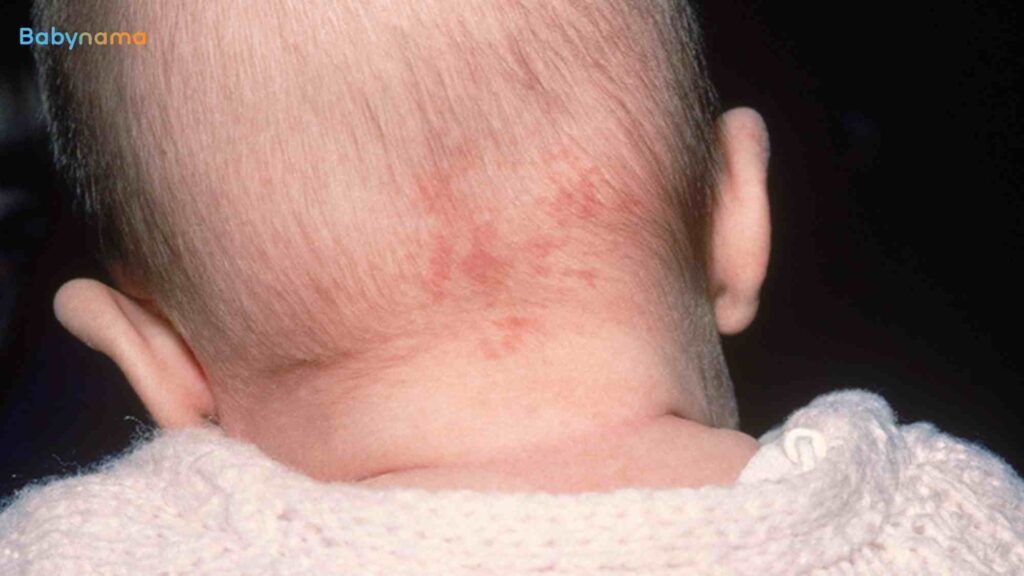
What Causes Stork Bites?
Stork bites (medical name: nevus simplex) are caused by stretched or dilated blood vessels (capillaries) under the skin. Here’s what you should know:
Why They Happen:
-
Blood vessels near the skin surface are slightly expanded
-
This is a normal variation during fetal development
-
They’re NOT caused by anything you did during pregnancy
-
Not related to delivery method (normal or cesarean)
-
Not a sign of any underlying health problem Where They Commonly Appear:
-
Back of the neck (most common - this is where the “stork carried the baby”)
-
Forehead or between the eyebrows
-
Eyelids
-
Upper lip
-
Lower back
-
Sometimes on legs or other body parts
What Do Stork Bites Look Like?
- Color: Light pink to reddish
- Texture: Flat - you cannot feel them as raised areas
- Size: Can be small spots or larger patches
- Shape: Often irregular, V-shaped, or butterfly-shaped on forehead
- Special feature: They may become MORE visible when baby cries, strains, or gets warm (this is normal!)
When Do Stork Bites Fade?
Good news for parents:
| Location | When They Usually Fade |
|---|---|
| Eyelids | Often the first to fade, usually by 1-2 years |
| Forehead | 1-2 years |
| Between eyebrows | 1-3 years |
| Back of neck | May persist into adulthood (but hidden by hair) |
Eyelid and facial stork bites fade earliest. A stork bite on the eyelid or forehead usually lightens steadily over the first year or two and is often gone completely by the time your child starts school. These facial “angel kisses” tend to be the ones parents ask about most, and they are also the ones most likely to disappear on their own.
Neck stork bites are the most persistent. The classic mark on the back of the neck — the “true” stork bite, where folklore says the stork carried the baby — often fades much more slowly and may never disappear entirely. This is completely normal and nothing to worry about: because it sits under the hairline, it is almost always hidden by hair as your child grows, so it stays out of sight even if it stays on the skin. Many adults have a neck stork bite without ever realising it.
The important point is that whether the mark fades in months or lasts for years, a stork bite stays flat, painless, and harmless throughout. Fading is gradual, not sudden — you may simply notice one day that the pink patch you used to see has quietly disappeared.
When to Worry (Red Flags)
Stork bites DO NOT need treatment. It helps to know the difference between normal stork-bite behaviour and the signs that deserve a closer look:
Normal for a stork bite (no action needed):
- Flat, so you cannot feel it when you run a finger over it
- Light pink to red, and briefly darker when baby cries, strains, or is warm
- Present from birth on the neck, forehead, or eyelids
- Slowly fades or stays the same, but never grows raised or lumpy
Worth showing your pediatrician (a different mark may be behind it):
- The mark becomes raised, bumpy, or has a different texture
- It grows significantly larger over time
- The color changes to a fixed deep red, purple, or blue that does NOT settle when baby is calm
- The mark bleeds or develops sores
- You notice new marks appearing after birth
- The birthmark has a rough, bumpy, or warty texture
- The mark is on one side of the face only, has a sharp, well-defined border, or does not cross the midline — see below
The key contrast: a stork bite is flat and only darkens for a moment during crying, then settles. A mark that is raised, keeps growing, or stays a deep purple even when your baby is relaxed is not behaving like a stork bite and should be examined in person. These could indicate a different type of birthmark that may need evaluation.
One distinction worth knowing: a true stork bite is midline and symmetric — right between the eyebrows, on both eyelids, or centred on the nape. A pink or red patch that is on one side of the face only, doesn’t cross the midline, or has a sharp, well-defined edge — especially on the forehead or upper eyelid — should be shown to your pediatrician even if it looks pale and unremarkable at first. Occasionally a mark in this exact location turns out to be a port-wine stain rather than a stork bite (see the comparison below); unlike a stork bite it does not fade, and when it involves the forehead/upper eyelid it sometimes needs an eye (glaucoma) and neurology check. This is uncommon, but it’s the one thing worth ruling out early rather than waiting to see if the mark fades.
Home Care for Baby’s Skin
While stork bites need no treatment, here’s how to care for your newborn’s delicate skin. For a full routine, see our guide to baby skincare tips, and for what else is normal in these early weeks, our newborn month-by-month guide (0-4 weeks) walks you through it.
General Skin Care:
-
Use lukewarm water for baths (gunguna pani)
-
Pat dry gently - don’t rub
-
Apply baby-safe moisturizer if skin is dry (Sebamed, Cetaphil Baby, Himalaya Baby Lotion)
-
Protect from direct sunlight What NOT to Do:
-
Don’t try to bleach or lighten the marks
-
Avoid applying any creams or oils specifically on the stork bite
-
Don’t scrub or rub the area
-
Don’t use home remedies or “totkas” to remove them - they fade naturally
Understanding Other Common Birthmarks
Since you’re learning about stork bites, here are other birthmarks you might see:
| Type | Appearance | What to Know |
|---|---|---|
| Mongolian spots | Blue-grey patches on lower back/buttocks | Common in Indian babies, usually fade by early childhood |
| Strawberry hemangiomas | Raised, red marks | Grow fast in the first weeks, then usually shrink over years. Most need no treatment, but show your doctor early if it’s near the eye, on the lip/nose, bleeding, or growing very fast — some need early medicine |
| Port wine stains | Deep red/purple flat marks, one-sided, sharp border | Don’t fade on their own, may need treatment; on the forehead/upper eyelid, mention to your pediatrician early |
| Cafe-au-lait spots | Light brown flat patches | Usually harmless; tell your doctor if there are six or more |
Expert Insight: Less is more with baby skin. Most newborn skin findings settle on their own with minimal intervention — when in doubt, ask your pediatrician rather than applying creams or remedies.
FAQs
Q: My baby’s stork bite turns darker when she cries. Is this dangerous?
A: Not at all — this is one of the most reassuring signs that a mark really is a stork bite. A stork bite is made of tiny dilated blood vessels just under the skin. When your baby cries, strains during potty, feeds hard, or gets warm, more blood flows through those vessels for a short while, so the pink patch looks brighter or a deeper red. The moment your baby settles and calms down, the blood flow eases and the mark fades right back to its usual soft colour. This come-and-go darkening is normal and expected; a genuine stork bite always returns to baseline once your baby is relaxed. The only time to check with your pediatrician is if a mark stays a fixed deep red or purple even when your baby is completely calm, or if it becomes raised — that pattern does not fit a stork bite. For everyday skin care around the mark, gentle routines like those in our baby skincare tips are all that is needed.
Q: Will the stork bite on my baby’s neck go away?
A: Neck stork bites often persist longer than facial ones and may remain into adulthood. However, they’re usually covered by hair and not noticeable. Many adults have them without knowing!
Q: Should I be worried that both my babies have stork bites?
A: Stork bites are so common (seen in roughly 40% of babies) that having them in multiple children is not unusual. It’s not a genetic condition to worry about.
Q: My mother-in-law says I should apply haldi paste to fade the mark. Should I?
A: Haldi (turmeric) paste is widely used in Indian homes but has no proven benefit for stork bites — please discuss with your pediatrician before applying anything. Substances like turmeric, lemon, or other home remedies can irritate a newborn’s delicate skin or cause allergic reactions. Stork bites fade on their own and need nothing applied to them.
Q: Is laser treatment needed for stork bites?
A: No, laser treatment is not recommended for typical stork bites since they fade on their own. Laser may be considered only for port wine stains (a different type of birthmark) that don’t fade.
Q: How do I know if it’s a stork bite or something else?
A: Stork bites are present at birth, flat (not raised), light pink/red in color, and typically located on the neck, forehead, or eyelids. If you’re unsure, show it to your pediatrician at your baby’s next checkup.
This article was reviewed by Babynama Pediatricians. Last updated: June 2026.
Disclaimer: This article is for general information for parents in India and is not a substitute for professional medical advice. Birthmarks can occasionally look alike, so have any new, changing, raised, or unusual mark examined in person. Always consult your pediatrician for diagnosis and care specific to your child.
Need personalized guidance? Book a consultation with our pediatricians or explore our Care Plans for 24/7 expert support!
Related Tools
Continue with this topic
A useful next step
Browse baby skin-care articlesFind guidance on rashes, eczema, dryness and everyday baby skin care.Have a question about your little one?
Join our free community for live Q&A with MD pediatricians — no cost to join.
Join the free community