Quick Answer
Your 34-month-old can hold a conversation. Not just answer questions, but go back and forth — 2-3 exchanges of real dialogue. “Did you have fun at the park?” “Yes! I went on slide.” “What else?” “I played with Arjun. He fell down.” This is a massive leap from the one-word answers of a year ago. They’re also forming real friendships — asking for specific children, worrying when friends are upset. Two months from three, they’re looking less like a toddler and more like a kid. Conversation, friendship, aur apne opinions — ab ye proper chhota insaan hai.
Development Milestones This Month
Milestones are ranges, not deadlines — healthy children reach these over a span of weeks to months. Use the “When to See a Doctor” red flags below as your guide, not the exact week your child ticks each box.
Movement & Motor Skills
- Stairs both ways — alternating feet going up AND down, with light support. Going down with alternating feet is the harder skill
- Tricycle steering — not just pedaling but navigating around objects. Spatial awareness while moving
- Stringing beads/macaroni — threading a string through holes requires concentration, bilateral coordination, and patience. Great activity for this age
- Fork use — can stab food with a fork and bring it to their mouth. Spoon is well-managed. Knife skills come much later
- Hopping — 2-3 hops on one foot. Unsteady but intentional
Communication
- Conversation — 2-3 exchanges back and forth. They ask, you answer, they respond. This is dialogue, not just Q&A
- 5-6 word sentences — “I don’t want to go bed”, “Can we go to the park?” Complex thoughts expressed in words
- Grammar improving — plurals, pronouns, prepositions (“in the box”, “on the table”, “under the bed”) are mostly correct
- Story retelling — with your help, they can retell a simple story from a favourite book. “What happened?” “The bear went in the cave.” “Then what?” “He found honey!” Sequencing and narrative skills
Social & Cognitive
- Friendship — actual preferences for specific children. “Can Aarav come play?” This is social selectivity — they’ve noticed personality differences in other kids and have favourites
- Empathy in action — not just noticing someone is sad, but responding: “Don’t cry, Ananya. It’s okay.” Attempting to comfort
- Simple game rules — can play a simple board game or take-turns game with reminders about the rules
- Waiting — brief patience is developing. They can wait 30 seconds to a minute for something, though more than that pushes it
- Two-category sorting — can sort blocks by BOTH color and shape. This requires holding two criteria in mind simultaneously
Feeding Guide
Eating Independence
At 34 months, your child should be eating meals independently. Fork, spoon, open cup — all in use. Some messiness is still normal, but they shouldn’t need you to feed them. If you’re still spoon-feeding every meal, start transitioning now — they need this skill for preschool.
Protein Adequacy
Indian vegetarian diets can run low on complete protein. Ensure your child gets:
- Dal + rice/roti at least once daily — this combination provides all essential amino acids
- Curd — 1 cup daily
- Paneer — 2-3 times per week
- Egg — daily if your family eats eggs. Excellent protein, iron, and B12
- Sprouts — moong, chana. Can be mixed into chaat or made into tikki
Fibre for Gut Health
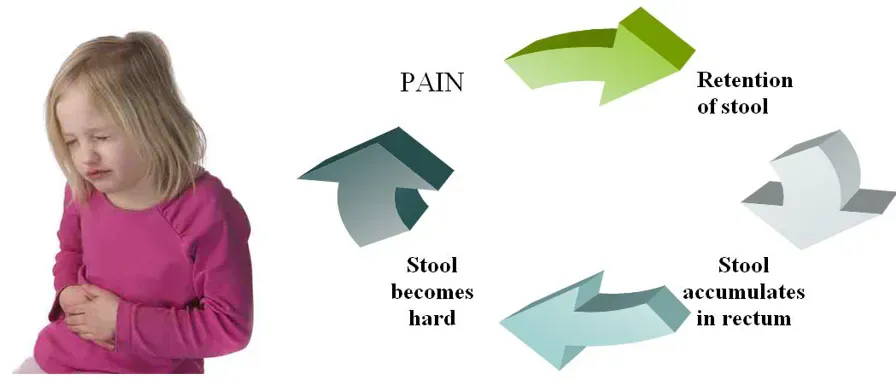
If constipation is an issue (very common in this age group):
- Whole fruits instead of juice (fibre intact)
- Ragi, whole wheat instead of maida
- Vegetables with every meal, even if only a tablespoon
- Adequate water — 4-5 small cups through the day
- Reduce excessive milk if it’s displacing food
Food Allergy Awareness
By 34 months, most common food allergies have already declared themselves. But if you notice consistent patterns — hives after certain foods, stomach pain after milk (could be lactose intolerance, different from allergy), eczema flares after eggs — mention it to your pediatrician. True food allergy requires proper testing, not elimination diets based on guesswork.
Sleep This Month
Total: 11-13 hours.
- Night sleep: 10-11 hours
- Nap: 1-1.5 hours, or quiet time if nap is being dropped
- Bedtime: 7:30-8:30 PM
Quiet Time Instead of Nap
If your child is dropping the nap, replace it with quiet time — 45-60 minutes in their room with books, puzzles, or quiet toys. This gives them (and you) a break, and the downtime is still restorative even without sleep. Don’t use screens for quiet time.
Common Sleep Issues at This Age
- Bedtime fears — dark, monsters, being alone. A night light and a brief reassurance routine help
- Getting out of bed — if they’re in a toddler bed, they may come out repeatedly. Walk them back calmly and silently. No conversation, no engagement. Boring is the goal
- Early waking — if they’re waking before 6 AM, ensure the room is dark and try a toddler clock that signals “okay to wake”
Common Concerns
Preschool Readiness
If you’re considering preschool around the third birthday, here’s what helps:
- Separation tolerance — can be away from you for 2-3 hours without distress
- Basic self-care — can eat independently, use the potty (or is in training), can ask for help
- Social interest — enjoys being around other children
- Follows simple instructions — can listen to and act on basic requests
- Emotional regulation — can calm down within 10 minutes
This doesn’t mean they need all of these perfectly. Preschool itself helps develop these skills. But if separation causes extreme distress lasting beyond 2-3 weeks of school, discuss with the teacher and pediatrician.
Potty Training — Final Stretch
Most children achieve daytime dryness by 36 months. At 34 months:
- Daytime accidents should be rare (a few per week at most)
- They should be telling you they need to go
- Pooping on the potty may still be inconsistent
- Nighttime dryness is a separate milestone — continue with a diaper at night
Sibling Jealousy
If a younger sibling is in the picture, 34 months is often when jealousy peaks. They understand that the baby gets more attention and they don’t like it. Dedicated one-on-one time, even 15-20 minutes daily, makes a big difference. “This is your special time with Mama/Papa.”
Speech Clarity
At 34 months, strangers should be able to understand roughly three-quarters of what your child says (full clarity to strangers is typically reached around age four — every child is a little different). Family members should understand nearly everything. If strangers consistently can’t understand your child, or if they’re leaving out consonants or substituting many sounds, a speech assessment is worthwhile.
When to See a Doctor
Contact your pediatrician if your 34-month-old:
- Does not speak in 3-4 word sentences
- Cannot have a simple conversation — no back-and-forth exchanges
- Strangers understand less than half of their speech
- Does not engage in cooperative play — no playing with other kids
- Cannot draw any recognizable shapes (not even a rough circle)
- Shows no interest in other children
- Has lost skills — language, motor, social
- No eye contact or response to name
- Extreme tantrums — lasting 25+ minutes, self-harm, extreme aggression
The third birthday is a key developmental checkpoint. Get ahead of it.
Aapke Sawaal
Mera bachcha 34 mahine ka hai — kya preschool bhejein?
Ye aapke bachche aur family par depend karta hai. Agar bachcha doosre bacchon mein interested hai, 2-3 ghante alag reh sakta hai, aur kuch basic self-care kar sakta hai — toh preschool try kar sakte hain. Play-based preschool dhundhein, academic pressure wala nahi. Pehle kuch din short visits karein. Agar 2-3 hafte baad bhi extreme crying ho aur bachcha settle na ho — toh 1-2 mahine wait karke phir try karein. Koi jaldi nahi hai.
Bachcha khaate waqt bahut slow hai — 1 ghanta lagata hai
Meals 20-30 minutes se zyada nahi hone chahiye. 30 minute ke baad plate hata do — bina kisi drama ke. “Khaana time khatam hua. Next snack time mein milega khaana.” Bachcha seekhega ki limited time mein khaana hai. Slow eating aksar hoti hai jab bachcha distracted hai (TV, toys) ya jab khaane mein interest nahi hai. Distractions hatao aur family ke saath baithke khaao — wo dekh ke seekhte hain.
Bachcha bahut zyada sharmata hai — doosron se baat nahi karta
Kuch bacche naturally shy hote hain — ye personality trait hai, problem nahi. Agar bachcha familiar logon ke saath normally baat karta hai aur sirf strangers ke saath hesitate karta hai — ye normal shyness hai. Force mat karo “uncle ko hello bolo” — ye anxiety badhata hai. Bachche ko observe karne do, comfort level badhne do. Lekin agar bachcha ghar par bhi kam bolta hai, ya familiar logon se bhi interact nahi karta — toh pediatrician se baat karein.
General information for Indian parents, not a substitute for your pediatrician. In an emergency, call 112 or 108.