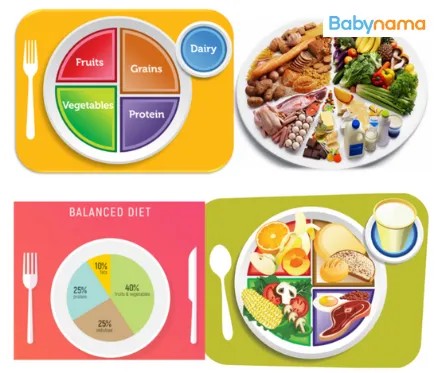
Quick Answer: What Is MyPlate?
MyPlate is the easiest way to plan your bachcha’s balanced meals - just imagine their thali divided into sections! Half the plate should be fruits and vegetables (sabziyan aur phal), one quarter should be grains (roti, chawal), and one quarter should be protein (dal, paneer, eggs, chicken). Add a small serving of dairy (doodh) on the side, and you have a complete, nutritious meal.
Unlike the old food pyramid that was confusing, MyPlate works perfectly with Indian food traditions. Your dadi’s wisdom of serving a balanced thali was right all along!
Why This Matters for Your Child
Good nutrition in childhood sets the foundation for lifelong health. A balanced diet helps your child:
| Benefit | How It Helps |
|---|---|
| Brain Development | Better focus in school, memory |
| Physical Growth | Strong bones, healthy weight |
| Immunity | Fewer infections, faster recovery |
| Energy | Active play, no afternoon fatigue |
| Mood | Better sleep, less irritability |
Children who eat balanced meals have better concentration, stronger immunity, and healthier growth patterns.
How to Build Your Child’s MyPlate (Age-Wise)
For Toddlers (1-3 Years)
Use a small katori as reference:
- Vegetables: 1 katori (mashed sabzi, soft cooked veggies)
- Fruits: 1 small fruit or half katori cut pieces
- Grains: Half roti or 2-3 tablespoons rice
- Protein: 2-3 tablespoons dal/paneer/egg
- Dairy: Half glass milk or small bowl dahi
For Preschoolers (3-5 Years)
- Vegetables: 1-2 katori (try different colors - palak, gajar, tamatar)
- Fruits: 1 medium fruit or 1 katori
- Grains: 1 roti or half bowl rice
- Protein: Half katori dal/beans/chicken
- Dairy: 1 glass milk or 1 bowl dahi
For School-Age Children (6-12 Years)
- Vegetables: 2 katori (include salad with meals)
- Fruits: 1-2 fruits daily
- Grains: 2 rotis or 1 bowl rice
- Protein: 1 katori dal + egg/paneer
- Dairy: 2 glasses milk or equivalent
For Teenagers (13+ Years)
- Vegetables: 2-3 katori (half plate at every meal)
- Fruits: 2-3 fruits daily
- Grains: 2-3 rotis or as per appetite
- Protein: 1.5 katori dal + additional protein source
- Dairy: 2-3 servings (crucial for bone development)
Indian Foods for Each Section
Vegetables (Sabziyan) - Half the Plate
- Green: Palak, methi, lauki, bhindi, beans
- Orange/Yellow: Gajar, pumpkin (kaddu), shakarkandi
- Others: Tamatar, gobhi, baingan, tori
Fruits (Phal)
- Local seasonal fruits: Kela, seb, santara, papita, aam, chiku, amrood
- Avoid packaged fruit juices - fresh fruit is always better
Grains (Anaaj) - Quarter Plate
- Whole wheat roti/chapati
- Brown rice or regular chawal
- Bajra, jowar, ragi rotis
- Daliya (broken wheat porridge)
- Poha, upma, idli (for breakfast)
Protein - Quarter Plate
- Dal (all varieties - moong, masoor, chana, toor)
- Rajma, chole, lobia
- Paneer, tofu
- Eggs (anda)
- Chicken, fish (for non-vegetarians)
- Nuts and seeds (for older children)
Dairy (On the Side)
- Full cream milk for children under 2
- Regular milk or toned milk for older kids
- Dahi, chaach, lassi
- Paneer (also counts as protein)
- Cheese in moderation
When to Worry (Red Flags)
Consult your pediatrician if your child:
- Refuses entire food groups for more than 2 weeks
- Shows no interest in food consistently
- Has very limited diet (eats only 5-10 foods)
- Not gaining weight appropriately for age
- Appears tired despite adequate sleep
- Has frequent constipation or digestive issues
- Shows signs of nutritional deficiency (pale skin, brittle nails, frequent infections)
Practical Tips for Indian Parents
Making Vegetables Fun
- Mix in favorites: Add palak to dal, gajar to paratha dough
- Fun shapes: Use cookie cutters for rotis
- Involve kids: Let them pick vegetables at the sabzi mandi
- Don’t force: Offer repeatedly without pressure (can take 15-20 exposures)
Smart Swaps
| Instead of | Try |
|---|---|
| Maida roti | Whole wheat roti |
| White bread | Multigrain bread |
| Packaged juice | Fresh fruit or nimbu pani |
| Chips | Roasted makhana or chana |
| Biscuits | Homemade mathri or khakhra |
Dealing with Picky Eaters
- Offer new foods alongside familiar favorites
- Make mealtimes stress-free - no TV, phones
- Eat together as a family when possible
- Be patient - taste preferences develop over time
- Try different preparations (raw gajar vs. gajar ka halwa)
FAQs
Q: My 3-year-old refuses vegetables. Is this normal?
A: Haan, bahut common hai! Toddlers often reject new foods initially. Keep offering small amounts without forcing. Try mixing vegetables into familiar foods like paratha or dal. Most children outgrow this phase by age 5-6.
Q: Should I give my child supplements if they don’t eat well?
A: Food-first approach is best. Supplements should only be given if your pediatrician recommends after checking for deficiencies. Focus on improving diet variety instead.
Q: Is it okay to give my child the same food daily if they like it?
A: While some repetition is fine, try to include variety over the week. Each food provides different nutrients. Even small changes help - different colored vegetables, different dals, etc.
Q: How do I know if my child is eating enough?
A: Check their growth chart with your pediatrician. If they’re following their growth curve, staying active, and generally healthy, they’re likely eating adequately. Don’t compare with other children.
Q: Can I replace milk with other calcium sources?
A: Yes, if needed. Dahi, paneer, ragi, sesame seeds (til), and green leafy vegetables provide calcium. For children with milk allergies, discuss fortified alternatives with your doctor.
Q: Is MyPlate suitable for vegetarian Indian families?
A: Yes, very much so! Indian vegetarian diets can be well balanced. Combine dal with rice/roti for complete protein. Include variety of dals, paneer, dahi, nuts, and seeds to meet protein needs.
This article was reviewed by Babynama Pediatricians.
This article is for general informational purposes for Indian parents and is not a substitute for professional medical advice. Portion sizes and food choices vary with each child’s growth, appetite, and any medical conditions — always discuss your child’s diet with your pediatrician. In an emergency, call 112 (national emergency) or 108 (ambulance), or go to your nearest hospital.
Need personalized guidance? Book a consultation with our pediatricians or explore our Care Plans for 24/7 expert support!
Related Tools
Continue with this topic