Quick Answer
Yes — research suggests that early exposure to dogs and cats may lower a child’s risk of developing allergies, rather than raise it. In one US study, babies exposed to two or more dogs or cats in their first year were up to 77% less likely to show allergic sensitisation by age 6–7 (Ownby DR et al., JAMA 2002;288:963–972). This is associational evidence from Western cohorts, not a guarantee for any individual baby. It may sound surprising if you’ve been told to keep pets away from babies, but early exposure may help train your baby’s immune system. If your child already has allergies, consult your pediatrician before getting a new pet. This is general information and not a substitute for advice from your pediatrician.
The Science Behind Pets and Allergies
What Research Shows
A long-term study from Detroit, Michigan tracked children from birth to 18 years and found:
| Finding | Reduction in Allergy Risk |
|---|---|
| Children with indoor dog in first year | Around half as likely to be sensitised to dogs (the effect was strongest in boys) |
| Children with indoor cat in first year | Roughly half as likely to be sensitised to cats |
| Children with two or more dogs/cats in first year | Up to 77% less likely to show allergic sensitisation by age 6–7 |
Sources: Ownby DR, Johnson CC, Peterson EL. JAMA 2002;288:963–972; Wegienka G et al., Clin Exp Allergy 2011 (18-year follow-up). These are US/Western cohorts — the mechanism is plausible but the exact effect size is study-specific, and these are not Indian data.
Key insight: The protective effect appears strongest when pet exposure happens in the first year of life. Later exposure doesn’t show the same benefit.
How Does This Work?
The “hygiene hypothesis” explains this phenomenon:
- Babies exposed to pets encounter more diverse bacteria and allergens early
- This “trains” the immune system to tolerate these substances
- The immune system becomes less likely to overreact later in life
- Exposure to pet dander, saliva proteins, and outdoor microbes helps build tolerance Small, early exposure may help the immune system learn to tolerate these substances. Important: this is associational evidence — it does not mean getting a pet will guarantee fewer allergies, and you should not acquire a pet solely for this reason.
Common Myths About Pets and Babies (Sach aur Jhooth)
Myth 1: “Pet ke baal se allergy hoti hai” (Pet hair causes allergies)
Truth: It’s not the hair (baal) itself! Allergies are caused by proteins found in:
- Pet dander (skin flakes)
- Saliva (thook)
- Urine (peshab) These proteins stick to furniture, clothes, and carpets for a long time.
Myth 2: “Baby ke liye pet rakhna dangerous hai”
Truth: With proper hygiene and supervision, pets can be safe AND beneficial for babies. Millions of Indian families successfully raise babies with pets.
Myth 3: “Agar family mein allergy hai toh pet mat rakho”
Truth: While genetics play a role, early pet exposure may actually help prevent allergies even in families with allergy history. However, consult your pediatrician first.
Myth 4: “Stray animals are dangerous, only pedigreed pets are safe”
Truth: Any well-vaccinated, healthy pet - whether adopted or pedigreed - can be safe for your family. But before close contact with an infant, any pet must have complete and current rabies/core vaccination and a vet health check. India is rabies-endemic: an unvaccinated stray is not the same as a vaccinated household pet. If a stray (or any animal of unknown vaccination status) bites, scratches, or licks broken skin near your baby, wash the area with soap and running water for 15 minutes and seek medical care the same day for rabies post-exposure treatment — rabies is almost always fatal once symptoms begin and must be prevented.
Age-Wise Guide for Pet Introduction
If You’re Planning a Baby (Pre-Pregnancy)
- Keep your existing pets - don’t give them away!
- Ensure pets are well-trained and vaccinated
- Establish boundaries (pet-free zones in nursery)
Newborn to 6 Months
- Never leave baby alone with pet
- Let pet sniff baby’s items to get familiar
- Maintain regular pet grooming
- Keep pet’s nails trimmed
- Wash hands before handling baby after petting
6-12 Months (Critical Window!)
- This is the most beneficial period for exposure
- Allow supervised interaction
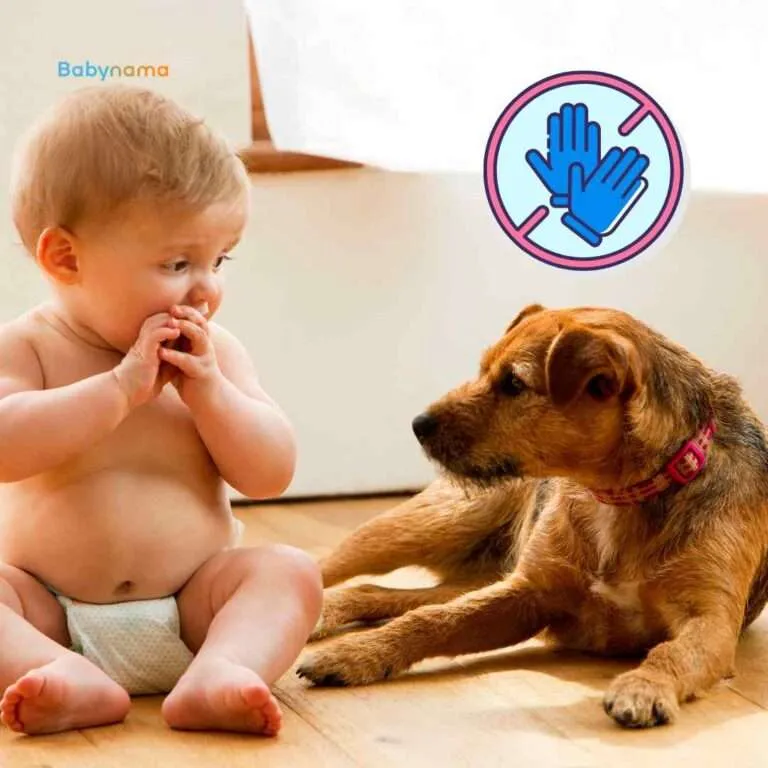
- Baby will naturally touch pet - wash hands after
- Don’t panic about pet hair on baby’s clothes
1 Year and Above
- Teach gentle touch (“pyaar se chhuo”)
- Supervise all interactions
- Teach child not to disturb eating/sleeping pet
- Include child in pet care activities
Popular Pets in Indian Homes: Safety Tips
Dogs (Kutte)
Best for families: Labrador, Golden Retriever, Beagle, Indian Pariah Dog
- Vaccinate against rabies, distemper, parvo (keep vaccination current)
- Deworm regularly as advised by your vet
- Daily brushing reduces dander
- Bathe as advised by your vet
Cats (Billi)
- Indoor cats pose fewer risks
- Keep litter box away from baby’s reach
- Pregnant women should avoid handling litter (toxoplasmosis risk)
- If a cat scratches or bites your baby, or licks an open wound, clean it and have a doctor review it
- Regular vaccination important
Birds (Pakshi)
- Keep cage clean daily
- Bird droppings can cause respiratory issues
- Keep in well-ventilated area away from baby’s room
Fish (Machli)
- Safest pet option for allergy-prone families
- No dander or fur concerns
- Great for sensory development
When to Worry (Red Flags)
Contact your pediatrician immediately if your child shows:
Respiratory symptoms:
-
Wheezing or difficulty breathing (saans mein taklif)
-
Persistent cough near pets
-
Runny or stuffy nose that doesn’t improve Skin symptoms:
-
Hives or rashes after pet contact
-
Itchy, red, watery eyes (aankhen laal aur kharish)
-
Eczema flare-ups 🚨 Call 112 (national emergency) or 108 (ambulance), or go straight to the nearest hospital, if you see: difficulty or noisy breathing; swelling of the face, lips or tongue; widespread hives with vomiting; pale, grey or blue skin; floppiness or unresponsiveness; or a seizure. These can be a severe allergic reaction (anaphylaxis). If an adrenaline auto-injector has been prescribed, use it first, then go. Do not wait for a clinic appointment.
What to Do If Your Child Has Pet Allergies
If Allergy Is Mild:
- Create pet-free zones (especially bedroom)
- Use HEPA air purifiers
- Wash hands after touching pets
- Vacuum frequently with HEPA filter
- Bathe pets weekly
- Consider antihistamines (consult doctor)
If Allergy Is Moderate to Severe:
- Consult allergist for testing
- Consider immunotherapy (allergy shots)
- May need to rehome pet in severe cases
- Don’t feel guilty - your child’s health comes first
Practical Tips for Indian Families
Budget-Friendly Pet Care:
- Local vet clinics offer affordable vaccination
- Homemade pet food (rice + chicken/fish) is nutritious
- Government animal hospitals provide free/low-cost treatment
- Adoption from shelters is better than buying
Managing Joint Family Concerns:
- Educate elders about research on pets and allergies
- Address hygiene concerns with regular cleaning
- Keep pets groomed to reduce dander in common areas
- Create compromise zones - pets allowed in some areas, not others
FAQs
Q: We’re expecting a baby. Should we give away our dog?
A: No! Research actually shows babies raised with dogs have fewer allergies. Keep your pet, but ensure it’s well-trained, vaccinated, and establish safe boundaries. Never leave baby and pet unsupervised together.
Q: My 6-month-old touched the pet and put hands in mouth. Should I worry?
A: Unless your baby shows allergic symptoms, this is actually fine and may even be beneficial! Just wash baby’s hands before meals. This early exposure is what builds immunity.
Q: Can we get a pet if our child already has eczema or asthma?
A: This requires careful consideration. Consult your pediatrician first. Some children with existing allergic conditions may worsen with pet exposure, while others are fine. An allergy test can help guide your decision.
Q: Is there a “hypoallergenic” dog breed that’s safer?
A: No dog is truly hypoallergenic. Breeds like Poodles or Shih Tzus may shed less, but they still produce dander and saliva proteins. However, lower-shedding breeds may cause fewer symptoms in mildly allergic individuals.
Q: My mother-in-law says pets and babies don’t mix. How do I convince her?
A: Share the research! In US studies, early pet exposure was linked to up to 77% lower allergic sensitisation. Millions of families worldwide safely raise babies with pets. Offer to maintain strict hygiene practices to address her concerns.
Q: At what age is it safest to introduce a pet?
A: The first year of life appears most beneficial for allergy prevention. However, any age can work with proper supervision. Getting a pet when your child can participate in care (age 5-6) also has benefits for teaching responsibility.
This article was reviewed by Babynama Pediatricians. Last updated: February 2026.
This article is general information for Indian parents, not a substitute for examination by your pediatrician. In an emergency, call 112 or 108.
Have questions about pets and your baby’s health? Chat with Babynama’s pediatricians on WhatsApp for personalized guidance.
Need personalized guidance? Book a consultation with our pediatricians or explore our Care Plans for 24/7 expert support!
Related Tools
Have a question about your little one?
Join our free community for live Q&A with MD pediatricians — no cost to join.
Join the free community