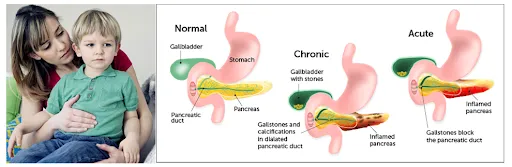
Quick Answer: Pancreatitis (inflammation of the pancreas) is rare in children but can be serious. Symptoms include severe abdominal pain (often after eating), nausea, vomiting, and fever. Causes include trauma, infections, medications, gallstones, and genetic factors. Treatment involves pain management, IV fluids, and dietary modifications. Most children recover fully with proper treatment. A low-fat diet is essential during recovery.
What Is Pancreatitis?
The pancreas is an organ behind the stomach that produces digestive enzymes and insulin. Pancreatitis occurs when these digestive enzymes activate inside the pancreas instead of in the intestines, causing inflammation and damage.
Types of Pancreatitis
| Type |
Characteristics |
| Acute |
Sudden onset, usually resolves with treatment |
| Recurrent acute |
Multiple episodes of acute pancreatitis |
| Chronic |
Long-term inflammation with permanent damage |
Causes in Children
Common Causes
| Cause |
Details |
| Trauma/injury |
Abdominal injury (bicycle handlebar, falls) |
| Infections |
Viral (mumps, hepatitis), bacterial |
| Medications |
Certain antibiotics, anti-seizure drugs |
| Biliary disease |
Gallstones, bile duct problems |
| Structural problems |
Pancreatic duct abnormalities |
Less Common Causes
| Cause |
Details |
| Genetic/hereditary |
Family history of pancreatitis |
| Autoimmune |
Body attacks the pancreas |
| Metabolic |
High triglycerides, high calcium |
| Cystic fibrosis |
Associated condition |
| Idiopathic |
Unknown cause (up to 30% of cases) |
Symptoms of Pancreatitis
Primary Symptoms
| Symptom |
Characteristics |
| Abdominal pain |
Severe, upper abdomen, radiates to back |
| Pain after eating |
Often worse with fatty foods |
| Nausea |
Persistent |
| Vomiting |
May not relieve pain |
| Fever |
Low to moderate |
| Abdominal tenderness |
Painful when touched |
Other Signs
| Sign |
What It Indicates |
| Loss of appetite |
Body’s response to inflammation |
| Bloating |
Digestive disruption |
| Rapid heart rate |
Pain, inflammation |
| Jaundice |
If bile duct is affected |
| Oily stools |
If fat absorption is affected |
Pain Patterns
| Pattern |
What to Notice |
| Location |
Upper abdomen, below breastbone |
| Radiating |
May spread to back |
| Position |
Often feels better when leaning forward |
| Timing |
Worse after eating |
| Severity |
Often severe, constant |
When to See a Doctor
| Warning Sign |
Action |
| Severe abdominal pain |
Go to the nearest hospital |
| Pain that won’t stop |
Go to the nearest hospital |
| Vomiting that won’t stop |
Go to the nearest hospital |
| Signs of dehydration |
Seek immediate care |
| Fever with abdominal pain |
See doctor same day |
| Abdominal trauma |
Get evaluated urgently |
🚨 For a medical emergency, call 112 (national emergency) or 108 (ambulance), or go to the nearest hospital right away. Severe, unrelenting abdominal pain in a child should never be left to “wait and watch.”
Note: In a baby under 3 months, any fever of 100.4°F (38°C) or higher is a same-day emergency — take the baby to a doctor or hospital immediately, regardless of other symptoms.
Diagnosis
Tests Used
| Test |
Purpose |
| Blood tests (amylase, lipase) |
Elevated in pancreatitis |
| Complete blood count |
Check for infection |
| Liver function tests |
Rule out liver/bile problems |
| Ultrasound |
Visualize pancreas, check for gallstones |
| CT scan |
Detailed view of pancreas |
| MRCP |
Detailed view of pancreatic/bile ducts |
What Results Show
| Finding |
Meaning |
| High lipase |
Strong indicator of pancreatitis |
| High amylase |
Supports diagnosis |
| Swollen pancreas on imaging |
Confirms inflammation |
| Fluid collections |
Severe inflammation |
Treatment
Hospital Treatment (Acute Pancreatitis)
| Treatment |
Purpose |
| IV fluids |
Hydration, rest for pancreas |
| Pain medication |
Comfort |
| NPO (nothing by mouth) |
Initially, to rest pancreas |
| Gradual diet introduction |
As pain improves |
| Treat underlying cause |
Infection, gallstones, etc. |
Mild Cases
| Management |
Details |
| Rest |
Reduce activity |
| Clear liquids first |
Gradual diet advancement |
| Low-fat diet |
Essential |
| Pain management |
As needed |
| Follow-up |
Monitor recovery |
Diet for Pancreatitis
Acute Phase (During Episode)
| Phase |
Diet |
| Initial |
NPO (nothing by mouth) with IV fluids |
| Improvement |
Clear liquids |
| Advancing |
Low-fat, soft foods |
| Recovery |
Gradual return to normal (low-fat) |
Foods to INCLUDE
| Food Category |
Examples |
| Lean proteins |
Skinless chicken, fish, egg whites |
| Low-fat dairy |
Skim milk, low-fat yogurt |
| Fruits |
All fruits (fresh, canned in juice) |
| Vegetables |
All vegetables (not fried) |
| Whole grains |
Rice, chapati (no oil), oats |
| Legumes |
Dal, beans (not fried) |
Foods to AVOID
| Food Category |
Examples |
| Fried foods |
Pakodas, french fries, fried snacks |
| Fatty meats |
Red meat, sausages |
| Full-fat dairy |
Whole milk, cheese, butter |
| Oily foods |
Parathas with ghee, rich curries |
| Sweets |
Heavy mithai, cream-based desserts |
| Junk food |
Chips, fast food |
Cooking Methods
| Do |
Avoid |
| Bake |
Deep fry |
| Steam |
Pan fry with oil |
| Boil |
Sauté in butter |
| Grill |
Use heavy cream |
| Roast |
Add excess oil |
Long-Term Diet Guidelines
Daily Recommendations
| Guideline |
Details |
| Fat limit |
Keep fat low — the exact daily amount depends on your child’s age and weight, so ask your child’s doctor or a pediatric dietitian |
| Small meals |
5-6 smaller meals better than 3 large |
| Hydration |
Plenty of water |
| Fiber |
Helps digestion |
| Avoid triggers |
Note foods that cause symptoms |
Sample Meal Plan
| Meal |
Low-Fat Options |
| Breakfast |
Oatmeal with fruit, toast with jam |
| Mid-morning |
Fruit + low-fat yogurt |
| Lunch |
Rice + dal + steamed vegetables |
| Snack |
Roti with vegetable curry (no oil) |
| Dinner |
Grilled chicken/fish + salad + rice |
Recovery and Follow-Up
Monitoring
| What to Watch |
Why |
| Pain recurrence |
May indicate incomplete recovery |
| Weight |
Ensure adequate nutrition |
| Stool changes |
Fat malabsorption signs |
| Growth |
In chronic cases |
Preventing Recurrence
| Strategy |
Details |
| Maintain low-fat diet |
Long-term |
| Identify triggers |
Avoid specific foods that cause symptoms |
| Treat underlying causes |
Gallstones, infections |
| Regular follow-up |
With a pediatric gastroenterologist |
| Genetic testing |
If recurrent, consider hereditary causes |
Frequently Asked Questions
Q: How long does pancreatitis last in children?
A: Mild acute pancreatitis usually resolves within 1-2 weeks with proper treatment. More severe cases may take longer. Chronic pancreatitis requires long-term management.
Q: Can my child eat normally after recovery?
A: A low-fat diet is usually recommended for several weeks to months after an episode. Your doctor will advise when and how to gradually return to normal eating, though avoiding very high-fat foods long-term is often recommended.
Q: Is pancreatitis in children hereditary?
A: Some forms are hereditary, especially if there’s family history of pancreatitis. Genetic testing may be recommended for children with recurrent pancreatitis or early-onset chronic pancreatitis.
Q: Will my child need surgery?
A: Most children with pancreatitis don’t need surgery. Surgery may be needed if there are gallstones, pseudocysts, or structural problems requiring intervention.
Q: Can pancreatitis affect my child’s growth?
A: Acute pancreatitis usually doesn’t affect growth once recovered. Chronic pancreatitis can affect nutrition absorption and may impact growth if not properly managed.
Key Takeaways
- Pancreatitis is rare but serious in children
- Severe abdominal pain is the main symptom
- Causes vary - trauma, infections, medications, genetic
- Treatment is supportive - fluids, pain control, rest
- Low-fat diet is essential during and after recovery
- Most children recover fully with proper care
- Seek immediate care for severe abdominal pain
- Follow-up is important to prevent recurrence
This article was reviewed by Babynama Pediatricians. Last updated: January 2026
This article is for general information for parents in India and does not replace a consultation with your child’s doctor. Pediatric pancreatitis needs evaluation and management by a pediatrician or pediatric gastroenterologist; any diet plan and follow-up should be guided by your child’s treating team. In an emergency, call 112 (national emergency) or 108 (ambulance), or go to the nearest hospital.
Need personalized guidance? Book a consultation with our pediatricians or explore our Care Plans for 24/7 expert support!
Have a question about your little one?
Join our free community for live Q&A with MD pediatricians — no cost to join.
Join the free community