Last updated: January 2026
Quick Answer
PKU (Phenylketonuria) screening is a simple blood test done on all newborns within 24-72 hours of birth to detect a rare but serious metabolic disorder. While PKU is uncommon in India, early detection through this test can prevent severe intellectual disability and developmental problems. If your hospital performed a heel prick test on your baby, PKU screening was likely included.
What is PKU?
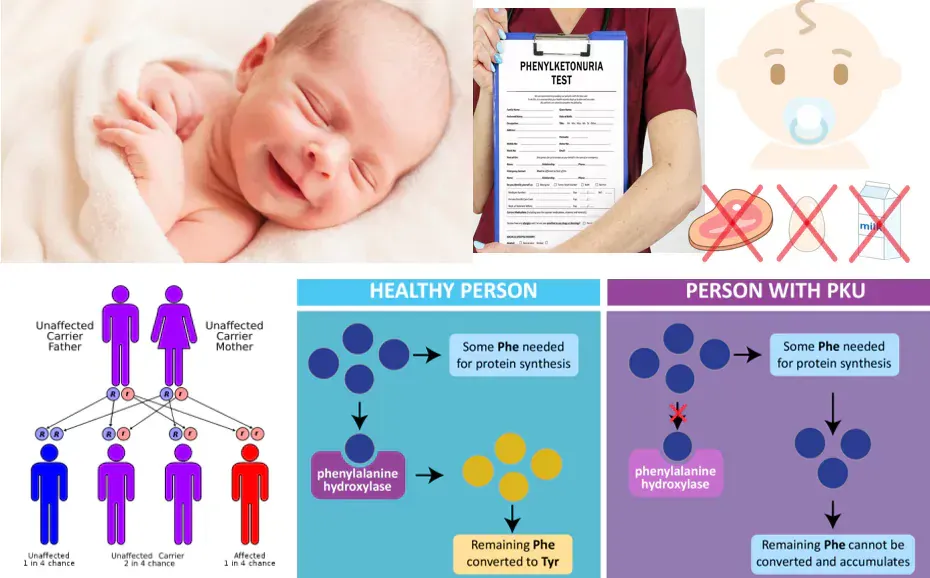
PKU (Phenylketonuria) is a rare genetic condition where the body cannot break down an amino acid called phenylalanine (Phe), which is found in most protein-containing foods. When Phe builds up in the blood, it can damage the brain and nervous system.
Reassuring fact: PKU is uncommon, and reliable India-wide figures are limited because universal newborn screening is not yet in place. Because it is treatable, screening matters regardless of how rare it is: when treatment is started early (within the first 1–2 weeks) and the diet is maintained for life, most children with PKU grow and develop normally.
Why PKU Screening is Important
Without treatment, PKU can cause:
-
Intellectual disability
-
Developmental delays
-
Behavioral problems
-
Seizures
-
Skin problems With early detection and treatment:
-
When treatment is started early (within the first 1–2 weeks) and the diet is maintained for life, most children with PKU grow and develop normally
-
Most can attend regular school and lead normal lives
-
Outcomes depend on how early treatment starts and lifelong adherence to the diet (per AAP/ACMG newborn-screening ACT sheets and the NIH PKU consensus)
Understanding the PKU Test
What is the Test?
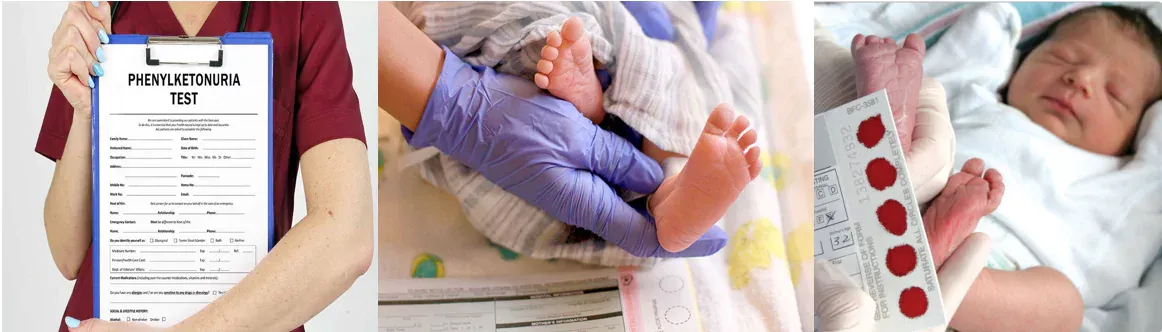
The PKU test is part of newborn screening (often called the “heel prick test” or “Guthrie test”).
How it’s done:
- A few drops of blood are collected from baby’s heel
- Blood is placed on special filter paper
- Sent to laboratory for testing
- Results usually available in a few days
When is it Done?
- Timing: 24-72 hours after birth
- Why this timing: Baby needs to have started feeding (maa ka doodh or formula) so phenylalanine is in their system
- If done too early: May need to repeat the test
Where it Happens
- Most major hospitals include PKU in newborn screening
- In India, coverage varies - ask your hospital if it’s included
- Some states have mandatory newborn screening programs
- Private labs can also perform the test if needed
Understanding Test Results
Cutoff values vary by lab and screening program (programs commonly use a 2, 3, or 4 mg/dL screen-positive threshold). Only your doctor can interpret your baby’s result.
Normal Result
- Phenylalanine level in the normal range (often below about 2 mg/dL)
- No further testing needed
- Baby does not have PKU
Elevated Result
- Phenylalanine level elevated (often above about 4 mg/dL) — needs repeat/confirmatory testing
- Don’t panic - may be a false positive
- Repeat testing will be done
- Confirmatory tests if still elevated
- A confirmed or strongly elevated result needs urgent referral to a metabolic specialist within days, not weeks — treatment delay directly worsens the neurological outcome.
False Results
- False positive: Test shows elevated when baby is fine (more common)
- False negative: Test shows normal when baby has PKU (rare)
- Reasons: Premature birth, early testing, feeding issues, certain medications
If Your Baby is Diagnosed with PKU
Step 1: Work with a Specialist Team
You’ll need:
- Pediatric metabolic specialist
- Dietitian experienced in PKU
- Regular follow-up care
Step 2: Start Special Diet Immediately
For Breastfeeding Babies:
-
Maa ka doodh is NOT completely stopped
-
Breast milk is lower in phenylalanine than standard formula, so breastfeeding can often continue — but ONLY in measured amounts alternated with special Phe-free formula, exactly as your metabolic dietitian prescribes
-
Never breastfeed on demand without this guidance — un-measured breastfeeding is harmful in PKU
-
Dietitian will guide exact proportions Formula-Fed Babies:
-
Special PKU formula replaces regular formula
-
Special low-phenylalanine medical formulas and low-protein staples are available in India on prescription/through metabolic centres; your metabolic team will arrange the specific product. These are not standard retail items.
Step 3: Lifelong Dietary Management
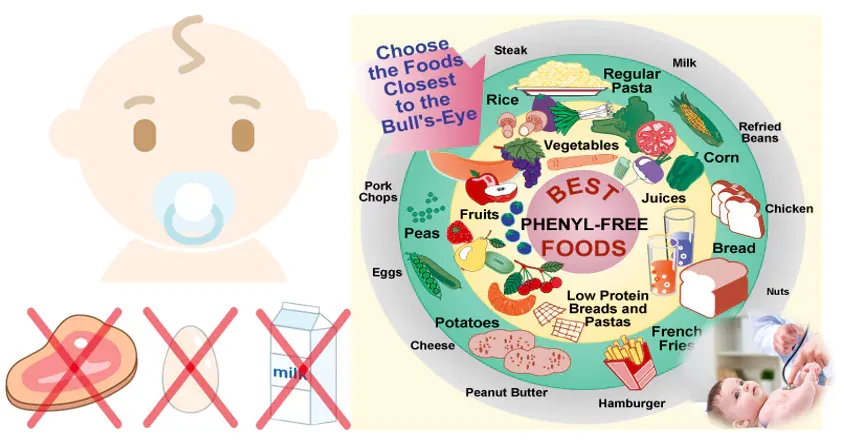
Foods to Avoid (High Phenylalanine):
-
High-protein foods: meat, fish, eggs, cheese
-
Milk and dairy products (regular amounts)
-
Nuts and legumes
-
Soy products
-
Aspartame (artificial sweetener) Foods Generally Allowed:
-
Most fruits and vegetables
-
Special low-protein breads and pasta
-
Fats and oils
-
Sugar, jaggery (in moderation) Indian Context:
-
Dal and pulses are restricted
-
Paneer and milk products limited
-
Rice and roti allowed with guidance
-
Special low-protein atta available
Step 4: Regular Monitoring
- Frequent blood tests to check Phe levels
- Adjustments to diet as child grows
- Monitor growth and development
- School coordination for meals
Tips for Success
- Stay informed: Learn about PKU from reliable sources
- Connect with others: Find PKU support groups in India
- Plan meals carefully: Work closely with your dietitian
- Be consistent: PKU management requires lifelong commitment
- Celebrate small wins: With early, consistent treatment most children with PKU lead healthy lives
- Educate others: Family, school, caregivers need to understand
Common Mistakes to Avoid
- Ignoring newborn screening - Always ask if PKU was tested
- Delaying treatment - Early intervention is crucial
- Complete protein restriction - Some protein is needed for growth
- Relying on internet alone - Work with specialists
- Giving up - Treatment works when followed consistently
- Not checking labels - Phenylalanine hides in many foods
When to Seek Help
Contact your pediatrician immediately if:
-
Test results show elevated phenylalanine
-
Baby is showing developmental concerns
-
You’re unsure if newborn screening was done
-
Family history of PKU or metabolic disorders For ongoing PKU management:
-
Regular follow-up with metabolic specialist
-
Immediate consultation if dietary slip-ups occur
-
Before starting any new medications or supplements
Frequently Asked Questions
Q: Kya PKU test sab hospitals mein hota hai?
A: Not all hospitals in India routinely perform PKU screening. Major private hospitals usually include it in newborn screening packages. Government hospitals in some states have screening programs. Ask your hospital specifically if PKU was included. If not done, you can get it from a private lab within the first week.
Q: Mera baby PKU positive aaya - ab kya karun?
A: First, don’t panic — but act today. Contact your doctor the same day to arrange confirmatory testing; a positive screening result needs confirmation before any feeding decisions are changed. Many initial positive results turn out to be false positives. Your doctor will order repeat testing. If confirmed, you’ll be referred to a metabolic specialist within days — not weeks — because early treatment protects your baby’s brain. With early, consistent management, most children with PKU develop normally.
Q: Can I breastfeed if my baby has PKU?
A: Often yes — but only under guidance. Breast milk is lower in phenylalanine than standard formula, so breastfeeding can usually continue, but ONLY in measured amounts alternated with special Phe-free formula, exactly as your metabolic dietitian prescribes. Never breastfeed on demand without this guidance — un-measured breastfeeding is harmful in PKU. Your dietitian will tell you exactly how much breastfeeding and formula to give.
Q: Is PKU curable?
A: PKU is a lifelong genetic condition and cannot be cured. However, it is highly manageable with strict, lifelong dietary control. Most children who follow the diet properly grow and develop normally and lead healthy lives, though outcomes depend on how early treatment starts and how consistently the diet is maintained. Some medications are now available that may help increase tolerance to phenylalanine in selected patients.
Q: How common is PKU in India?
A: PKU is uncommon, and reliable India-wide figures are limited because universal newborn screening is not yet in place — so the exact numbers are genuinely unknown. Even though it is uncommon, screening matters because early, consistent treatment can prevent most of the devastating effects of untreated PKU.
Q: Will my next baby also have PKU?
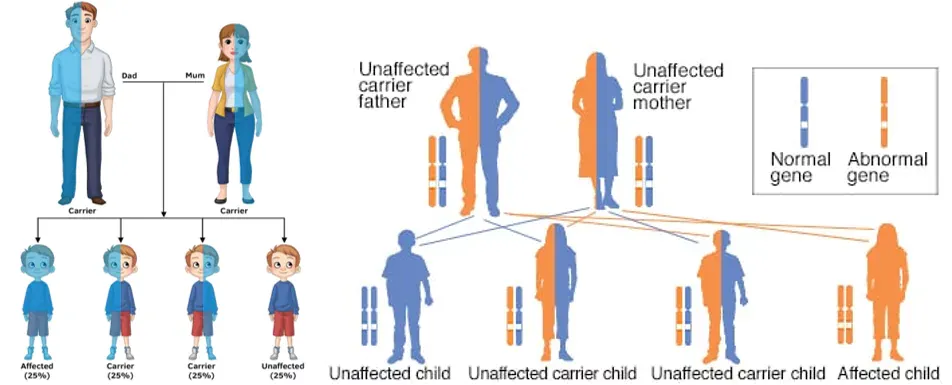
A: PKU is inherited in an autosomal recessive way: both parents must carry the PKU gene for a child to be affected, and if one child has PKU there is a 25% (1 in 4) chance with each pregnancy that another child will also have it (source: NIH MedlinePlus Genetics). Genetic counselling is recommended for future pregnancies. Separately, a mother who herself has PKU needs strict phenylalanine control before and during pregnancy to protect the baby (maternal PKU syndrome) — discuss this with a metabolic specialist before planning a pregnancy.
This article was reviewed by Babynama Pediatricians. PKU is uncommon but serious — early detection through newborn screening, followed by early and consistent treatment, gives most children the best chance to develop normally.
This article is for general information only and is not a substitute for diagnosis or advice from your pediatrician or a metabolic specialist. Diet and dosing for PKU must be individualised by a qualified metabolic team. In an emergency, call 112 or 108.
Need personalized guidance? Book a consultation with our pediatricians or explore our Care Plans for 24/7 expert support!
Continue with this topic
A useful next step
Browse child-development articlesExplore milestones, movement, speech, behaviour and learning across childhood.Have a question about your little one?
Join our free community for live Q&A with MD pediatricians — no cost to join.
Join the free community