
Why is my child is not Burping? Possible causes and remedies
Quick Answer
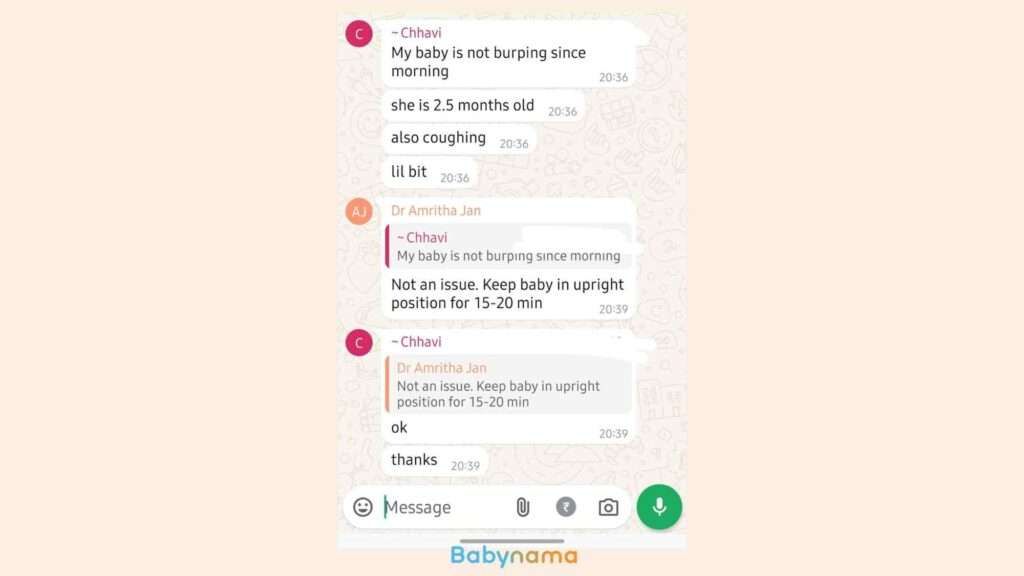
If your baby doesn’t burp, don’t panic - not every baby needs to burp after every feed! Some babies swallow less air and simply don’t need to burp much. However, if your baby seems uncomfortable, fussy, or gassy after feeds, trying different burping techniques can help. Most burping difficulties are normal and resolve with simple adjustments.

Why Burping Matters
What Burping Does:
-
Releases swallowed air
-
Reduces gas discomfort
-
Prevents spit-up/reflux
-
Helps baby feed more comfortably
-
Clears space in tummy for more milk Air Swallowing Happens During:
-
Breastfeeding (improper latch)
-
Bottle feeding (fast flow)
-
Crying before/during feeds
-
Feeding too quickly
-
Improper feeding position
What Causes Difficulty Burping
Common Reasons:
| Cause | Explanation |
|---|---|
| Not much air swallowed | Some babies just don’t swallow much air |
| Wrong burping position | Position may not be effective |
| Air trapped deep | May take time to come up |
| Too soon after feeding | Need to wait for air to rise |
| Baby too relaxed/sleepy | Muscle tone affects burping |
| Feeding position | Upright feeding = less air |
Age Factors:
- Newborns: Need burping most often
- 3-4 months: Getting better at feeding
- 6+ months: May not need burping
- Breastfed vs bottle: Different needs
Symptoms to Watch For
Signs Baby Needs to Burp:
-
Squirming during feeds
-
Pulling off breast/bottle
-
Fussiness during/after feeding
-
Arching back
-
Clenched fists
-
Drawing legs up Signs of Trapped Gas:
-
Crying after feeds
-
Hard, distended tummy
-
Passing lots of gas
-
Restlessness
-
Difficulty settling
Effective Burping Techniques
Position 1: Over the Shoulder
How To:
- Hold baby upright against your chest
- Baby’s chin rests on your shoulder
- Support bottom with one hand
- Gently pat/rub back with other hand
- Use a burp cloth on your shoulder
Position 2: Sitting on Lap
How To:
- Sit baby on your lap
- Support chin and chest with one hand
- Lean baby slightly forward
- Pat/rub back gently
- Keep baby’s head above chest
Position 3: Face Down on Lap
How To:
- Lay baby face down across your lap
- Support head (higher than chest)
- Pat/rub back gently
- Keep cloth ready for spit-up
Helpful Tips:
- Try different positions
- Pat firmly but gently
- Rub in circular motions
- Wait 5-10 minutes if no burp
- Move baby slightly
- Try during and after feeds
Home Remedies
During Feeding:
-
Ensure good latch (breastfeeding)
-
Keep bottle tilted (avoid air in nipple)
-
Use slow-flow nipple
-
Take breaks mid-feed
-
Keep baby semi-upright After Feeding:
-
Keep upright for 15-20 minutes
-
Gentle tummy massage (clockwise)
-
Bicycle legs gently
-
Try different positions
-
Don’t bounce or shake General Tips:
-
Feed before baby is very hungry (less crying = less air)
-
Calm feeding environment
-
Don’t overfeed
-
Use anti-colic bottles if bottle feeding
-
Check bottle nipple size
When Baby Doesn’t Need to Burp
It’s Okay If:
-
Baby seems comfortable after feeds
-
No fussiness or crying
-
Tummy is soft
-
Sleeping well after feeds
-
Growing and gaining well
-
No excessive spit-up No Burp Needed If:
-
Baby fell asleep comfortably
-
Tried for 10-15 minutes
-
No signs of discomfort
-
Baby is content
When to See a Doctor
Seek immediate care if:
-
Projectile vomiting
-
Blood in spit-up
-
Not gaining weight
-
Refusing feeds
-
Signs of pain (screaming)
-
Fever with feeding issues
-
Green vomit Schedule appointment if:
-
Consistent feeding difficulties
-
Excessive spit-up every feed
-
Baby seems uncomfortable frequently
-
Concerns about weight gain
-
Trying everything with no improvement
Prevention
Reduce Air Swallowing:
- Good latch for breastfeeding
- Proper bottle angle
- Appropriate nipple flow
- Feed before extreme hunger
- Calm feeding environment
- Take feeding breaks Anti-Colic Options:
| Product | How It Helps |
|---|---|
| Anti-colic bottles | Reduce air intake |
| Slow-flow nipples | Slower feeding, less air |
| Gripe water | May help some babies |
| Tummy time | Helps pass gas |
| Baby massage | Aids digestion |
Age-Specific Guidance
Newborns (0-2 months):
-
Burp every 2-3 oz (bottle) or breast switch
-
Try burping mid-feed always
-
Need burping most frequently
-
Takes time to learn feeding 2-4 Months:
-
May need less frequent burping
-
Better at feeding
-
Still benefit from burping
-
May burp on their own 4-6 Months:
-
Often don’t need burping
-
Can hold head well
-
Sitting helps air escape
-
Watch for individual needs 6+ Months:
-
Usually don’t need burping
-
Eating solids changes things
-
Can sit independently
-
Air escapes naturally
Frequently Asked Questions
Q: Mera baby burp nahi karta - is this a problem?
A: Not necessarily! If your baby is comfortable, feeding well, not excessively fussy, and gaining weight appropriately, they may just not need to burp much. Some babies swallow less air, especially breastfed babies with good latch. Try burping for 5-10 minutes, but if no burp comes and baby is happy, it’s okay to stop.
Q: How long should I try to burp my baby?
A: Try for 5-10 minutes. If no burp comes and baby seems comfortable, you can stop. Don’t stress! If baby seems uncomfortable, try different positions. Sometimes lying baby down for a minute and picking up again helps trapped air rise.
Q: Bottle-feeding mein zyada burping chahiye kya?
A: Often yes, because bottles can introduce more air than breastfeeding. Tips: use anti-colic bottles, slow-flow nipples, keep bottle tilted so nipple is full of milk (not air), take breaks to burp, and don’t let baby finish bottle too quickly. Burp after every 2-3 oz.
Q: Baby so gaya hai after feeding - should I wake to burp?
A: If baby fell asleep peacefully and seems comfortable, you don’t have to wake them to burp. Lay them on their back (safe sleep position) and watch for discomfort. If they wake fussy, then burp. If they continue sleeping well, the burp can wait or may not be needed.
Q: Gripe water safe hai kya for burping problems?
A: Gripe water is commonly used in India for gas and colic. While generally considered safe, evidence for effectiveness is limited. Check that the brand is alcohol-free and age-appropriate. Consult your pediatrician before using, especially for babies under 1 month. It’s not a substitute for proper feeding techniques.
This article was reviewed by a pediatrician. Last updated: January 2025
Need personalized guidance? Book a consultation with our pediatricians or explore our Care Plans for 24/7 expert support!
Need Expert Breastfeeding Support?
Get personalized guidance from certified lactation consultants.
Explore Breastfeeding Program