
Quick Answer: The “best” breastfeeding position is the one that works for YOU and your baby! Different positions suit different situations - cradle hold for everyday feeding, football hold after C-section, side-lying for night feeds, and laid-back for newborns. The key is that both you and baby are comfortable, baby has a deep latch, and you’re not straining your back, neck, or arms. Try different positions until you find what feels right!
Before You Begin: Getting Ready
Essential Setup
What to have nearby:
-
Pillows (regular pillows work fine!)
-
Water bottle (you’ll get thirsty)
-
Burp cloth or muslin
-
Comfortable seating
-
Phone/remote if needed Body positioning basics:
-
Sit or recline comfortably
-
Support your back
-
Bring baby TO breast (don’t lean forward)
-
Baby’s ear, shoulder, and hip in a line
-
Baby’s tummy facing your tummy
Tip for new mothers: You don’t need expensive nursing pillows. Regular pillows or folded blankets work perfectly to support your arms and baby!
The 5 Best Breastfeeding Positions
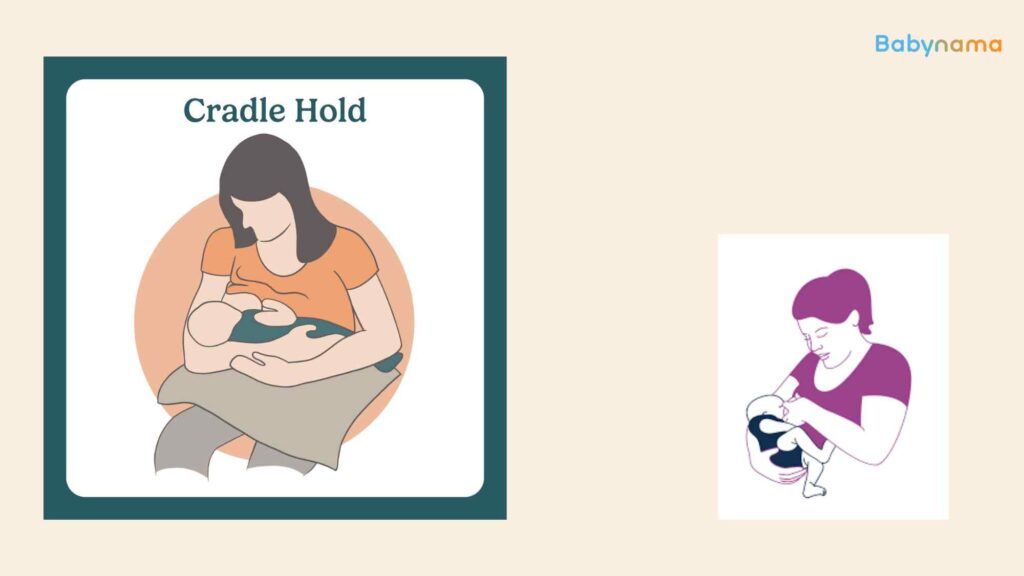
1. Cradle Hold (Godi Mein)
Best for: Everyday feeding, babies of any age, feeding in public

Step-by-step:
-
Sit comfortably in a chair with armrests (if available)
-
Hold baby in the arm on the SAME side as the breast you’re feeding from
-
Right arm for right breast
-
Left arm for left breast
-
Rest baby’s head in the crook of your elbow
-
Baby’s body faces yours (tummy to tummy)
-
Support your breast with the opposite hand in a C or U shape
-
Guide baby’s mouth to nipple
-
Use a pillow on your lap to raise baby if needed Tips:
-
Don’t lean forward - bring baby UP to your breast
-
Baby’s head should be in line with body, not turned
-
Rest your arm on a pillow or armrest
-
Works well with a baby carrier/sling Why mothers love it:
-
Most natural-feeling position
-
Can feed almost anywhere
-
Good for older babies who latch easily
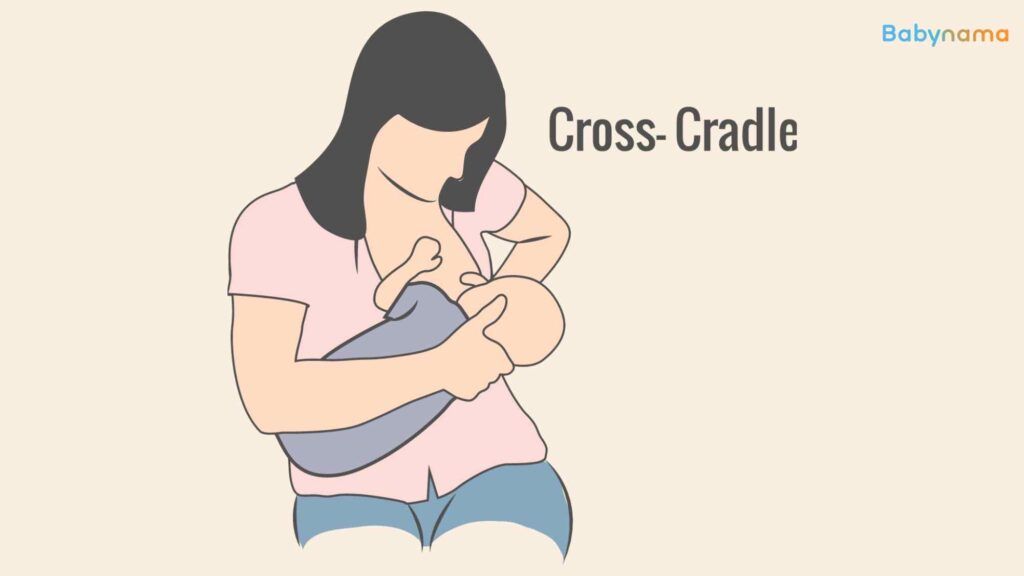
2. Cross-Cradle Hold
Best for: Newborns, babies learning to latch, mothers who want more control
Step-by-step:
-
Sit upright with back support
-
Hold baby with the arm OPPOSITE to the breast you’re feeding from
-
Right arm for LEFT breast
-
Left arm for RIGHT breast
-
Support baby’s head with your open hand at the base of skull
-
Baby’s body rests on your forearm, across your tummy
-
Use your free hand to support breast in U-shape
-
Guide baby to latch Tips:
-
Gives you excellent control of baby’s head
-
Great for teaching a good latch
-
Don’t press on back of baby’s head - support the neck/base of skull
-
Once latched, you can switch to cradle hold if more comfortable Why mothers love it:
-
Best control for new babies
-
Can see the latch clearly
-
Helpful for babies struggling to latch
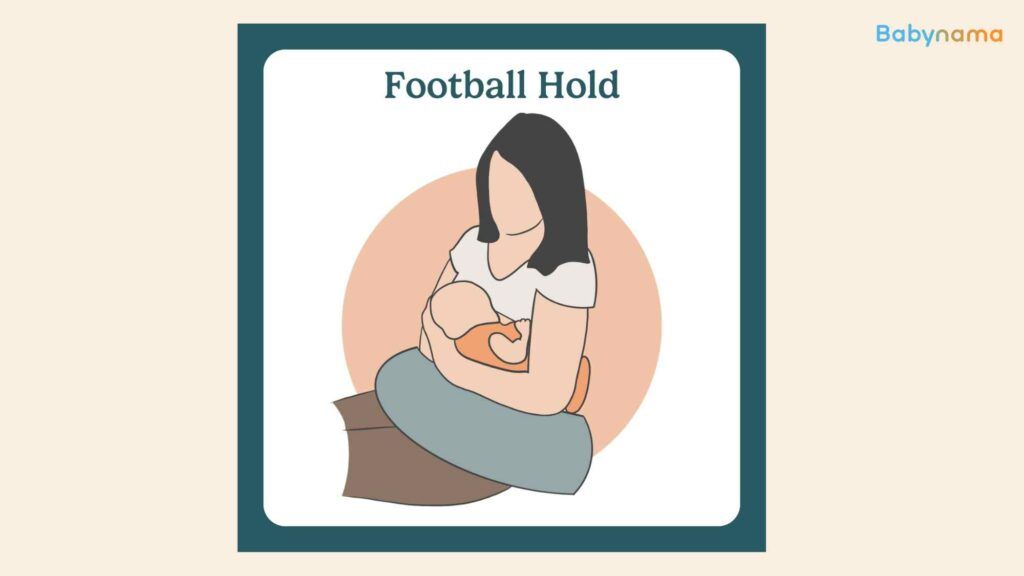
3. Football (Clutch) Hold
Best for: After C-section, large breasts, flat nipples, twins, strong let-down
Step-by-step:
-
Sit comfortably with a pillow at your side
-
Place baby under your arm like a football/clutch bag
-
Baby’s legs go behind you, along your side
-
Support baby’s head with your palm, neck on your forearm
-
Baby should be level with your nipple
-
Use other hand to support breast in C-shape
-
Guide baby to latch Tips:
-
Keeps baby’s weight off C-section incision
-
Baby’s chin points up, nose is clear
-
Use firm pillow to raise baby to nipple level
-
Great visibility of latch Why mothers love it:
-
No pressure on tummy (perfect post-C-section)
-
Easy to control baby’s head
-
Both breasts accessible when feeding twins
-
Good for babies who struggle with flow
4. Side-Lying Position (Karwat Mein)
Best for: Night feeds, resting while feeding, after C-section, sore perineum
Step-by-step:
-
Lie on your side with pillow under your head
-
Keep back straight (pillow behind back helps)
-
Baby lies on their side facing you
-
Baby’s mouth should be level with your nipple
-
Support baby with one hand on their back
-
Use other hand to guide breast to baby
-
Once latched, you can rest your head Tips:
-
Keep baby on their side, not back
-
Baby’s nose should be level with your nipple
-
Roll baby back into their own sleep space after feeding
-
Use lower breast first, then either roll over or prop up to use top breast Why mothers love it:
-
Can rest while feeding
-
Perfect for exhausted new mothers
-
No pressure on perineum or C-section wound
-
Great for night feeds
Safety note: Always return baby to their own safe sleep space after feeding. Don’t fall asleep with baby in your bed.
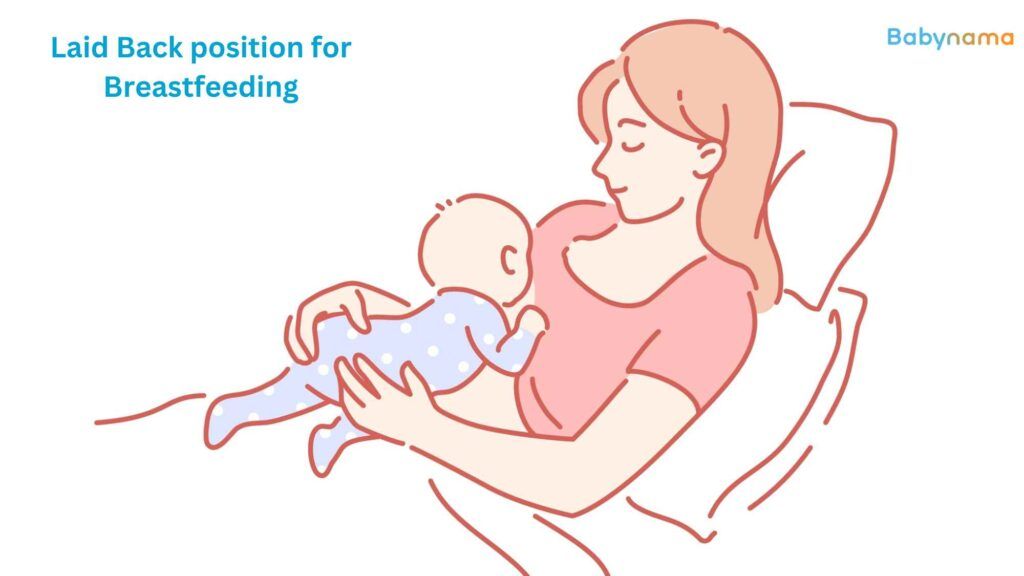
5. Laid-Back (Biological Nurturing) Position
Best for: Newborns (first weeks), skin-to-skin, strong let-down, small breasts
Step-by-step:
-
Recline comfortably (45-60 degrees) - not flat
-
Support your back and head with pillows
-
Place baby tummy-down on your chest
-
Baby’s head should be above your breast
-
Let baby use natural instincts to find nipple

-
Baby will wiggle, bob, and “crawl” to breast
-
Support baby’s body, let gravity help the latch Tips:
-
Don’t force baby - let instincts guide them
-
Gravity helps baby self-attach
-
Great for skin-to-skin contact
-
Slows down milk flow for babies who choke/splutter Why mothers love it:
-
Very natural and relaxed
-
Baby uses inborn feeding reflexes
-
Excellent for bonding
-
Helpful when supply is very strong
Which Position for Which Situation?
| Situation | Best Position |
|---|---|
| Newborn learning to latch | Cross-cradle or Laid-back |
| After C-section | Football hold or Side-lying |
| Night feeds | Side-lying |
| Sore nipples | Change position each feed |
| Fast let-down/choking baby | Laid-back |
| Large breasts | Football hold |
| Flat or inverted nipples | Football or Cross-cradle |
| Twins | Football hold (both sides) or tandem |
| Feeding in public | Cradle hold |
| Sleepy baby | Laid-back (skin-to-skin) |
Signs of a Good Latch (Any Position)
| Good Latch | Poor Latch |
|---|---|
| Mouth wide open | Pursed lips |
| Lips flanged outward | Lips tucked in |
| More areola visible above nipple than below | Equal or more below |
| Chin touches breast | Chin away from breast |
| Cheeks rounded | Cheeks sucked in |
| You hear swallowing | Clicking sounds |
| Comfortable (after first few seconds) | Painful throughout |
| Nipple looks normal after | Nipple squashed/misshapen |
Common Mistakes to Avoid
| Mistake | Why It’s a Problem | What to Do Instead |
|---|---|---|
| Leaning forward to baby | Back pain, poor latch | Bring baby UP to breast |
| Baby’s head turned | Difficulty swallowing | Head in line with body |
| Holding back of head | Baby fights the breast | Support neck/base of skull |
| Forcing baby to latch | Breast refusal | Let baby come to breast |
| Same position every feed | Sore spots, blocked ducts | Rotate positions |
| No back support | Strain and pain | Use pillows/chair back |
Frequently Asked Questions
Q: Which position is best for a new baby?
A: Cross-cradle or laid-back positions give you the most control and visibility for newborns. Once baby is latching well, you can try other positions.
Q: I had a C-section. Which position won’t hurt?
A: Football hold is ideal - baby’s weight never touches your incision. Side-lying also works well for rest.
Q: My baby keeps falling asleep while feeding. What position helps?
A: Laid-back with skin-to-skin keeps baby more alert. You can also try feeding with baby in only a diaper for more skin contact.
Q: Can I switch positions during a feed?
A: Yes! If one position isn’t working, gently break the latch and try another. Some mothers start in cross-cradle then switch to cradle once latched.
Q: My back hurts after feeding. What am I doing wrong?
A: You’re probably leaning forward. Sit back fully, use pillows to bring baby up, and let baby come to breast - not breast to baby.
Q: How do I know if baby is in the right position?
A: Baby’s ear, shoulder, and hip should be in a straight line. Tummy faces your tummy. You shouldn’t feel strain, and baby should be latching without pain.
Key Takeaways
- No single “best” position - The best one is what works for you and baby
- Tummy to tummy - Baby should always face you
- Bring baby to breast - Don’t lean forward
- Support yourself - Use pillows, get comfortable
- Change positions - Prevents sore spots and blocked ducts
- Good latch matters more - Any position works with proper latch
This article was reviewed by the Babynama Medical Team. Last updated: January 2026
Struggling with breastfeeding positions? Book a lactation consultation on Babynama - our experts can guide you to the perfect position!
Need personalized guidance? Book a consultation with our pediatricians or explore our Care Plans for 24/7 expert support!
General information for Indian parents, not a substitute for your pediatrician. In an emergency, call 112 or 108.
Need Expert Breastfeeding Support?
Get personalized guidance from certified lactation consultants.
Explore Breastfeeding Program