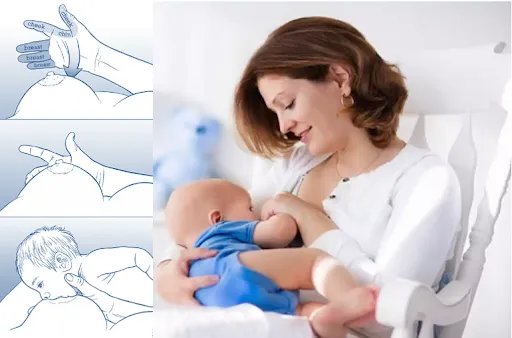
Quick Answer: The Dancer Hand position is a specialized breastfeeding technique that provides extra support to your baby’s chin and jaw while feeding. It’s especially helpful for premature babies, babies with low muscle tone, Down syndrome, cleft lip/palate, or any baby who has difficulty maintaining a latch. If your baby struggles to stay latched or gets tired quickly during feeds, this technique can be a game-changer!
What is the Dancer Hand Position?
The Dancer Hand position is named because of how the hand looks while performing it - similar to a graceful dance pose. It’s a technique where you use your hand to simultaneously:
- Support your breast
- Support your baby’s chin and cheeks This dual support helps babies who lack the muscle strength or coordination to maintain a good latch on their own.
Reassurance for new mothers: If your baby is struggling to breastfeed, it’s NOT your fault. Some babies simply need extra help, and the Dancer Hand position is designed exactly for this. With patience and practice, most babies improve!
Which Babies Benefit from Dancer Hand Position?
This technique is particularly helpful for:
| Baby | Why It Helps |
|---|---|
| Premature babies | Weak sucking muscles, tire easily |
| Babies with Down syndrome | Low muscle tone (hypotonia) |
| Babies with cleft lip/palate | Difficulty creating suction |
| Babies with weak muscle tone | Can’t maintain latch independently |
| Sick or recovering babies | Low energy for sustained feeding |
| Small for gestational age babies | May have weak oral muscles |
| Babies with tongue-tie | After correction, may need retraining |
| Any baby struggling to latch | Extra support can help |
Note: Even babies without any special conditions may benefit when first learning to breastfeed.
Step-by-Step Guide: How to Do Dancer Hand Position
Preparation
Before starting:
- Get into a comfortable position (sitting with back support works well)
- Have pillows ready to support your arms
- Ensure baby is alert and showing hunger cues
- Take a deep breath and relax
The Basic Dancer Hand Technique
Step 1: Form the “U” Shape
Using the hand on the same side as the breast you’re feeding from:
- Place your thumb on one side of your breast
- Place your remaining four fingers on the other side
- Slide your hand forward so your thumb and forefinger are just behind the areola
- Form a “U” shape under your breast Step 2: Create the Support Structure
Now, extend your support to baby’s face:
-
Your three lower fingers (middle, ring, pinky) stay under the breast for support
-
Your thumb and forefinger extend forward
-
These two fingers will cup baby’s cheeks Step 3: Position Baby
-
Hold baby close to your body
-
Baby’s nose should be level with your nipple
-
Baby’s body should be in a straight line (ear, shoulder, hip aligned) Step 4: Add Chin Support
As baby approaches the breast:
-
Your forefinger goes under baby’s chin
-
Your thumb rests on one cheek
-
The web between thumb and forefinger supports the chin
-
Your lower three fingers continue supporting the breast Step 5: Guide Baby to Latch
-
Wait for baby to open mouth wide
-
Bring baby to breast (not breast to baby)
-
Ensure baby takes a good mouthful of breast, not just nipple
-
The chin support helps baby maintain the position Step 6: Maintain Throughout Feed
-
Keep gentle pressure on cheeks and chin
-
Don’t push or squeeze - just support
-
Adjust if baby seems uncomfortable
-
Your hand may get tired - switch hands or take breaks if needed
Two-Finger Dancer Hand Variation
For babies with very weak cheek tone, try this modified version:
Instead of U-shape:
-
Use only your thumb and forefinger
-
Form a “C” shape around baby’s cheeks
-
Thumb on one cheek, forefinger on other
-
The web of your hand supports chin
-
Other fingers can rest anywhere comfortable This variation works well for:
-
Very small premature babies
-
Babies who need more cheek compression
-
Mothers with smaller hands
Tips for Success with Dancer Hand
Do’s:
- Practice when baby is calm - Not when desperately hungry
- Be patient - May take several tries to get it right
- Stay relaxed - Your tension transfers to baby
- Switch sides - Practice on both breasts
- Use pillow support - Your arm will get tired!
- Maintain throughout feed - Don’t let go once latched
Don’ts:
- Don’t squeeze cheeks too hard - Gentle pressure only
- Don’t push baby’s head - Support chin and cheeks instead
- Don’t give up after one try - Learning takes time
- Don’t forget to breathe - Stay calm
- Don’t hesitate to ask for help - Lactation consultants can demonstrate in person
Combining with Other Positions
Dancer Hand can be used with various breastfeeding positions:
| Position | Why It Works Well |
|---|---|
| Cross-cradle hold | Easy to access baby’s face with opposite hand |
| Football hold | Good visibility of latch, great for C-section moms |
| Laid-back position | Baby on top, gravity helps with attachment |
| Side-lying | Can work, but requires practice |
Most recommended: Cross-cradle hold with Dancer Hand gives the most control and visibility.
When Will My Baby No Longer Need Dancer Hand?
Good news! As babies grow and strengthen:
-
Premature babies catch up developmentally
-
Muscle tone improves with practice
-
Feeding becomes more coordinated
-
You’ll gradually need less support Signs baby is ready to latch independently:
-
Sustained latch without support
-
Efficient feeding (swallowing regularly)
-
Baby doesn’t slip off the breast
-
Weight gain is adequate Most babies outgrow the need for Dancer Hand support within weeks to months, depending on their initial challenges.
When to Seek Professional Help
Consult a lactation expert if:
- Baby still cannot latch even with Dancer Hand
- Feeds are taking excessively long (45+ minutes every time)
- Baby is losing weight or not gaining
- Breastfeeding is painful despite correct technique
- You suspect tongue-tie or other oral issues
- Baby seems frustrated or refuses the breast Babynama offers online lactation consultations - our experts can guide you through video call!
Frequently Asked Questions
Q: Will my baby become dependent on the Dancer Hand support?
A: No. As baby’s muscles strengthen and coordination improves, they’ll naturally need less support. Think of it like training wheels on a bicycle - eventually, they come off!
Q: My hands get tired during the feed. What can I do?
A: Use pillows to support your arm and baby’s body. Some mothers switch hands partway through. You can also take short breaks - baby will re-latch.
Q: Can the Dancer Hand technique work with large breasts?
A: Yes! You may need to use the two-finger variation and definitely use pillows for support. A lactation consultant can help you find what works for your body.
Q: My baby was premature and still in NICU. Can I learn this technique?
A: Absolutely! Many NICUs have lactation consultants who can teach you Dancer Hand before discharge. It’s actually ideal to learn while baby is still in the hospital.
Q: Is it normal for this technique to feel awkward at first?
A: Very normal! Like learning any new skill, it takes practice. Most mothers feel comfortable after a few days of trying.
Q: Can I use this technique with a nipple shield?
A: Yes, Dancer Hand works with nipple shields. The extra chin support can actually help baby maintain latch on the shield.
Key Takeaways
- Dancer Hand provides extra support - For babies who can’t maintain latch independently
- Especially helpful for - Premature babies, Down syndrome, cleft lip, low muscle tone
- Practice makes perfect - Don’t give up after first few tries
- Use pillows - Support your arms to prevent fatigue
- It’s temporary - Most babies outgrow the need for this support
- Ask for help - Lactation consultants can demonstrate in person
This article was reviewed by the Babynama Medical Team. Last updated: January 2026
Struggling with breastfeeding? Book a lactation consultation on Babynama - we can guide you through video call!
Need personalized guidance? Book a consultation with our pediatricians or explore our Care Plans for 24/7 expert support!
Related Tools
General information for Indian parents, not a substitute for your pediatrician. In an emergency, call 112 or 108.
Need Expert Breastfeeding Support?
Get personalized guidance from certified lactation consultants.
Explore Breastfeeding Program