
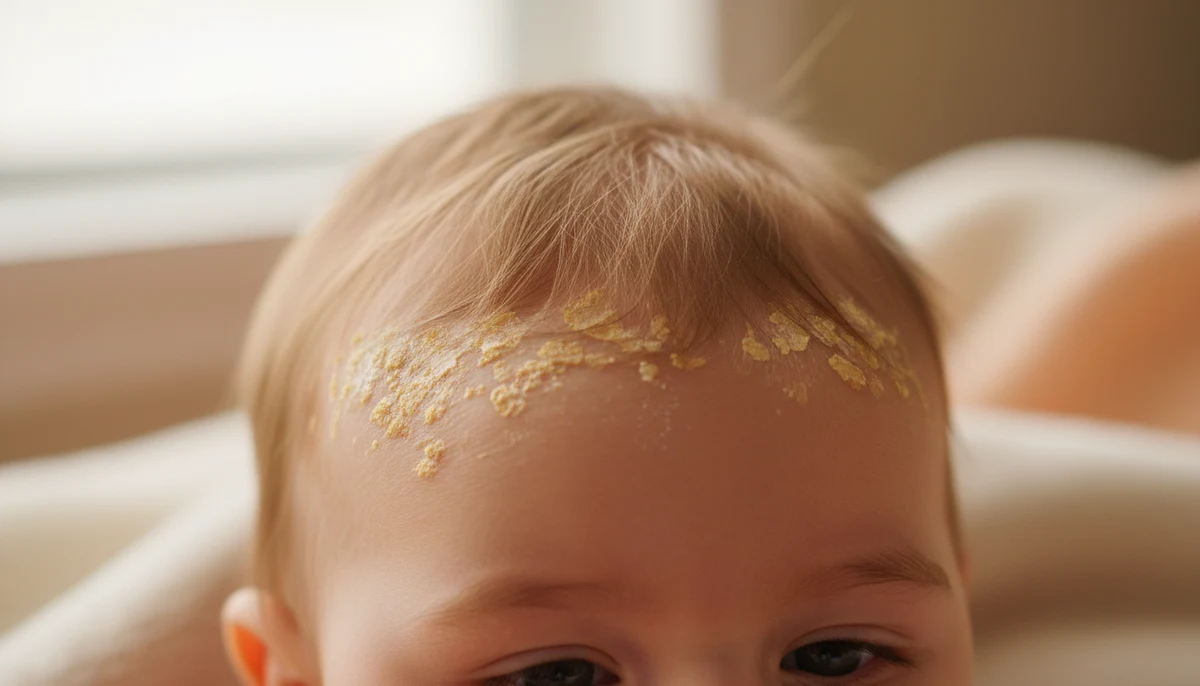
Yellowish, slightly greasy flakes on your newborn’s scalp can look alarming the first time you notice them, especially if they seem to spread or thicken. Almost always, this is cradle cap — a harmless, extremely common condition that has nothing to do with how clean your baby is, and nothing that needs urgent treatment.
Quick Answer
Cradle cap (infantile seborrheic dermatitis) is a common, harmless skin condition causing yellowish, greasy scales or flakes on a baby’s scalp, and sometimes the eyebrows, ears, or nappy area. It is not caused by poor hygiene, is not contagious, and usually clears on its own within a few weeks to months, often by 6-12 months of age. Gently massaging a little baby oil or coconut oil into the scalp 15-30 minutes before a bath, then loosening the softened flakes with a soft brush or soft cloth during a normal wash, is usually all that’s needed. See a doctor if the area looks red, swollen, or oozing, spreads well beyond the scalp, seems to itch or bother your baby, or hasn’t improved after several months of gentle care.
What Causes Cradle Cap?
Cradle cap happens because a newborn’s sebaceous (oil) glands are still adjusting and can produce extra oil, which traps dead skin cells on the scalp as scales. It is not an infection, not an allergy, and not related to how often you wash your baby’s hair — in fact, under-washing a worried-about scalp sometimes makes the scales build up more, not less.
It most often appears in the first few weeks to months of life and typically resolves on its own as the oil glands settle down, usually well before a baby’s first birthday.
What It Looks Like
- Yellowish or whitish, slightly greasy, scaly patches on the scalp, often starting on the crown.
- Mild redness underneath the scales in some babies.
- Occasionally spreads to the eyebrows, eyelids, around the ears, the nose, or the nappy area (seborrheic dermatitis can appear in these oil-gland-rich areas too).
- Usually not itchy or bothersome to the baby — most babies with cradle cap are completely unfazed by it.
Home Care: Loosening the Scales
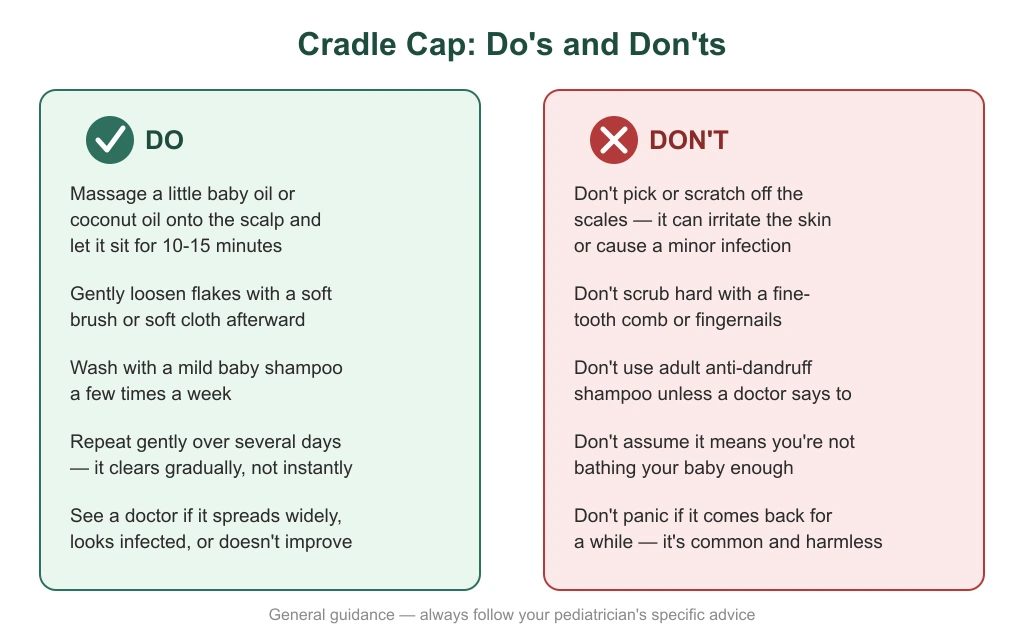
Cradle cap does not need to be treated aggressively, and picking at dry scales can irritate the scalp or cause minor bleeding. A gentle routine works well for most babies:
- Soften first. Massage a small amount of plain baby oil, coconut oil, or mineral oil into the scalp and leave it for 15-30 minutes (or overnight if you prefer) before a bath.
- Brush gently. During or after the bath, use a soft baby brush, soft toothbrush, or soft washcloth to gently loosen and lift the softened flakes. Do not scrape or pick at scales that haven’t softened yet.
- Wash with a mild baby shampoo, rinsing thoroughly, a few times a week.
- Repeat as needed. Some babies need this routine for a few weeks, others for several months, until the scales stop recurring.
There is no need for strong anti-dandruff shampoos, steroid creams, or antifungal treatments unless a doctor specifically recommends them for a stubborn or unusually widespread case.
When to See a Doctor
Most cradle cap resolves with the simple routine above and needs no medical treatment. See a doctor if:
- The area looks red, swollen, warm, or is oozing or crusting in a way that looks infected.
- The rash spreads significantly beyond the scalp, eyebrows, and ears.
- Your baby seems uncomfortable, itchy, or unsettled by it — cradle cap itself is usually painless and non-itchy, so real discomfort can point to a different skin condition like eczema that needs its own care.
- It hasn’t improved at all after a few months of consistent gentle care.
Indian Context
In hot, humid weather, some parents worry that oiling the scalp will make things worse — in practice, the oil-and-brush routine above is still the standard, gentle approach and works regardless of season; just rinse thoroughly afterward. There is no need for medicated shampoos sold for adult dandruff on a baby’s scalp unless your pediatrician specifically recommends one.
Frequently Asked Questions
Q: Did I cause this by not washing my baby’s hair enough?
A: No. Cradle cap is caused by overactive oil glands in a newborn, not hygiene. In fact, gentle regular washing (with oiling beforehand to loosen scales) helps manage it, rather than hygiene being the cause.
Q: Is cradle cap contagious?
A: No, it cannot spread to other children or family members.
Q: Can I just pick the flakes off with my fingers?
A: It’s best not to pick at dry, unsoftened scales — this can irritate the scalp or cause small cuts. Soften with oil first, then gently brush or wipe them away.
Q: Will it come back after it clears up?
A: It can recur, especially in the first year, but it generally becomes less frequent and eventually stops as your baby grows. Most children outgrow it well before age 2-3.
Q: Is this the same as eczema?
A: No, though they can look a little similar. Cradle cap is typically greasy, yellowish, and non-itchy; eczema tends to be drier, redder, and itchy, and can appear on cheeks, elbows, and knees too. If you’re unsure, a doctor can tell the difference quickly.
Not sure whether what you’re seeing on your baby’s scalp is cradle cap or something else? Join here to share a photo and talk it through with other parents and our team.
This article is for general information and is not a substitute for personalised medical advice. Always consult your paediatrician if a skin condition looks infected, spreads widely, or doesn’t improve.
Continue with this topic
A useful next step
Browse baby skin-care articlesFind guidance on rashes, eczema, dryness and everyday baby skin care.Have a question about your little one?
Join our free community for live Q&A with MD pediatricians — no cost to join.
Join the free community