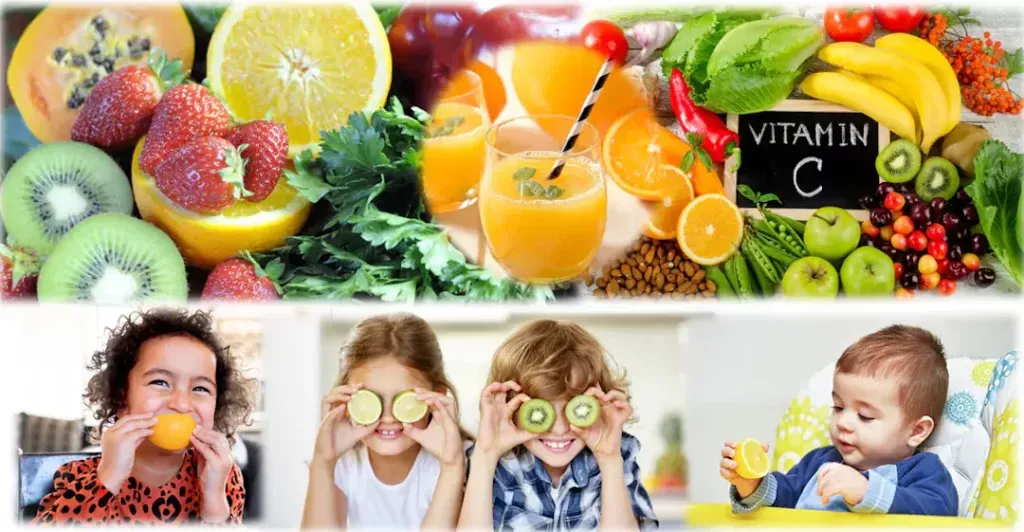
Quick Answer: Vitamin C is essential for your child’s immunity (rog pratirodhak shakti), iron absorption, wound healing, and healthy growth. Babies under 6 months get enough Vitamin C from breast milk or formula doodh. After 6 months, introduce Vitamin C-rich foods like orange, papita, amla, and tomatoes. Most Indian children get adequate Vitamin C through a balanced diet - supplements are usually NOT needed unless your pediatrician specifically recommends them.
Why Is Vitamin C So Important for Children?
Vitamin C (also called ascorbic acid) is a powerhouse nutrient that your child’s body cannot make on its own. Yeh body mein nahi banta, so it must come from food or milk.
Key Benefits of Vitamin C for Babies and Kids
| Benefit | How It Helps Your Child |
|---|---|
| Immunity Booster | Helps fight infections, reduces severity of colds |
| Iron Absorption | Helps body absorb iron from food (prevents anemia) |
| Wound Healing | Essential for healing cuts, scrapes, and injuries |
| Collagen Production | Builds strong bones, muscles, blood vessels |
| Antioxidant | Protects cells from damage |
| Healthy Teeth & Gums | Keeps gums strong, prevents bleeding |
How Much Vitamin C Does Your Child Need?
According to ICMR-NIN (Indian Council of Medical Research – National Institute of Nutrition) 2020 Recommended Dietary Allowances:
| Age Group | Daily Vitamin C Requirement |
|---|---|
| 0-6 months (breastfed) | Through breast milk |
| 0-12 months (formula-fed) | Through formula doodh (adequate amount) |
| Infants 6-12 months | About 3 mg/day |
| Children 1-3 years | About 8 mg/day |
| Children 4-6 years | About 11 mg/day |
| Children 7-9 years | About 15 mg/day |
| Children 10-12 years | About 16-28 mg/day |
| Teens 13-18 years | About 22-32 mg/day |
| Lactating mothers | About 95 mg/day |
These ICMR-NIN figures are lower than older US/RDA values you may see online. They reflect the average Indian diet and are very easily met through everyday foods.
Good news: These amounts are easily achievable through regular Indian foods - ek santara (orange) has about 50-70mg of Vitamin C!
Vitamin C Sources: Indian Foods Your Child Will Love
Fruits (Phal)
| Food | Vitamin C Content | Serving for Baby |
|---|---|---|
| Amla (Indian Gooseberry) | ~200-700mg per 100g (varies by variety) | 1-2 tsp juice (diluted) for 6+ months |
| Orange (Santara/Narangi) | 50-70mg per fruit | Fresh segments, no seeds |
| Papaya (Papita) | 60mg per 100g | Mashed, excellent for babies |
| Guava (Amrood) | 230mg per 100g | Mashed/pureed when ripe |
| Mango (Aam) | 36mg per 100g | Seasonal, mashed for babies |
| Strawberry | 60mg per 100g | Mashed, check for allergies |
| Kiwi | 90mg per 100g | Mashed, introduce after 8 months |
| Lemon/Lime (Nimbu) | 50mg per 100g | Few drops in water for 6+ months |
| Chikoo (Sapodilla) | 15mg per 100g | Mashed, sweet taste babies love |
| Banana (Kela) | 9mg per 100g | Low in Vitamin C but great first food |
Vegetables (Sabziyan)
| Food | Vitamin C Content | How to Serve |
|---|---|---|
| Capsicum (Shimla Mirch) | 120-180mg per 100g | Cooked, mashed for 8+ months |
| Broccoli | 90mg per 100g | Steamed, mashed |
| Tomato (Tamatar) | 14mg per 100g | In dal, khichdi, purees |
| Potato (Aloo) | 20mg per 100g | Mashed, in khichdi |
| Spinach (Palak) | 28mg per 100g | Cooked, pureed |
| Cabbage (Patta Gobi) | 36mg per 100g | Cooked, mashed for older babies |
| Cauliflower (Phool Gobi) | 48mg per 100g | Steamed, mashed |
Herbs (Masale aur Jadiyan)
| Herb | Vitamin C Content | How to Use |
|---|---|---|
| Coriander leaves (Dhania) | 27mg per 100g | Fresh garnish |
| Curry leaves (Kadi patta) | 4mg per 100g | In dal, curries |
| Mint (Pudina) | 27mg per 100g | Fresh, in chutneys |
Step-by-Step Guide: Ensuring Your Baby Gets Enough Vitamin C
Step 1: For Babies 0-6 Months
Breastfed babies: Your breast milk provides all the Vitamin C baby needs! Ensure YOU eat Vitamin C rich foods:
- Eat 1 orange or amla daily
- Include tomatoes, papaya in your diet
- Your Vitamin C passes to baby through milk Formula-fed babies: All infant formulas (NAN Pro, Lactogen, Similac, Enfamil) are fortified with adequate Vitamin C. No supplements needed - formula doodh mein sab kuch hai!
Step 2: For Babies 6-12 Months (Starting Solids)
Introduce Vitamin C rich foods gradually:
Week 1-2: Start with papita (papaya) - mashed, easy to digest
Week 3-4: Try orange segments (seedless, no membrane)
Week 5-6: Introduce mashed amrood (guava)
Week 7-8: Add tomato to dal or khichdi
Pro tip: Pair iron-rich foods with Vitamin C for better absorption:
- Dal khichdi + tomato
- Ragi porridge + orange juice (few drops)
- Spinach puree + lemon drops
Step 3: For Toddlers 1-3 Years
Make Vitamin C part of daily meals:
| Meal | Vitamin C Addition |
|---|---|
| Breakfast | Fresh fruit - orange, papaya, or guava |
| Mid-morning | Amla juice (diluted) or nimbu pani |
| Lunch | Tomato in dal, capsicum in sabzi |
| Evening | Fruit chaat with orange, guava |
| Dinner | Broccoli/cauliflower in meal |
Step 4: Monitor and Adjust
Watch for signs of adequate Vitamin C:
- Quick wound healing
- Healthy gums (no bleeding)
- Good immunity (fewer frequent colds)
- Normal growth and development
The Amla Advantage: India’s Vitamin C Superfood
Amla (Indian gooseberry) is one of the richest natural sources of Vitamin C in the world - gram for gram it contains many times more Vitamin C than an orange!
How to Give Amla to Children
| Age | How to Give | Amount |
|---|---|---|
| 6-12 months | Fresh amla juice, diluted with water | 1-2 tsp, 2-3 times/week |
| 1-3 years | Amla juice, amla candy (homemade, no sugar) | 1-2 tsp juice or 1 small piece |
| 3+ years | Fresh amla, amla murabba, amla juice | 1 small amla or equivalent |
Easy Amla Recipe for Kids:
- Grate fresh amla
- Mix with honey (for 1+ year) or jaggery
- Give 1 teaspoon daily Note: Amla is sour! Start with small amounts mixed with sweeter foods.
Signs of Vitamin C Deficiency in Children
Vitamin C deficiency is rare in children who eat a varied diet, but watch for these signs:
Early Signs
- Slow wound healing
- Easy bruising
- Frequent infections/colds
- Dry, rough skin
- Bleeding gums
- Tiredness and irritability
Severe Deficiency (Scurvy) - Rare
- Brown spots on skin
- Joint pain
- Bone pain
- Swollen, bleeding gums
- Loose teeth
- Poor growth If you notice these signs: Consult your pediatrician immediately. Do not self-prescribe supplements.
Tips for Success
- Fresh is best - Vitamin C degrades with heat and time; serve fruits fresh
- Don’t overcook - Lightly steam vegetables to preserve Vitamin C
- Variety matters - Rotate different fruits and vegetables
- Start early - Babies who eat fruits early accept them better later
- Be a role model - Eat fruits in front of your child
- Make it fun - Fruit chaat, smoothies, fun shapes attract kids
- Store properly - Keep cut fruits covered in refrigerator
Common Mistakes to Avoid
- Giving supplements without need - Excess Vitamin C causes problems too!
- Over-relying on juice - Whole fruits are better than packaged juices
- Heating citrus fruits - Destroys Vitamin C
- Forcing sour foods - Introduce gradually; don’t create negative associations
- Ignoring formula/breastmilk - These already contain adequate Vitamin C for babies
- Buying packaged “Vitamin C drinks” - Usually loaded with sugar; fresh fruits are better
- Giving too much amla - Can cause acidity; moderation is key
When to Consider Supplements
Most children do NOT need Vitamin C supplements. Consider them only if:
- Child has diagnosed deficiency
- Very restricted diet (extreme picky eating)
- Medical condition affecting absorption
- Pediatrician specifically recommends Always consult your pediatrician before giving any supplements!
If Supplements Are Prescribed
| Type | Common Brands in India | Notes |
|---|---|---|
| Drops | Celin drops | For infants if prescribed |
| Chewables | Limcee, Celin chewable | For older children |
| Syrup | Various brands | As per doctor’s prescription |
Do NOT exceed recommended dose - excess Vitamin C can cause:
- Nausea and stomach upset
- Diarrhea
- Kidney stones (with chronic excess)
When to Seek Help
Consult your pediatrician if:
- Child refuses all fruits and vegetables
- Signs of deficiency persist despite good diet
- Child has repeated infections
- Wounds take unusually long to heal
- Gums bleed during brushing
- You’re considering supplements
- Child has absorption issues or chronic illness
FAQs
Q: Kya formula milk mein Vitamin C hota hai?
A: Haan, all infant formulas sold in India (NAN Pro, Lactogen, Similac, Enfamil, Dexolac) are fortified with Vitamin C as per regulations. Formula doodh se baby ko adequate Vitamin C milta hai. Separate supplements usually aren’t needed.
Q: How can I give Vitamin C to my 6-month-old baby?
A: Start with Vitamin C-rich first foods like mashed papaya, ripe mango (seasonal), or a few drops of fresh orange juice mixed in food. Breast milk or formula also provides Vitamin C. No supplements needed for healthy babies eating a variety of foods.
Q: Is it safe to give amla to babies?
A: Yes, but start after 6 months with small amounts. Fresh amla juice diluted with water (1:3 ratio) can be given as 1-2 teaspoons, 2-3 times per week. Watch for any digestive upset as amla is sour. Avoid store-bought amla candy with preservatives and excess sugar.
Q: Mera baccha sirf kela khata hai - kya Vitamin C deficiency ho jayegi?
A: Bananas have very little Vitamin C. Try to introduce other fruits gradually. If your child is extremely picky and refuses all Vitamin C sources, consult your pediatrician. In the meantime, try papaya (mild taste), chikoo, or add tomato to familiar foods like dal.
Q: Can too much Vitamin C harm my child?
A: Yes, excess Vitamin C (usually from supplements, not food) can cause stomach upset, diarrhea, and in chronic cases, kidney stones. Stick to food sources - it’s nearly impossible to get “too much” Vitamin C from regular foods. Avoid giving supplements without medical advice.
Q: Does cooking destroy Vitamin C?
A: Yes, Vitamin C is sensitive to heat. To preserve it:
- Give fruits fresh whenever possible
- Steam vegetables lightly instead of boiling
- Don’t reheat food multiple times
- Use minimal water when cooking
Q: Which has more Vitamin C - orange or amla?
A: Amla wins by a huge margin! Per 100g, amla has roughly 200-700mg Vitamin C (depending on variety) while an orange has about 50-70mg. However, amla is much more sour, so children often prefer oranges. Both are excellent choices - give what your child enjoys.
This article was medically reviewed by Babynama Pediatricians.
This article is for general information for parents in India and is not a substitute for an in-person consultation. Nutrient figures follow ICMR-NIN 2020 guidance; vitamin C content of foods varies by variety, ripeness and season. Always consult your pediatrician before starting any supplement or if you are worried about your child’s diet.
Worried about your child’s nutrition? Chat with a Babynama pediatrician anytime. Our doctors can assess your child’s diet and advise whether supplements are needed. Available 24/7 on WhatsApp!
Need personalized guidance? Book a consultation with our pediatricians or explore our Care Plans for 24/7 expert support!
Related Tools
Continue with this topic