Last updated: January 2026
Quick Answer
Is milk essential for my child? YES - milk is excellent for children’s growth, but it’s not the only source of nutrition and some children may need alternatives.
Doodh (milk) has been a staple of Indian childhood - from “doodh peelo beta” to badam milk at bedtime. And for good reason! Milk provides calcium, protein, and vitamin D that children need. However, too much milk can actually cause problems like kabz (constipation), iron deficiency, and poor appetite. The key is balance - the right amount at the right age.
When Can Children Have Cow’s Milk?
Age-Wise Guide:
| Age | Recommended Milk | Amount |
|---|---|---|
| 0-6 months | Breast milk only (or formula) | On demand |
| 6-12 months | Breast milk + formula | Continue as needed |
| 12+ months | Can introduce cow’s milk | 2 cups (400ml) daily |
| 1-2 years | Whole/full-fat milk | 2 cups (400ml) |
| 2-5 years | Can switch to toned milk | 2 cups (400ml) |
| 5+ years | Toned or double toned | 2-3 cups (400-500ml) |
Important: Do NOT give cow’s milk as main drink before 12 months - it can cause iron deficiency and digestive issues.
Benefits of Milk for Children
1. Strong Bones and Teeth
- Rich in calcium
- Contains vitamin D (in fortified milk)
- Essential for growing children
2. Muscle Growth
- High-quality protein
- Helps in tissue repair
- Important for active children
3. Brain Development
- Contains B vitamins
- Provides healthy fats (in whole milk)
- Supports cognitive function
4. Overall Nutrition
- Provides many nutrients in one food (but low in iron, so not a complete food on its own)
- Provides energy
- Good source of potassium
Problems with Too Much Milk
Why 2 Cups is Enough:
- Iron Deficiency (Milk Anemia)
- Milk is low in iron
- Excessive milk reduces appetite for iron-rich foods
- Can cause pale skin, weakness
- Constipation (Kabz)
- Too much milk can harden stools
- Common in toddlers who drink only milk
- Reduces fiber intake from other foods
- Poor Appetite
- Milk fills tummy, child refuses food
- Misses out on variety of nutrients
- Common complaint: “mera bachcha khana nahi khata”
- Weight Issues
- Too much can lead to excess weight
- Or underweight if refusing other foods
Milk and Digestion Problems
Lactose Intolerance:
Some children cannot digest lactose (milk sugar) properly.
Symptoms:
-
Gas and bloating (pet phoolna)
-
Pet dard after drinking milk
-
Loose motion or watery potty
-
Cramping What to do:
-
Try lactose-free milk
-
Give small amounts with food
-
Try curd/dahi (easier to digest)
-
Consider alternatives
Milk Protein Allergy:
Different from lactose intolerance - this is an immune reaction.
Symptoms:
-
Rash or hives
-
Vomiting
-
Blood in stool
-
Severe reactions (rare) What to do:
-
Avoid all dairy
-
Use specialized formula for babies
-
Consult pediatrician
What If My Child Won’t Drink Milk?
Don’t Panic! Alternatives for Calcium:
| Food | Calcium Content | How to Give |
|---|---|---|
| Curd/Dahi | Excellent | With lunch, as raita |
| Paneer | Excellent | In sabzi, paratha |
| Cheese | Good | In sandwich, pasta |
| Ragi | Good | Porridge, dosa |
| Sesame (Til) | Excellent | In chutney, ladoo |
| Green leafy vegetables | Good | In dal, sabzi |
| Almonds | Good | Soaked, in milk |
| Oranges | Moderate | As fruit |
Tricks to Get Children to Drink Milk:
- Flavored Milk:
- Badam milk (almond)
- Kesar milk (saffron)
- Elaichi (cardamom)
- Chocolate (occasionally)
- Turmeric milk (haldi doodh)
- Smoothies:
- Blend with fruits
- Add dry fruits
- Make it a fun drink
- In Food:
- Kheer
- Oats with milk
- Suji halwa
- Custard
- Fun Presentation:
- Colorful cups
- Special straw
- Let child pour themselves
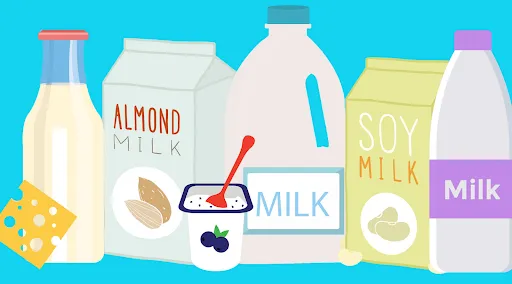
Milk Alternatives
When to Consider Alternatives:
- Lactose intolerance
- Milk allergy
- Vegan preference
- Child refuses all dairy
Options Available in India:
| Alternative | Pros | Cons | Best For |
|---|---|---|---|
| Soy Milk | High protein, similar to cow’s milk | Some allergic | Lactose intolerant |
| Almond Milk | Light, tasty | Low protein | Older children |
| Coconut Milk | Creamy, tasty | Low protein | Cooking |
| Oat Milk | Good fiber | Contains gluten | Not for Celiac |
| Rice Milk | Hypoallergenic | Low nutrition | Multiple allergies |
Note: Plant milks are NOT suitable as main milk source for children under 2 years unless recommended by doctor.
When to See a Doctor
Consult pediatrician if:
- Child has symptoms after drinking milk
- Blood in stool
- Severe vomiting with milk
- Family history of milk allergy
- Child is not gaining weight properly
- You want to eliminate dairy from diet
What’s Usually Expected With Milk?
Usually not a concern:
- Slight preference for flavored over plain milk
- Drinking less milk after starting solids
- Some gas (part of normal digestion)
- Occasional refusal
Worth checking with your pediatrician:
- Consistent stomach pain after milk
- Regular loose motions with milk
- Rash or skin reactions
- Complete aversion despite trying
FAQs
Q: My toddler only drinks milk and refuses food - what should I do?
A: This is very common! Reduce milk to 2 cups maximum. Don’t give milk 1-2 hours before meals. Offer food when truly hungry. Milk should complement meals, not replace them.
Q: Does milk cause kabz (constipation)?
A: Excessive milk can contribute to constipation, especially if child is drinking more than 2-3 cups and eating less fiber. Balance milk with fiber-rich foods and water.
Q: Which is better - packaged or fresh milk?
A: Both are fine if pasteurized. Packaged milk is already pasteurized. Fresh milk should be boiled before giving. Avoid raw, unpasteurized milk.
Q: Should I give full-fat or toned milk?
A: Children under 2 years need full-fat (whole) milk for brain development. After 2 years, you can switch to toned milk, especially if child is overweight.
Q: My baby has loose motions with cow’s milk - is it allergy?
A: Could be lactose intolerance or milk protein allergy. Try stopping milk for a few days. If symptoms improve, discuss with your pediatrician about alternatives and testing.
Q: Can I give buffalo milk instead of cow’s milk?
A: Yes, buffalo milk is fine. It’s actually higher in fat and calcium. Dilute slightly for young children if needed, as it’s richer than cow’s milk.
This article was reviewed by Babynama Pediatricians. For personalized advice about milk for your child, consult with Babynama’s pediatric experts on WhatsApp.
Need personalized guidance? Book a consultation with our pediatricians or explore our Care Plans for 24/7 expert support!
Related Tools
Disclaimer: This article is for general information for parents in India and follows Indian Academy of Pediatrics (IAP) guidance. It is not a substitute for an in-person consultation. Feeding plans, milk allergy, and lactose intolerance should be discussed with your child’s pediatrician. In an emergency, call 112 (national emergency) or 108 (ambulance), or go to your nearest hospital.
Continue with this topic
A useful next step
Browse nutrition and feeding articles Explore practical guidance for babies, toddlers and older children.Starting Solids? We Can Help!
Expert-guided nutrition plans for your baby.
Explore Nutrition Program