Quick Answer
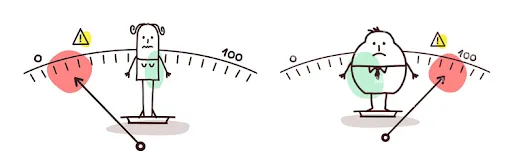
If your child is not gaining weight properly, eating poorly, or seems weaker than other children, don’t panic - malnutrition (kuposhan) is treatable when caught early. The first 1000 days (pregnancy + first 2 years) are crucial for preventing long-term effects. With proper nutrition and medical guidance, most children recover well. This guide helps you identify signs early and take action.
What is Child Malnutrition?
Malnutrition means the body isn’t getting the right amount of nutrients. It includes:
| Type | What It Means | Signs |
|---|---|---|
| Undernutrition | Not enough calories/nutrients | Underweight, stunted growth |
| Micronutrient deficiency | Missing vitamins/minerals | Anemia, weak immunity |
| Overnutrition | Too many calories, wrong foods | Obesity, but still nutrient deficient |
In India (NFHS-5, 2019-21): about 35% of children under 5 are stunted and about 19% are wasted (too thin for height)
Types of Malnutrition in Children
Acute Malnutrition (Wasting)
| Severity | Signs | Action Needed |
|---|---|---|
| Mild | Slightly underweight, less active | Improve diet, monitor |
| Moderate (MAM) | Weight-for-height low, visible thinning | Medical nutrition therapy |
| Severe (SAM) | Very thin, loose skin, edema | Hospital treatment urgently |
Chronic Malnutrition (Stunting)
- Height-for-age significantly low
- May not appear thin
- Affects brain development
- Often irreversible after age 2
Micronutrient Deficiencies (Hidden Hunger)
| Deficiency | Common Signs | Food Sources |
|---|---|---|
| Iron | Pale skin, fatigue, poor concentration | Ragi, spinach, dates, jaggery |
| Vitamin A | Night blindness, frequent infections | Carrot, papaya, leafy greens |
| Zinc | Poor appetite, slow wound healing | Nuts, seeds, legumes |
| Iodine | Goiter, developmental delays | Iodized salt |
| Vitamin D | Weak bones, delayed walking | Sunlight, fortified foods |
Signs of Malnutrition by Age
Babies (0-12 months)
| Normal | Warning Signs |
|---|---|
| Steady weight gain | Not doubling birth weight by 5 months |
| Active, alert | Excessive sleepiness, weak cry |
| Meeting milestones | Delayed head control, sitting |
| 6+ wet diapers daily | Fewer wet diapers |
| Good appetite | Refuses feeds, weak sucking |
Toddlers (1-3 years)
| Normal | Warning Signs |
|---|---|
| Curious, active | Listless, irritable |
| Height increasing | Not growing taller |
| Learning new words | Delayed speech |
| Pink lips, good color | Pale, dry skin |
| Thick, shiny hair | Thin, discolored hair |
Older Children (3+ years)
| Normal | Warning Signs |
|---|---|
| Energetic play | Tires easily |
| Good concentration | Can’t focus in school |
| Fighting off infections | Frequently sick |
| Healing quickly | Wounds take long to heal |
| Healthy appetite | Very picky, refuses most foods |
What Causes Malnutrition?
Primary Causes (Diet-Related)
| Cause | Common In | Solution |
|---|---|---|
| Not enough food | Low-income families | Government programs (ICDS, MDM) |
| Wrong foods | All income groups | Nutrition education |
| Early stopping of breastmilk | Working mothers | Extended breastfeeding support |
| Late introduction of solids | Misinformed parents | Start at 6 months |
| Too much junk food | Urban children | Limit processed foods |
Secondary Causes (Health-Related)
| Cause | How It Affects Nutrition |
|---|---|
| Frequent diarrhea (loose motion) | Nutrients not absorbed |
| Worm infestations | Worms consume nutrients |
| Chronic infections | Body uses nutrients for fighting |
| Celiac disease | Intestine can’t absorb nutrients |
| Cleft palate | Difficulty feeding |
Social Causes
- Poverty and food insecurity
- Poor sanitation (leads to infections)
- Lack of clean drinking water
- Mother’s malnutrition during pregnancy
- Large family size with limited resources
- Gender discrimination (girls fed less)
How to Check Your Child’s Nutrition Status
Use Growth Charts
Track your child’s weight and height on WHO growth charts (available in all govt hospitals and anganwadi centers).
| Measurement | What It Shows |
|---|---|
| Weight-for-age | Overall nutrition |
| Height-for-age | Long-term nutrition (stunting) |
| Weight-for-height | Recent nutrition (wasting) |
| MUAC (arm circumference) | Quick screening for SAM |
MUAC Measurement (for children 6 months - 5 years)
| MUAC Reading | Status | Action |
|---|---|---|
| Green (>13.5 cm) | Normal | Continue good nutrition |
| Yellow (12.5-13.5 cm) | At risk | Improve diet, monitor weekly |
| Orange (11.5-12.5 cm) | Moderate malnutrition | Seek medical help |
| Red (<11.5 cm) | Severe malnutrition | Hospital treatment immediately |
Treatment of Malnutrition
Mild Malnutrition (Home-Based)
Increase calorie-dense foods:
| Food | How to Use | Benefit |
|---|---|---|
| Ghee (desi ghee) | Add 1 tsp to every meal | High calories |
| Groundnut powder | Mix in khichdi, dal | Protein + calories |
| Jaggery (gur) | With roti, in milk | Energy |
| Dates (khajoor) | As snack, with milk | Iron + energy |
| Sesame (til) | In ladoos, chutney | Calcium + calories |
| Banana | Daily as snack | Easy calories |
Energy-Dense Recipe: Sattu Ladoo
- Roasted chana powder: 1 cup
- Jaggery powder: 1/2 cup
- Ghee: 2 tbsp
- Mix and make small balls. Give 2-3 daily.
Moderate Malnutrition
- Therapeutic foods prescribed by doctor
- Ready-to-use therapeutic food (RUTF) if available
- Micronutrient supplements
- Deworming medication
- Weekly weight monitoring
Severe Malnutrition (SAM)
Requires hospital treatment:
- Nutritional Rehabilitation Center (NRC) admission
- Careful refeeding (too fast is dangerous)
- Treating infections
- Correcting dehydration
- Micronutrient supplementation
- Follow-up for 6+ months
Prevention: The First 1000 Days
During Pregnancy
| What to Do | Why |
|---|---|
| Take iron-folic acid tablets | Prevents anemia, neural tube defects |
| Eat protein-rich food daily | Baby’s growth |
| Get 4+ antenatal checkups | Early problem detection |
| Gain appropriate weight | Healthy birth weight |
Birth to 6 Months
| What to Do | Why |
|---|---|
| Breastfeed within 1 hour of birth | Colostrum protects baby |
| Exclusive breastfeeding | Complete nutrition |
| No water, no other foods | Breast milk has enough water |
| Feed on demand (8-12 times) | Ensures enough milk |
6-24 Months (Complementary Feeding)
| Age | What to Give | How Much |
|---|---|---|
| 6-8 months | Mashed dal-rice, ragi, banana | 2-3 meals, 2-3 tbsp each |
| 9-11 months | Soft khichdi, egg, paneer | 3-4 meals, 1/2 katori each |
| 12-24 months | Family food, mashed/chopped | 3-4 meals + 2 snacks |
Key: Continue breastfeeding until age 2+
Government Programs for Malnutrition
| Program | What It Provides | Where |
|---|---|---|
| ICDS (Anganwadi) | Supplementary food, growth monitoring | Every village/ward |
| Mid-Day Meal | School lunch | Government schools |
| POSHAN Abhiyaan | Nutrition awareness, tracking | Nationwide |
| NRC (Nutritional Rehabilitation) | SAM treatment | District hospitals |
| Janani Suraksha Yojana | Maternal nutrition support | All states |
When to See a Doctor
🚨 Seek same-day emergency care (nearest hospital, or call 112 / 108) if:
- Child is severely thin with loose skin
- Swelling on feet, face, or hands (edema)
- Not responding normally, very weak or drowsy
- Refusing all food and drink
- Persistent diarrhea or vomiting (risk of dehydration)
- Any fever in a baby under 3 months (100.4°F / 38°C or higher) — this is always a same-day emergency
Schedule appointment if:
- Weight not increasing for 2+ months
- Falling off growth curve
- Frequent illness (more than once a month)
- Very picky eating affecting growth
- Pale skin, brittle hair
Expert Insight: Severe malnutrition with swelling (edema), loose skin, or a child who won’t feed is an emergency. Don’t wait for a routine appointment — go to the nearest hospital or 🚨 call 112 (national emergency) or 108 (ambulance) the same day.
FAQs
Q: My child is thin but active. Should I worry?
A: If your child is growing along their growth curve (even if in lower percentiles), eating well, meeting milestones, and rarely sick - they may just be naturally slim. However, if they’ve dropped percentiles or show other signs, consult your pediatrician. Get a growth chart assessment for peace of mind.
Q: We eat well at home but my child is still malnourished. Why?
A: Several reasons are possible: worm infestation (very common in India - deworm every 6 months), absorption problems (celiac disease, chronic diarrhea), chronic infections, or the child may not be eating enough quantity despite good food being available. A doctor can investigate the underlying cause.
Q: Is my overweight child also at risk of malnutrition?
A: Yes! Overweight children can have “hidden hunger” - deficient in iron, vitamins, and other micronutrients while having excess calories. This happens when diet is high in processed foods and low in vegetables, fruits, and proteins. An overweight child may need nutrition correction too.
Q: Can malnutrition cause permanent damage?
A: If severe malnutrition occurs during the first 1000 days (pregnancy + first 2 years), it can cause irreversible stunting and affect brain development. After age 2, the brain is less vulnerable, but growth can still be affected. Early treatment prevents most long-term effects.
Q: My 18-month-old only wants milk and refuses food. Is this malnutrition risk?
A: Yes, this is a concern. After 6 months, breastmilk/formula alone cannot meet all nutritional needs. Excessive milk (>500ml/day) fills the stomach and reduces appetite for solid food. This can lead to iron deficiency and other problems. Gradually reduce milk and increase solid food with help from your pediatrician.
Q: Are expensive health drinks necessary?
A: No! Commercial health drinks (Horlicks, Bournvita, Pediasure) are not necessary and often contain added sugar. Homemade nutrient-rich foods like sattu, ragi porridge, and dates-badam milk are healthier and cheaper. Save money for real food instead.
This article was reviewed by Babynama Pediatricians. Last updated: January 2025
Need personalized guidance? Book a consultation with our pediatricians or explore our Care Plans for 24/7 expert support!
Related Tools
Disclaimer: This article is for general information for parents in India and is not a substitute for professional medical advice. Growth, feeding, and immunisation guidance here follows IAP (Indian Academy of Pediatrics), WHO, and Government of India (POSHAN/ICDS) recommendations. Every child is different — always consult your own pediatrician for diagnosis and treatment. In an emergency, go to the nearest hospital or call 112 (national emergency) or 108 (ambulance).
Continue with this topic
A useful next step
Baby development milestones by ageSee movement, language, social and cognitive milestones from birth to 3 years.Have a question about your little one?
Join our free community for live Q&A with MD pediatricians — no cost to join.
Join the free community