Quick Answer
Understanding your child’s emotional development is just as important as tracking their physical growth! Erikson’s stages of development explain how children (and adults) develop emotionally and socially at different ages. Each stage has a key challenge - and your support helps your child navigate these successfully. Don’t worry if your child seems to struggle at any stage - this is common, and most children develop well with loving guidance.
What Are Erikson’s Stages?
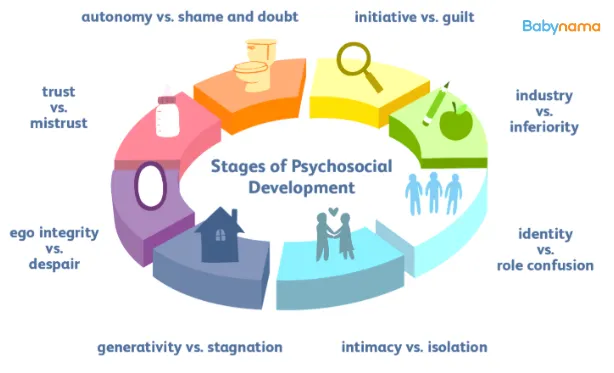
Erik Erikson, a famous developmental psychologist, identified 8 stages of psychosocial development from birth to old age. At each stage, children face a “conflict” or challenge that shapes their personality.
The good news: You don’t need to be a perfect parent! Children are resilient. With consistent love, support, and understanding, most children navigate these stages successfully.
The 8 Stages - What Parents Need to Know
Stage 1: Trust vs. Mistrust (Birth to 18 Months)
The Big Question Your Baby Asks: “Is the world safe? Can I trust my caregivers?”
What’s Happening:
-
Baby is completely dependent on you
-
They learn if their needs will be met
-
Consistency builds trust
-
Foundation for all future relationships What Helps:
-
Respond to crying promptly (you can’t spoil a baby!)
-
Consistent feeding, changing, comforting
-
Lots of physical touch and eye contact
-
Predictable routines
-
Warm, loving caregiving Signs of Healthy Development:
-
Baby seems secure when with caregivers
-
Comfortable being held
-
Develops attachment to primary caregivers
-
Curious about surroundings
-
Recovers quickly from distress when comforted What NOT to Worry About:
-
Stranger anxiety (6-12 months) is normal
-
Separation anxiety is a sign of healthy attachment
-
Some fussiness is normal - you’re doing fine!
Stage 2: Autonomy vs. Shame/Doubt (18 Months to 3 Years)
The Big Question Your Toddler Asks: “Can I do things myself?”
What’s Happening:
-
“Me do it!” phase begins
-
Child wants independence
-
Learning to control their body (potty training)
-
Developing their own will
-
Testing limits (tantrums are normal!) What Helps:
-
Offer age-appropriate choices (“Red shirt or blue shirt?”)
-
Let them try things independently (even if messy)
-
Patience with potty training - no shaming
-
Safe environment for exploration
-
Praise efforts, not just success
-
Set consistent, loving limits Signs of Healthy Development:
-
Says “no” often (this is normal!)
-
Wants to do things independently
-
Shows pride in accomplishments
-
Developing preferences
-
Increasing physical confidence What NOT to Worry About:
-
Tantrums are developmentally normal at this age
-
Saying “no” to everything is a healthy sign
-
Potty training takes time - each child is different
Stage 3: Initiative vs. Guilt (3 to 5 Years)
The Big Question Your Preschooler Asks: “Can I make things happen?”
What’s Happening:
-
Imagination flourishes
-
Child takes initiative in play and activities
-
Asks endless “why?” questions
-
May try to “help” with everything
-
Learning right from wrong
-
Role-playing and pretend play What Helps:
-
Encourage creative play
-
Answer questions patiently (or explore together)
-
Let them “help” with tasks
-
Praise initiative and effort
-
Use gentle discipline, not shaming
-
Read stories with moral lessons
-
Encourage friendships and group play Signs of Healthy Development:
-
Initiates activities and games
-
Imaginative play
-
Makes plans and tries to carry them out
-
Shows curiosity about everything
-
Beginning to understand rules What NOT to Worry About:
-
Wild imagination and “tall tales”
-
Constant questions (sign of healthy curiosity)
-
Bossy behavior (learning leadership)
Stage 4: Industry vs. Inferiority (6 to 12 Years)
The Big Question Your School-Age Child Asks: “Am I capable and competent?”
What’s Happening:
-
School becomes central
-
Comparing themselves to peers
-
Developing skills and competencies
-
Building work habits
-
Learning to cooperate
-
Seeking approval from teachers and peers What Helps:
-
Celebrate efforts, not just results
-
Help find activities where they excel
-
Don’t compare to siblings or other children
-
Support through academic challenges
-
Encourage participation in group activities
-
Teach that failure is part of learning
-
Build on strengths while working on weaknesses Signs of Healthy Development:
-
Takes pride in accomplishments
-
Enjoys learning new skills
-
Forms friendships
-
Shows persistence in tasks
-
Developing sense of competence What to Watch For:
-
Avoiding challenges due to fear of failure
-
Comparing themselves unfavorably to others
-
Loss of interest in previously enjoyed activities
-
Excessive perfectionism
Stages 5-8 (Adolescence and Beyond)
Stage 5: Identity vs. Role Confusion (12-18 years)
-
Teen asks: “Who am I?”
-
Exploring identity, values, beliefs
-
May try different styles, groups, interests
-
Support: Be patient, stay connected, allow exploration within safe limits Stage 6: Intimacy vs. Isolation (Young Adulthood)
-
Forming deep relationships
-
Learning to commit to others Stage 7: Generativity vs. Stagnation (Middle Adulthood)
-
Contributing to next generation
-
Finding meaning in work and family Stage 8: Integrity vs. Despair (Late Adulthood)
-
Reflecting on life
-
Finding peace with choices made
How This Applies to Indian Parenting
Cultural Considerations:
Indian families often have:
-
Extended family support - Multiple caregivers can all help build trust (Stage 1)
-
Emphasis on respect and obedience - Balance with allowing autonomy (Stage 2)
-
Strong educational focus - Ensure competence isn’t tied only to academics (Stage 4)
-
Close family bonds - Help identity formation while honoring family values (Stage 5) Tips for Indian Parents:
-
Grandparents’ involvement is wonderful for child development
-
Allow age-appropriate independence within your comfort zone
-
Celebrate creativity and initiative, not just obedience
-
Value effort alongside academic achievement
-
Have open conversations as children approach teen years
When to Worry (Red Flags)
Contact your pediatrician or child psychologist if you notice:
- Extreme difficulty separating from parents beyond toddler years
- Complete lack of interest in other children by age 3-4
- Persistent, severe anxiety or fearfulness
- Refusal to try anything new
- Excessive guilt or shame over small mistakes
- Significant behavior changes or regression
- Social withdrawal or isolation
- Signs of depression (persistent sadness, loss of interest)
- Self-harming behaviors at any age
What You Can Do at Each Stage
Universal Parenting Tips:
- Be consistent - Predictability builds security
- Show unconditional love - Separate behavior from the child
- Allow age-appropriate independence - Let them try and sometimes fail
- Praise effort - “You worked so hard!” vs. “You’re so smart!”
- Set loving limits - Children need boundaries
- Listen actively - Make time for connection
- Model healthy behavior - Children learn from watching you
FAQs
Q: My 2-year-old says “no” to everything - is this normal?
A: Yes, this is a typical part of development. This is the “Autonomy” stage in action. Your toddler is learning they’re a separate person with their own will. While exhausting, this is actually a healthy developmental sign. Offer limited choices (“Red cup or blue cup?”) and pick your battles.
Q: My 4-year-old has an imaginary friend - should I be worried?
A: No! Imaginary friends are common and healthy during the “Initiative” stage (3-5 years). They show a developed imagination and are often a way for children to practice social skills. It usually resolves on its own by school age.
Q: My child is struggling in school and says they’re “dumb” - what should I do?
A: This is related to the “Industry” stage (6-12 years). Children at this age are developing their sense of competence. Help by:
- Finding activities where they excel (sports, art, music)
- Praising effort over results
- Breaking tasks into smaller, achievable goals
- Working with teachers to identify learning difficulties
- Never comparing to siblings or other children
- Reminding them of things they’re good at
Q: How do I balance Indian values of respect with allowing independence?
A: This is a common challenge! You can honor both by:
- Offering choices within acceptable options
- Explaining the “why” behind rules (age-appropriately)
- Involving grandparents in supporting independence too
- Praising when they make good independent choices
- Setting clear boundaries while allowing room for self-expression
- Remembering that independence is healthy - it doesn’t mean disrespect
Q: My teenager is withdrawn and won’t talk to me - is this normal?
A: Some withdrawal is normal in the “Identity” stage (12-18 years). Teens are developing their separate identity. However, maintain connection by:
- Staying available without forcing conversation
- Showing interest in their interests
- Having meals together
- Being present at important events
- Respecting their privacy while staying aware Be concerned if withdrawal is extreme, accompanied by significant behavior changes, or includes signs of depression.
Q: Does screen time affect these developmental stages?
A: Balance is key. Excessive screen time can:
-
Reduce opportunities for imaginative play (Stage 3)
-
Limit social skill development (Stages 3-4)
-
Affect self-esteem if comparing to social media (Stage 4-5) Ensure screen time is balanced with:
-
Physical play
-
Social interaction
-
Creative activities
-
Family time
This article was reviewed by Babynama Pediatricians. Last updated: January 2025
This article is for general educational purposes for parents in India and is not a substitute for professional medical advice. Developmental milestones are ranges, and children vary. If you have concerns about your child’s development or behaviour, please consult your pediatrician or a child psychologist. In an emergency, call 112 (national emergency) or 108 (ambulance).
Need personalized guidance? Book a consultation with our pediatricians or explore our Care Plans for 24/7 expert support!
Related Tools
Continue with this topic
A useful next step
Baby development milestones by ageSee movement, language, social and cognitive milestones from birth to 3 years.Have a question about your little one?
Join our free community for live Q&A with MD pediatricians — no cost to join.
Join the free community