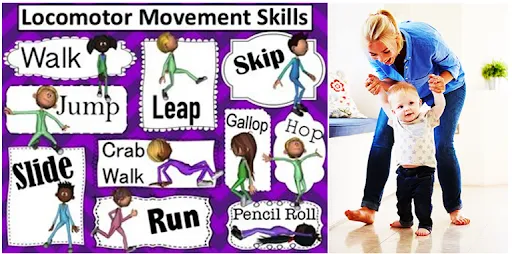
Quick Answer: Locomotor skills are movement abilities that help children get from one place to another - crawling, walking, running, jumping, hopping, galloping, and skipping. These skills develop in a predictable sequence from birth through age 6. Most children walk by 12-15 months, run by 18-24 months, and skip by age 5-6. Support development through floor time, outdoor play, and patience - every child develops at their own pace!
What Are Locomotor Skills?
Locomotor skills are movements that transport the body from one place to another. They’re the foundation for physical activity, sports, and everyday independence.
Types of Locomotor Skills
| Skill | What It Is | Typical Age |
|---|---|---|
| Rolling | Moving body over on floor | 3-6 months |
| Crawling | Moving on hands and knees | 6-10 months |
| Cruising | Walking while holding furniture | 9-12 months |
| Walking | Independent steps | 9-15 months |
| Running | Fast walking with both feet off ground | 18-24 months |
| Jumping | Both feet leave ground together | 2-3 years |
| Hopping | Jumping on one foot | 3-4 years |
| Galloping | Step-hop pattern, one foot leads | 3-4 years |
| Skipping | Alternating step-hop | 5-6 years |
| Leaping | One-foot takeoff, landing on other foot | 4-5 years |
Development Timeline: What to Expect
0-6 Months
| Milestone | What You’ll See |
|---|---|
| Head control | Lifts head during tummy time |
| Rolling | Back to tummy, tummy to back |
| Early sitting | With support |
6-12 Months
| Milestone | What You’ll See |
|---|---|
| Sitting | Without support |
| Crawling | May vary in style (army crawl, hands-knees, scooting) |
| Pulling to stand | Using furniture |
| Cruising | Walking while holding objects |
| First steps | Some babies walk by 12 months |
12-24 Months
| Milestone | What You’ll See |
|---|---|
| Walking | Getting steadier |
| Climbing | Stairs with help, playground structures |
| Running | Emerges around 18 months |
| Kicking | Ball kicking begins |
2-3 Years
| Milestone | What You’ll See |
|---|---|
| Jumping | Both feet off ground |
| Climbing stairs | Alternating feet |
| Running | More coordinated |
| Balance | Can stand on one foot briefly |
3-5 Years
| Milestone | What You’ll See |
|---|---|
| Hopping | On one foot |
| Galloping | Step-hop with one foot leading |
| Skipping | Emerges around age 5 |
| Leaping | Jumping over obstacles |
Supporting Your Child’s Development
Activities by Age
Babies (0-12 months)
| Activity | How It Helps |
|---|---|
| Tummy time | Builds core and neck strength |
| Reaching for toys | Motivates movement |
| Safe floor space | Room to explore and roll |
| Pull-to-stand toys | Encourages standing |
Toddlers (1-2 years)
| Activity | How It Helps |
|---|---|
| Push toys | Support for early walking |
| Safe climbing | Builds strength and coordination |
| Dancing | Balance and coordination |
| Ball play | Kicking and throwing |
| Outdoor walking | Different surfaces challenge balance |
Preschoolers (3-5 years)
| Activity | How It Helps |
|---|---|
| Obstacle courses | Multiple locomotor skills |
| Hopscotch | Hopping and jumping |
| Running games | Speed and coordination |
| Tricycle/balance bike | Coordination and balance |
| Playground play | Climbing, jumping, running |
Common Questions About Milestones
“My baby skipped crawling. Is that okay?”
Yes! Some babies skip traditional crawling and move straight to walking. As long as baby is finding ways to move (scooting, rolling, etc.) and eventually walks normally, there’s no concern.
“My toddler is 14 months and not walking yet.”
Most babies walk between 9-15 months, with some normal variation up to 18 months. If baby is:
- Pulling to stand
- Cruising along furniture
- Making progress …then likely just taking their time. Consult your pediatrician if no walking by 18 months.
Walking Timeline Variations
| Factor | May Walk Earlier | May Walk Later |
|---|---|---|
| Temperament | Risk-takers | Cautious babies |
| Build | Lighter babies | Heavier babies |
| Birth order | First-borns may walk later | Siblings to mimic |
| Motor focus | Focused on movement | Focused on language |
Red Flags to Watch
Consult your pediatrician if:
| Age | Concern |
|---|---|
| 4 months | No head control during tummy time |
| 6 months | Not rolling |
| 9 months | Not sitting with support |
| 12 months | Not pulling to stand |
| 18 months | Not walking |
| Any age | Losing previously gained skills |
| Any age | Using one side of body much more than other |
| Any age | Persistent toe-walking after age 2 |
Other Warning Signs
- Stiff or floppy muscle tone
- Legs that cross scissor-like when standing
- Strong preference for one hand before age 1
- Not bearing weight on legs when held standing (9+ months)
Creating an Active Environment
Indoor Space
- Clear floor space - Room to move safely
- Soft surfaces - For early walkers’ falls
- Low furniture - Safe for pulling up
- No walkers - Baby walkers delay walking and are dangerous
Outdoor Time
- Daily outdoor play - Different terrain challenges balance
- Grass, sand, hills - Varying surfaces build skills
- Playgrounds - Climbing, jumping opportunities
- Open spaces - Room to run
Safety While Encouraging Movement
| Do | Don’t |
|---|---|
| Baby-proof the home | Restrict movement too much |
| Supervise climbing | Use baby walkers |
| Soft landing areas | Leave hazards in crawling path |
| Appropriate shoes (or barefoot) | Stiff shoes for new walkers |
The Role of Free Play
Structured activities are fine, but free play is essential for locomotor development:
Why Free Play Matters
- Child practices what THEY want to practice
- Builds problem-solving (how do I climb this?)
- Develops at their own pace
- More motivated when self-directed
What Free Play Looks Like
- Floor time with minimal equipment
- Outdoor exploration
- Playground time without directed activities
- Music and movement (dancing freely)
Tip: Resist the urge to always “teach” movement. Often, giving children safe space and time to explore is more effective than structured activities.
Footwear and Development
Barefoot Is Best (When Safe)
Bare feet help children:
- Feel the ground for balance
- Strengthen foot muscles
- Develop proper walking patterns
When to Wear Shoes
- Outdoors on rough/hot/cold surfaces
- Protection from hazards
Choosing First Shoes
| Choose | Avoid |
|---|---|
| Flexible sole | Stiff, rigid shoes |
| Lightweight | Heavy shoes |
| Room for toes | Tight or narrow |
| Secure fit | Slip-ons that fall off |
Frequently Asked Questions
Q: Will a baby walker help my child walk sooner?
A: No! Baby walkers actually delay walking and are dangerous. AAP recommends against them. Alternatives: stationary activity centers, push toys.
Q: My child is clumsy and falls a lot. Is this normal?
A: Falling is normal, especially in early walkers and toddlers. Clumsiness that doesn’t improve, or that significantly affects activities, should be evaluated by a pediatrician.
Q: Should I enroll my toddler in movement classes?
A: Optional! Classes can be fun for socialization, but they’re not necessary for locomotor development. Free play achieves the same goals. If child enjoys it, great - but don’t stress if not.
Q: My 3-year-old can’t hop. Should I be concerned?
A: Hopping typically develops between 3-4 years. If not hopping by age 4, mention it at your checkup, but it’s often just a matter of practice and development.
Q: Does more tummy time mean walking earlier?
A: Tummy time builds the foundation (core strength, neck control) for later skills, but doesn’t directly predict walking timing. Do tummy time for overall development, not to speed up milestones.
Key Takeaways
- Development follows a sequence - Roll → Sit → Crawl → Stand → Walk → Run → Jump
- Wide range of normal - Walking 9-18 months is typical
- Free play is essential - Give safe space to explore
- Barefoot when possible - Better for balance and foot development
- No baby walkers - Delay development and are dangerous
- Watch for red flags - But don’t compare to other children
- Every child is different - Milestones are guidelines, not deadlines
This article was reviewed by Babynama Pediatricians. Last updated: January 2026
Need personalized guidance? Book a consultation with our pediatricians or explore our Care Plans for 24/7 expert support!
General information for Indian parents, not a substitute for your pediatrician. In an emergency, call 112 or 108.
Continue with this topic
A useful next step
Baby development milestones by ageSee movement, language, social and cognitive milestones from birth to 3 years.Have a question about your little one?
Join our free community for live Q&A with MD pediatricians — no cost to join.
Join the free community