Quick Answer
Your baby’s bones are actively growing and developing from birth through early adulthood, and the first 2 years are especially critical. Good news for parents: ensuring strong bones (haddiyon ki mazbooti) is simpler than you think - proper feeding (breastmilk or formula), vitamin D supplementation, and age-appropriate physical activity are the key ingredients. Whether your baby is breastfed, formula-fed, or on mixed feeding, this guide will help you support optimal bone health.
Understanding Your Baby’s Bones
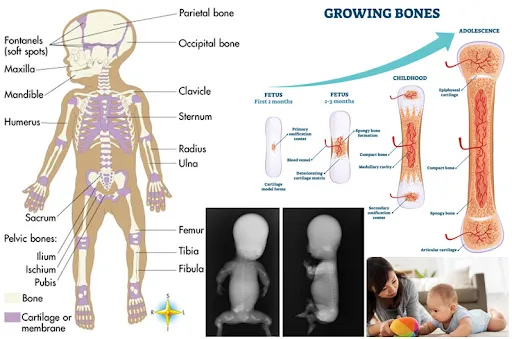
Amazing Bone Facts
- Newborns have about 300 bones (adults have only 206!)
- Baby’s bones gradually fuse together as they grow
- The “soft spot” (fontanelle) on baby’s head allows brain growth and usually closes between about 9 and 18 months (the normal range is wide — some close later)
- The large majority of your bone mass is built during childhood and the teen years - so childhood nutrition matters hugely!
Why Infant Bones Are Different
Baby bones are softer and more flexible than adult bones because they contain more cartilage (naram haddi). This is nature’s design - it helps during birth and allows for rapid growth. Over time, calcium and minerals harden the bones through a process called ossification.
Nutrition for Strong Bones: Age-by-Age Guide
0-6 Months: Milk is Everything
Breastfed Babies:
-
Breastmilk provides perfect calcium-to-phosphorus ratio
-
BUT breastmilk is low in Vitamin D
-
Vitamin D supplement is essential - 400 IU daily from birth Formula-Fed Babies:
-
Formula (NAN, Lactogen, Similac, Aptamil, Enfamil) is fortified with:
-
Calcium
-
Vitamin D
-
Phosphorus
-
Still need to ensure adequate sunlight exposure
-
Follow preparation instructions exactly Mixed Feeding:
-
If giving both breastmilk and formula, Vitamin D drops are still recommended
-
Calcium needs are usually met through milk
Formula Comparison for Bone Health
| Formula | Calcium (per 100ml) | Vitamin D (per 100ml) | Price Range (400g) |
|---|---|---|---|
| NAN Pro 1 | 41mg | 40 IU | Rs. 650-750 |
| Lactogen 1 | 38mg | 32 IU | Rs. 400-450 |
| Similac Advance | 52mg | 40 IU | Rs. 700-800 |
| Aptamil 1 | 45mg | 41 IU | Rs. 750-850 |
| Enfamil A+ | 43mg | 40 IU | Rs. 600-700 |
Note: All standard infant formulas meet minimum bone nutrition requirements. Choice depends on baby’s tolerance and family budget.
6-12 Months: Adding Solid Foods
Continue breastmilk/formula as primary nutrition, plus introduce:
Calcium-Rich Foods:
-
Ragi (nachni) porridge - excellent calcium source!
-
Homemade paneer (small amounts)
-
Curd/dahi (after 8 months)
-
Sesame seeds (til) in foods
-
Green leafy vegetables (palak, methi) - pureed Vitamin D Sources:
-
Fish (if non-vegetarian family)
-
Egg yolk
-
Fortified cereals
-
Sunlight - most important!
1-3 Years: Building the Foundation
Daily Requirements:
- Calcium: 700mg/day
- Vitamin D: 600 IU/day Good Sources:
| Food | Calcium Content |
|---|---|
| 1 cup milk | 300mg |
| 1 cup dahi | 300mg |
| 1 roti with ragi | 100mg |
| 50g paneer | 250mg |
| 1 tbsp til | 88mg |
Step-by-Step Guide: Supporting Bone Development
Step 1: Ensure Adequate Vitamin D (From Birth)
Why it matters: Without Vitamin D, calcium cannot be absorbed properly.
How to get it:
- Sunlight exposure (best natural source)
- Morning sun between 7-10 AM
- 15-20 minutes, 3-4 times per week
- Expose arms and legs (not just face)
- Avoid peak afternoon sun
- Vitamin D drops
- 400 IU daily for breastfed babies
- Ask doctor about formula-fed babies
- Brands available: Dvital, Calshine-D, Uprise-D3 Indian context: Despite abundant sunshine, Vitamin D deficiency is common in Indian children due to limited outdoor time and darker skin requiring more sun exposure.
Step 2: Provide Calcium Through Diet
For babies 0-6 months:
-
Breastmilk or formula only - no other calcium sources needed For babies 6+ months:
-
Continue milk feeds
-
Add ragi-based foods (ragi porridge, ragi dosa)
-
Include green vegetables
-
Small amounts of dahi after 8 months Cost-effective calcium sources for Indian families:
-
Ragi flour: Rs. 80-100/kg
-
Sesame seeds: Rs. 150-200/kg
-
Green leafy vegetables: Rs. 20-40/bunch
-
Homemade dahi from milk
Step 3: Encourage Physical Activity
0-6 months:
-
Tummy time daily (starts from day 1!)
-
Gentle stretching during massage (malish)
-
Allow kicking and movement 6-12 months:
-
Crawling time - don’t use walkers!
-
Supported standing
-
Reaching for toys 1-3 years:
-
Walking, running, climbing
-
Dancing to music
-
Playing outside
-
Avoid excessive screen time
Step 4: Limit Bone-Weakening Factors
- Avoid excess salt in baby food
- Limit sugary foods - interferes with calcium absorption
- No carbonated drinks for children
- Don’t over-restrict fat - babies need fat for vitamin D absorption
Indian Traditional Practices That Help Bones
Helpful:
-
Regular oil massage (malish) - improves circulation, muscle strength
-
Ragi in baby’s diet - excellent calcium
-
Til (sesame) ladoos for older children
-
Playing outdoors in morning sun Not Helpful (myths):
-
Janam ghuttis claiming to strengthen bones
-
Excessive ghee - doesn’t directly help bones
-
Keeping baby indoors “for protection” - reduces Vitamin D
Common Mistakes to Avoid
- Skipping Vitamin D drops - “Baby gets enough sun” is often not true
- Introducing cow’s milk before 1 year - Stick to breastmilk/formula
- Using walkers - Delays motor development, doesn’t help bones
- Too much milk after 1 year - Should not exceed 400-500ml daily
- Ignoring growth charts - Regular check-ups catch bone issues early
- Diluting formula - Baby doesn’t get enough calcium
When to Consult a Doctor
Routine care:
-
Regular growth monitoring at pediatric visits
-
Ask about Vitamin D supplementation Seek evaluation if:
-
Baby’s soft spot (fontanelle) is bulging or sunken
-
Fontanelle hasn’t closed by 18 months
-
Baby has unusual head shape
-
Bones seem fragile (fractures easily)
-
Delayed motor milestones (not sitting by 9 months, not walking by 18 months)
-
Bow legs that worsen after age 2
-
Baby’s legs look bent or curved
-
Poor growth or weight gain Tests your doctor might order:
-
Vitamin D levels (25-OH Vitamin D)
-
Calcium levels
-
X-rays if bone issues suspected
Signs of Good Bone Health
Your baby’s bones are developing well if:
- Meeting motor milestones (rolling, sitting, crawling, walking on time)
- Good growth (following growth curve)
- Active and energetic
- No unusual bone deformities
Expert Insight: Fed is best. Whether your baby is breastfed, formula-fed, or both, what matters most is that your baby is feeding well and growing. Formula is a valid choice and provides good nutrition for bone development.
FAQs
Q: My baby is exclusively breastfed. Does she need calcium supplements?
A: No, breastmilk provides adequate calcium for babies under 6 months. However, breastmilk is low in Vitamin D, so daily Vitamin D drops (400 IU) are essential. Without Vitamin D, calcium cannot be absorbed properly. After 6 months, continue breastfeeding and add calcium-rich foods like ragi.
Q: Which formula is best for bone health - NAN or Lactogen?
A: Both NAN and Lactogen (and other standard formulas like Similac, Aptamil, Enfamil) contain adequate calcium and Vitamin D for bone development. The main difference is cost - Lactogen is more affordable at Rs. 400-450 vs NAN at Rs. 650-750 for similar quantity. Choose based on what baby tolerates well and family budget.
Q: My 8-month-old hates ragi. How else can I give calcium?
A: Don’t worry! Try these alternatives: homemade dahi, small amounts of paneer, green vegetable purees (palak, methi), sesame seed powder (til) mixed in other foods, or ragi in different forms (ragi dosa, ragi cookies). Continue breastmilk/formula which remains the primary calcium source until age 1.
Q: How much time in sun does my baby need?
A: Aim for 15-20 minutes of morning sun (7-10 AM), 3-4 times per week. Expose baby’s arms and legs, not just face. Avoid peak afternoon sun (12-4 PM). Indian babies with darker skin may need slightly more sun exposure for adequate Vitamin D production. If regular sun exposure isn’t possible, Vitamin D supplements become even more important.
Q: My mother-in-law says formula-fed babies have weaker bones. Is this true?
A: This is a myth. Modern infant formulas are scientifically designed to provide all nutrients needed for bone development, including calcium, Vitamin D, and phosphorus. Formula-fed babies develop healthy bones when fed correctly. The key is proper preparation (correct water ratio) and adequate Vitamin D supplementation if recommended by your doctor.
Q: My toddler doesn’t drink milk. Will his bones be weak?
A: Many toddlers reduce milk intake - this is normal. Focus on other calcium sources: dahi, paneer, cheese, ragi, sesame seeds, and leafy greens. If your child eats a variety of these foods, bone health will be fine. Ensure Vitamin D through sunlight or supplements. Aim for 700mg calcium daily through combined food sources.
This article was reviewed by a pediatrician. Last updated: June 2026
General information for Indian parents, not a substitute for your pediatrician. In an emergency, call 112 or 108.
Need personalized guidance? Book a consultation with our pediatricians or explore our Care Plans for 24/7 expert support!
Related Tools
Have a question about your little one?
Join our free community for live Q&A with MD pediatricians — no cost to join.
Join the free community