Quick Answer
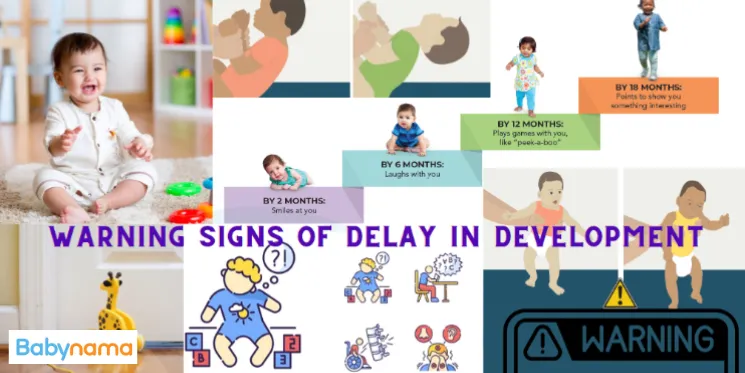
Every child develops at their own pace - what looks like a “delay” is often just variation within the typical range. However, knowing the warning signs helps you seek early intervention if truly needed. Early identification and support can make a significant difference. Trust your instincts - if something concerns you, talk to your pediatrician.
Understanding Developmental Delays
What is a Developmental Delay?
- Not reaching milestones at expected age
- Can be mild or significant
- Can affect one or multiple areas
- Often temporary
- May need intervention Types of Delays:
| Type | Affects |
|---|---|
| Motor | Movement, coordination |
| Speech/Language | Communication |
| Cognitive | Thinking, problem-solving |
| Social-Emotional | Interaction, emotions |
| Global | Multiple areas |
Important: All children develop differently. A slight lag in one area doesn’t always mean a problem!
Normal Variation vs Concern
Wide Range of Normal:
-
Walking: 9-18 months is normal range
-
First words: 8-14 months is normal
-
Crawling: Some babies skip it entirely
-
Sitting: 4-9 months is normal range When to Take Note:
-
Significantly behind age peers
-
Regression (losing skills)
-
Multiple areas affected
-
Not progressing over time
-
Very different from siblings at same age
Warning Signs by Age
Birth to 3 Months
Red Flags:
- No head control when pulled up
- Very stiff or very floppy
- No response to loud sounds
- Doesn’t watch moving objects
- Doesn’t smile at people by 2-3 months
- Poor sucking/feeding
- No eye contact
4-6 Months
Red Flags:
- Can’t hold head steady
- Doesn’t reach for objects
- No babbling sounds
- Doesn’t respond to sounds
- One-sided movements only
- Very stiff or very floppy
- Doesn’t smile or show joy
7-9 Months
Red Flags:
- Can’t sit with support
- Doesn’t bear weight on legs when held
- Doesn’t babble (“mama”, “baba”)
- Doesn’t recognize familiar people
- Doesn’t look where you point
- Doesn’t transfer toys between hands
- Doesn’t respond to name
10-12 Months
Red Flags:
- Doesn’t crawl or move around
- Can’t stand with support
- Doesn’t search for hidden objects
- No single words
- Doesn’t point
- Doesn’t wave bye-bye
- Lost skills previously had
13-18 Months
Red Flags:
- Not walking by 18 months
- Fewer than 5 words by 18 months
- Doesn’t follow simple instructions
- Doesn’t point to show things
- Doesn’t imitate others
- No pretend play starting
- Lost skills previously had
2-3 Years
Red Flags:
- Falls frequently, poor balance
- Very unclear speech
- Can’t follow 2-step instructions
- Doesn’t play with other children
- Very limited pretend play
- Extreme difficulty separating from parent
- Very repetitive behaviors
Common Causes
Contributing Factors:
| Factor | Examples |
|---|---|
| Premature birth | Allow for adjusted age |
| Genetic conditions | Down syndrome, etc. |
| Hearing/vision issues | May affect multiple areas |
| Infections | Meningitis, CMV |
| Birth complications | Oxygen deprivation |
| Nutritional deficiencies | Severe malnutrition |
| Environmental factors | Limited stimulation |
| Unknown | Many cases have no clear cause |
Often No Clear Cause:
- Many delays have no identifiable reason
- Doesn’t mean anything was done wrong
- Focus on support, not blame
When to Worry (Red Flags at Any Age)
🚨 Go to the nearest hospital or call 112 (national emergency) or 108 (ambulance) right away if your child has:
- A seizure (fits/convulsions)
- Difficulty breathing, blue lips, or becomes unresponsive
Contact your pediatrician promptly (same day if possible) if:
-
Loss of skills baby previously had (regression)
-
Not responding to sounds at any age
-
No eye contact by 3 months
-
Very stiff or very floppy body
-
Not progressing at all over time Schedule appointment if:
-
Concerns about any milestone
-
Behind in multiple areas
-
Teacher/caregiver expresses concern
-
Family history of developmental issues
-
Your instinct says something is off
What You Can Do
At Home
Support Development:
-
Talk to your baby constantly
-
Read together daily
-
Play on floor at baby’s level
-
Provide tummy time
-
Offer age-appropriate toys
-
Encourage exploration
-
Follow baby’s interests Create Stimulating Environment:
-
Sensory experiences
-
Music and singing
-
Outdoor time
-
Social interaction
-
Free play time
-
Safe exploration space
Getting Help
Early Intervention:
-
Available from birth in India
-
Don’t wait if concerned
-
Earlier = better outcomes
-
Many therapies available Where to Get Help:
-
Pediatrician (first step)
-
Developmental pediatrician
-
Child psychologist
-
Speech therapist
-
Occupational therapist
-
Physical therapist In India:
-
Government hospitals
-
NIMHANS and similar centers
-
District early intervention centers
-
Private specialists
-
NGOs working in child development
Remember: Early Help Makes Difference
Why Early Matters:
-
Brain is most adaptable in early years
-
Earlier intervention = better outcomes
-
Can prevent secondary problems
-
Helps child reach full potential
-
Supports whole family Most Children Do Well:
-
Many delays are temporary
-
With support, children catch up
-
Each child has unique strengths
-
Progress may be slower but happens
-
Focus on progress, not perfection
Frequently Asked Questions
Q: Mera bachcha abhi tak walk nahi kar raha - 14 months ho gaye - kya chinta karni chahiye?
A: Walking anywhere from 9-18 months is normal! At 14 months, there’s no need to worry yet. Is your baby pulling to stand? Cruising along furniture? These are good signs. Focus on giving safe opportunities to practice. If not walking by 18 months, or if you notice other concerns too, talk to your pediatrician.
Q: My child was reaching milestones but seems to have lost some skills - is this serious?
A: Regression (losing skills) is something to take seriously. While it can sometimes happen temporarily during illness or stress, losing skills like speech, social engagement, or motor abilities should be evaluated by a pediatrician promptly. This is different from normal variation or slow progress.
Q: Premature baby ke liye milestones kaise calculate karein?
A: For premature babies, use “corrected age” for the first 2-3 years. Corrected age = actual age minus weeks of prematurity. So a 6-month-old born 2 months early would be compared to 4-month milestones. Premature babies often catch up by age 2-3, but regular follow-up is important.
Q: Is my child autistic if they’re not talking yet?
A: Speech delay alone doesn’t mean autism. Autism involves a pattern of differences in social communication, interaction, and behaviors - not just speech. Some children are late talkers but develop typically. If you have concerns about autism, look for: limited eye contact, not responding to name, lack of pointing/showing, limited social interest. Discuss with your pediatrician for proper evaluation. For the signs to watch at each age, see our guide to signs of autism in babies and toddlers.
Q: Doctor bolte hain “wait and see” but I’m worried - what should I do?
A: Trust your instincts! If you’re concerned, you have every right to seek another opinion or ask for referral to a developmental specialist. You can also start supportive activities at home (talking more, reading, play). Document your concerns with specific examples to share with doctors. Early evaluation doesn’t hurt - it either provides reassurance or gets help started.
This article was reviewed by Babynama Pediatricians.
General information for Indian parents, not a substitute for your pediatrician. In an emergency, call 112 or 108.
Need personalized guidance? Book a consultation with our pediatricians or explore our Care Plans for 24/7 expert support!
Continue with this topic
A useful next step
Baby development milestones by ageSee movement, language, social and cognitive milestones from birth to 3 years.Have a question about your little one?
Join our free community for live Q&A with MD pediatricians — no cost to join.
Join the free community