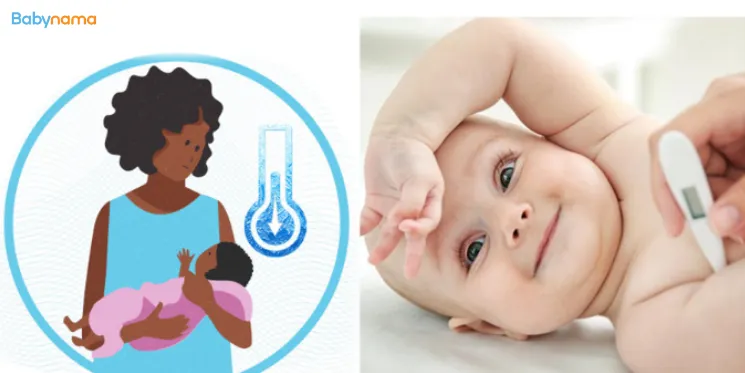
Quick Answer: Normal baby temperature is 36.5-37.4°C (97.7-99.3°F). Below that is low — but how low decides what you do.
- Below 36.0°C (96.8°F): go to hospital now, at any age. Do NOT warm the baby and wait. A low temperature can be the first sign of sepsis (a serious infection) — a sick newborn often runs cold, not hot. Keep the baby skin-to-skin and cover their head on the way.
- 36.0-36.4°C (96.8-97.5°F): usually cold stress or a measurement error. Re-take it correctly, warm the baby skin-to-skin, feed, and re-check in 30 minutes — it should climb above 36.5°C. If it does not rise, or your baby is under 3 months, or is feeding poorly, sleepy or floppy, see a doctor the same day.
See the full normal baby temperature chart for what your exact reading means.
What Is Normal Baby Temperature?
| Reading | Meaning |
|---|---|
| 36.5-37.4°C (97.7-99.3°F) | Normal |
| 36.0-36.4°C (96.8-97.5°F) | Low (cold stress) — re-take, warm, re-check in 30 min |
| Below 36.0°C (96.8°F) | Hypothermia — hospital now, any age. Can be sepsis. |
| Above 37.5°C (99.5°F) | Elevated |
| Above 38°C (100.4°F) | Fever |
Where to Measure
For a low reading, the armpit (axillary) method is what most Indian families use, and it is what WHO and India’s IMNCI guidance use for babies: safe at any age and accurate enough when done properly. If a reading comes back low, repeat it with the thermometer tip in the centre of a dry armpit and the arm held gently against the body for the full time. Do not add a fixed correction to an armpit number, and do not take a rectal temperature at home. If the repeat is still low, or your baby is under 3 months or unwell in any way, treat it as real and get help as described below.
The normal ranges for every method (rectal, armpit, ear, forehead), in both °C and °F, live on our normal baby temperature chart. This page is about what to do when the reading comes back low.
Why Do Babies Get Cold Easily?
Babies are vulnerable to temperature drops because:
| Factor | Why It Matters |
|---|---|
| Large head | Babies lose heat quickly through their head |
| Small body mass | Less able to generate and retain heat |
| Thin skin | Less insulation |
| Immature temperature control | Brain’s thermostat isn’t fully developed |
| Limited movement | Can’t shiver effectively to warm up |
Newborns Are Most at Risk
In the first few weeks, babies cannot regulate temperature well. This is why:
- Skin-to-skin contact is encouraged after birth
- Hospitals keep delivery rooms warm
- Newborns need careful monitoring
Common Causes of Low Temperature
Environmental Causes (Most Common)
| Cause | Solution |
|---|---|
| Cold room | Keep room at 20-22°C (68-72°F) |
| Wet clothes/diaper | Change immediately |
| After bath | Dry quickly, warm room |
| Underdressed | Add layers, cover head |
| Air conditioning | Dress appropriately, avoid direct drafts |
Medical Causes
| Cause | Other Signs |
|---|---|
| Infection (sepsis) | Lethargy, poor feeding, fever may follow |
| Low blood sugar | Jitteriness, poor feeding, lethargy |
| Prematurity | Born before 37 weeks |
| Thyroid problems | Prolonged jaundice, constipation |
Signs Your Baby Is Too Cold
Watch for these warning signs:
Early Signs
- Cool hands and feet (can be normal, check chest)
- Skin feels cool to touch (check tummy or back)
- Pale or mottled skin
- Less active than usual
Serious Signs (Seek Help)
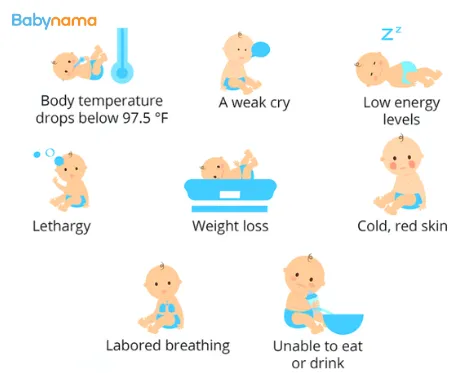
- Chest or back feels cold
- Refusing to feed
- Weak cry
- Unusual sleepiness
- Skin looks blue or gray
- Slow, shallow breathing
What to Do If Baby’s Temperature Is Low
⚠️ First, check how low it is
Below 36.0°C (96.8°F) — go to hospital now, at any age. Do NOT try to warm the baby at home and re-check. A low temperature can be the first sign of sepsis, and warming will not treat an infection. Keep the baby skin-to-skin and cover their head while you travel.
The steps below are ONLY for a reading of 36.0-36.4°C (96.8-97.5°F) — cold stress in an otherwise well baby.
Immediate Steps (only for 36.0-36.4°C, in a baby who is otherwise well)
- Move to warm room (20-22°C)
- Remove wet clothes if any
- Skin-to-skin contact - Place baby against your bare chest, cover both of you
- Add layers - Warm clothes, hat, blanket
- Recheck temperature in 15-20 minutes — it should climb above 36.5°C
- If it does not rise, or your baby is under 3 months, or is feeding poorly, sleepy or floppy — see a doctor the same day.
How to Warm Baby Safely
| Do | Don’t |
|---|---|
| Skin-to-skin (kangaroo care) | Hot water bottles (burn risk) |
| Warm hat and socks | Electric blankets |
| Extra blanket layer | Heating pads |
| Warm the room | Overheating |
| Breastfeed (warmth + calories) | Rubbing limbs vigorously |
Best method: Skin-to-skin contact is the safest and most effective way to warm a cold baby.
When to Seek Medical Help
Call Your Doctor If:
- Temperature stays below 36.5°C despite warming efforts
- Baby under 3 months with any low temperature
- Baby seems unwell (not feeding, very sleepy, floppy)
- Temperature keeps dropping
Go to Emergency If:
🚨 Call 112 (national emergency) or 108 (ambulance), or go to the nearest hospital, if your baby has any of these:
- Temperature below 35°C (95°F) - severe hypothermia
- Baby is limp or unresponsive
- Skin looks blue, gray, or mottled
- Not breathing normally
- Won’t feed at all
- Signs of infection (also may have fever)
For babies under 3 months: Any fever of 38°C (100.4°F) or higher is a same-day emergency. Don’t medicate and wait — see a doctor or go to hospital the same day. A low temperature in this age group is equally urgent.
Preventing Low Temperature
Room Temperature
- Keep baby’s room at 20-22°C (68-72°F)
- Use room thermometer to check
- Avoid drafts near baby’s sleep area
Dressing Baby
| Temperature | What to Dress |
|---|---|
| Above 24°C | Light onesie |
| 20-24°C | Onesie + light sleep sack |
| 16-20°C | Onesie + warm sleep sack |
| Below 16°C | Layers + warm sleep sack + hat indoors |
General Rule
Baby needs one more layer than you do to feel comfortable.
After Bath
- Prepare warm room before undressing
- Have towel and clothes ready
- Dry quickly and thoroughly
- Dress immediately
- Skip bath on very cold days if baby is unwell
Low Temperature vs Fever: Both Matter
| Low Temperature | Fever |
|---|---|
| Below 36.5°C | Above 38°C |
| Can indicate infection in newborns | Also indicates infection |
| Warm the baby | Manage fever, don’t overdress |
| Often overlooked | More commonly recognized |
Key point: In young babies, especially newborns, a LOW temperature can be just as concerning as a fever. Sick newborns often can’t mount a fever and may actually become cold instead.
Special Situations
Premature Babies
Preemies are at higher risk for low temperature:
- Less body fat for insulation
- More immature temperature regulation
- May need incubator care initially
- Monitor closely after discharge
During Illness
A sick baby may:
- Have trouble maintaining temperature
- Need extra warmth
- Show low temperature before developing fever
Winter/Cold Weather
- Don’t take newborns out in extreme cold
- Warm car before placing baby in car seat
- Use blanket over car seat (not under straps)
- Remove extra layers once indoors
Frequently Asked Questions
Q: My baby’s hands and feet are always cold. Is this low temperature?
A: Cold hands and feet can be normal! Babies have immature circulation. Check the chest or back - if warm, baby’s core temperature is fine. Cold hands/feet with cold chest needs attention.
Q: Should I wake my baby to check temperature?
A: Not routinely. If baby is sleeping peacefully, well-dressed, and the room is warm, they’re likely fine. Check if you have concerns or baby seems unwell.
Q: Can too many baths cause low temperature?
A: Frequent baths don’t directly cause hypothermia, but each bath is an opportunity for heat loss. In cold weather, bathe every 2-3 days. Always prepare warm room and dry quickly.
Q: Is low temperature in babies an emergency?
A: It depends on how low. Below 36.0°C (96.8°F) it is an emergency at any age — go to hospital now, do not warm and wait. Between 36.0-36.4°C in an older baby who is otherwise well, warm them and re-check in 15-20 minutes; if it does not come up, see a doctor the same day. For a newborn under 1 month, any low temperature needs a doctor today, even if warming brings it up.
Q: My newborn has low temperature but seems fine. Should I worry?
A: Yes — and “seems fine” is exactly what makes it dangerous. A newborn with a serious infection (sepsis) often runs cold, not hot, and can look settled while becoming very unwell. If the reading is below 36.0°C (96.8°F), go to hospital now — do not warm the baby and wait to see if it comes up. Warming does not treat an infection. If the reading is 36.0-36.4°C, warm them skin-to-skin and feed, re-check in 15-20 minutes, and see a doctor the same day if it does not rise or your baby is under 3 months, feeding poorly, sleepy or floppy.
Key Takeaways
- Normal range is 36.5-37.4°C - Below this is considered low; 37.5°C and above is a fever
- Below 36.0°C: hospital now, any age - Do not warm and wait. A low temperature can be the first sign of sepsis
- 36.0-36.4°C: warm and re-check in 15-20 minutes - It should climb above 36.5°C; if it does not rise, or the baby is under 3 months or unwell, see a doctor the same day
- Newborns are high risk - A sick newborn often runs cold, not hot. Take a low temperature seriously
- Warm with skin-to-skin - Safest method, but never a substitute for a doctor when the reading is below 36.0°C
- Seek help if concerned - Trust your instincts
- Prevention is key - Keep room warm, dress appropriately
This article was reviewed by Babynama Pediatricians. Last updated: January 2026
General information for Indian parents, not a substitute for your pediatrician. In an emergency, call 112 or 108.
Need personalized guidance? Book a consultation with our pediatricians or explore our Care Plans for 24/7 expert support!
Have a question about your little one?
Join our free community for live Q&A with MD pediatricians — no cost to join.
Join the free community