Quick Answer: Does My Child Have Sinusitis?
Not every stuffy nose is sinusitis! A common cold (nazla-zukam) usually resolves in 7-10 days. If your child has a runny nose with thick yellow-green discharge lasting MORE than 10 days, OR a cold that seems to get better then gets worse again, it might be sinusitis.
Reassurance: Sinusitis sounds scary, but most cases in children are mild and treatable. With proper care, most children feel better soon.
🚨 Babies under 3 months: ANY fever of 100.4°F (38°C) or higher is a same-day emergency — do not wait or treat at home. Take your baby to a doctor or hospital immediately.
What is Sinusitis?
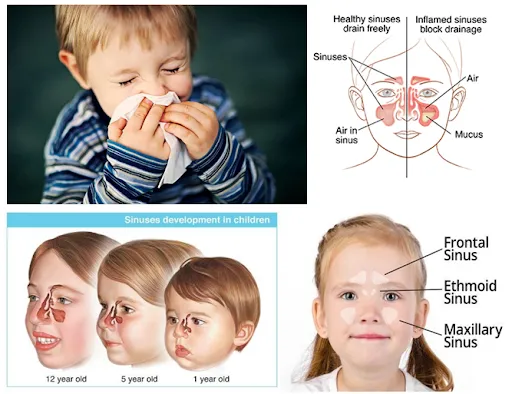
Sinusitis is an infection or inflammation of the sinuses - the air-filled spaces around the nose and eyes. In children, sinuses are not fully developed until teenage years, which actually makes severe complications rare.
Types of Sinusitis
| Type | Duration | Common in Kids? |
|---|---|---|
| Acute | Less than 4 weeks | Most common |
| Subacute | 4-12 weeks | Less common |
| Chronic | More than 12 weeks | Rare in children |
| Recurrent | 3+ episodes per year | Needs evaluation |
How to Tell Sinusitis from Common Cold
| Symptom | Common Cold | Sinusitis |
|---|---|---|
| Duration | 7-10 days | More than 10 days |
| Nasal discharge | Clear, then may turn colored | Thick yellow-green for 3+ days |
| Pattern | Gets better gradually | Gets worse OR improves then worsens |
| Fever | Usually first 2-3 days only | Can persist or return |
| Headache | Mild | More prominent, facial pain |
| Cough | Present | Often worse at night |
| Bad breath | Usually not | Often present |
Sinusitis Symptoms by Age
Babies and Toddlers (Under 3 Years)
- Runny nose lasting more than 10 days
- Thick, colored nasal discharge
- Cough (especially at night)
- Fussiness and irritability
- Reduced appetite
- Mild fever that comes and goes
- Swelling around eyes (sometimes)
Older Children (3+ Years)
- All above symptoms PLUS:
- Headache or facial pain/pressure
- Pain around eyes, forehead, or cheeks
- Bad breath (saanson mein badbu)
- Feeling of “stuffiness” in face
- Decreased sense of smell
- Tiredness
When Sinusitis Causes Fever
| Fever Level | Interpretation | Action |
|---|---|---|
| Any fever in baby under 3 months (≥100.4°F / 38°C) | Medical emergency | See a doctor/hospital SAME DAY |
| No fever with cold >10 days | Likely mild sinusitis | Home care, monitor |
| Low fever (99-101°F) | Bacterial infection possible | May need a doctor’s review |
| Moderate fever (101-102°F) | Bacterial sinusitis possible | Consult doctor |
| High fever (>102°F) | Active infection | See doctor same day |
| Fever with eye swelling | Possible complication | URGENT - go to hospital |
Paracetamol Dosage for Sinusitis Fever
Paracetamol (Calpol) is dosed by your child’s weight, not age:
- 15 mg per kg per dose, every 4–6 hours as needed
- Maximum 60 mg/kg in 24 hours (and no more than 4 doses in a day)
How to convert to ml:
- Calpol Drops (100 mg/ml): dose in ml = (weight in kg × 15) ÷ 100
- Calpol Syrup (120 mg/5 ml): dose in ml = (weight in kg × 15) ÷ 24
For example, a 10 kg child needs about 150 mg per dose — roughly 1.5 ml of drops or 6.25 ml of syrup.
Important: Do NOT give paracetamol to a baby under 3 months without a doctor’s advice. If you are unsure of the right amount, confirm the dose with your pediatrician before giving it.
Home Remedies for Sinusitis
1. Saline Nasal Drops/Spray
- Use Nasoclear, Otrivin Baby Saline, or homemade saline
- 2-3 drops in each nostril, 3-4 times daily
- Helps thin mucus and clear congestion
- Generally well tolerated, including in babies
2. Steam Inhalation (for older children)
- NOT for babies - risk of burns
- For children 5+, closely supervised steam only
- Avoid adding eucalyptus or other essential oils for young children — they can irritate airways; plain steam is safer
- 5-10 minutes, twice daily
3. Warm Compress
- Warm (not hot) wet cloth on face
- Place over nose and cheeks
- Relieves pain and pressure
- 5-10 minutes, several times daily
4. Elevation
- Keep head elevated while sleeping
- Use extra pillow or raise mattress head
- Helps mucus drain
5. Hydration
- Plenty of warm fluids
- Warm water, soups, dal paani
- Helps thin mucus
6. Humidifier
- Keeps air moist
- Helps with congestion
- Clean regularly to avoid mold
Medical Treatment for Sinusitis
When Doctor May Prescribe Antibiotics
Antibiotics are needed if:
- Symptoms last more than 10 days without improvement
- Severe symptoms (fever >102°F, facial pain for 3+ days)
- Symptoms improve then get significantly worse Common antibiotics: Amoxicillin (Mox), Amoxicillin-clavulanate (Augmentin)
Duration: Usually 10-14 days - complete the course!
Other Medications
| Medication | Purpose | Note |
|---|---|---|
| Paracetamol (Calpol) | Fever and pain | As per weight |
| Saline spray | Clear congestion | Generally well tolerated; non-medicated |
| Antihistamines | If allergies involved | Doctor’s prescription |
| Nasal steroid spray | Chronic cases | Doctor’s prescription |
Avoid: OTC decongestants (Sinarest, etc.) in young children unless prescribed
When to See a Doctor
Emergency (Go Immediately)
- Swelling or redness around eyes
- Eye pain or difficulty moving eyes
- Vision changes
- Severe headache with stiff neck
- High fever (>103°F) with lethargy
- Swelling on forehead
🚨 For any of the above, go to the nearest hospital immediately, or call 112 (national emergency) or 108 (ambulance). Eye/forehead swelling with sinusitis can signal a serious spreading infection.
Consult Within 24 Hours
- Cold symptoms lasting more than 10 days
- Thick green discharge for more than 3 days
- Fever returning after initially improving
- Facial pain or pressure
- Symptoms getting worse instead of better
Schedule Appointment
- Recurrent sinusitis (3+ times per year)
- Chronic nasal congestion
- Snoring with frequent infections
- To discuss allergy testing
Prevention Tips
- Wash hands frequently - especially before meals
- Avoid sick contacts - keep distance from people with colds
- Keep nose moist - use saline spray in dry weather
- Treat allergies - if your child has allergies, manage them
- Maintain humidity - use humidifier in dry rooms
- Avoid cigarette smoke - secondhand smoke increases risk
- Vaccinations - flu vaccine reduces infections
- Good nutrition - builds immunity
FAQs
Q: My child has had a runny nose for 2 weeks. Is it sinusitis?
A: If the runny nose has thick yellow-green discharge for more than 10 days, or if the cold seemed to get better then got worse, it could be sinusitis. Consult your pediatrician who may recommend antibiotics if needed.
Q: Can I give Sinarest to my child for blocked nose?
A: OTC decongestants like Sinarest are NOT recommended for children under 6 years. Use saline drops instead. For older children, use only under doctor’s guidance.
Q: Does my child need antibiotics for sinusitis?
A: Not always! Viral sinusitis (most cases) doesn’t need antibiotics. Antibiotics are needed only when symptoms persist beyond 10 days, are severe, or get worse after initial improvement. Let your doctor decide.
Q: Child has sinusitis and fever of 101°F. What medicine to give?
A: Give Calpol/paracetamol based on weight (see dosage chart above). Keep child hydrated, use saline nasal drops, and if fever persists or goes above 102°F, consult a doctor.
Q: How long does sinusitis last in children?
A: Acute sinusitis with proper treatment usually improves within 7-10 days, though some symptoms may linger for 2-3 weeks. If symptoms persist beyond 4 weeks, it may be becoming chronic.
Q: Is sinusitis contagious?
A: Sinusitis itself is not contagious, but the viruses that cause it can spread. The underlying cold can be passed to others through coughing, sneezing, or touching contaminated surfaces.
This article was reviewed by Babynama Pediatricians. Last updated: January 2025
This article is for general information for parents in India and does not replace a consultation with your pediatrician. Medicine doses, especially paracetamol, must be confirmed with a doctor based on your child’s exact weight. In an emergency, call 112 (national emergency) or 108 (ambulance), or go to your nearest hospital.
Need personalized guidance? Book a consultation with our pediatricians or explore our Care Plans for 24/7 expert support!
Related Tools
Have a question about your little one?
Join our free community for live Q&A with MD pediatricians — no cost to join.
Join the free community