
Last updated: January 2026
Quick Answer
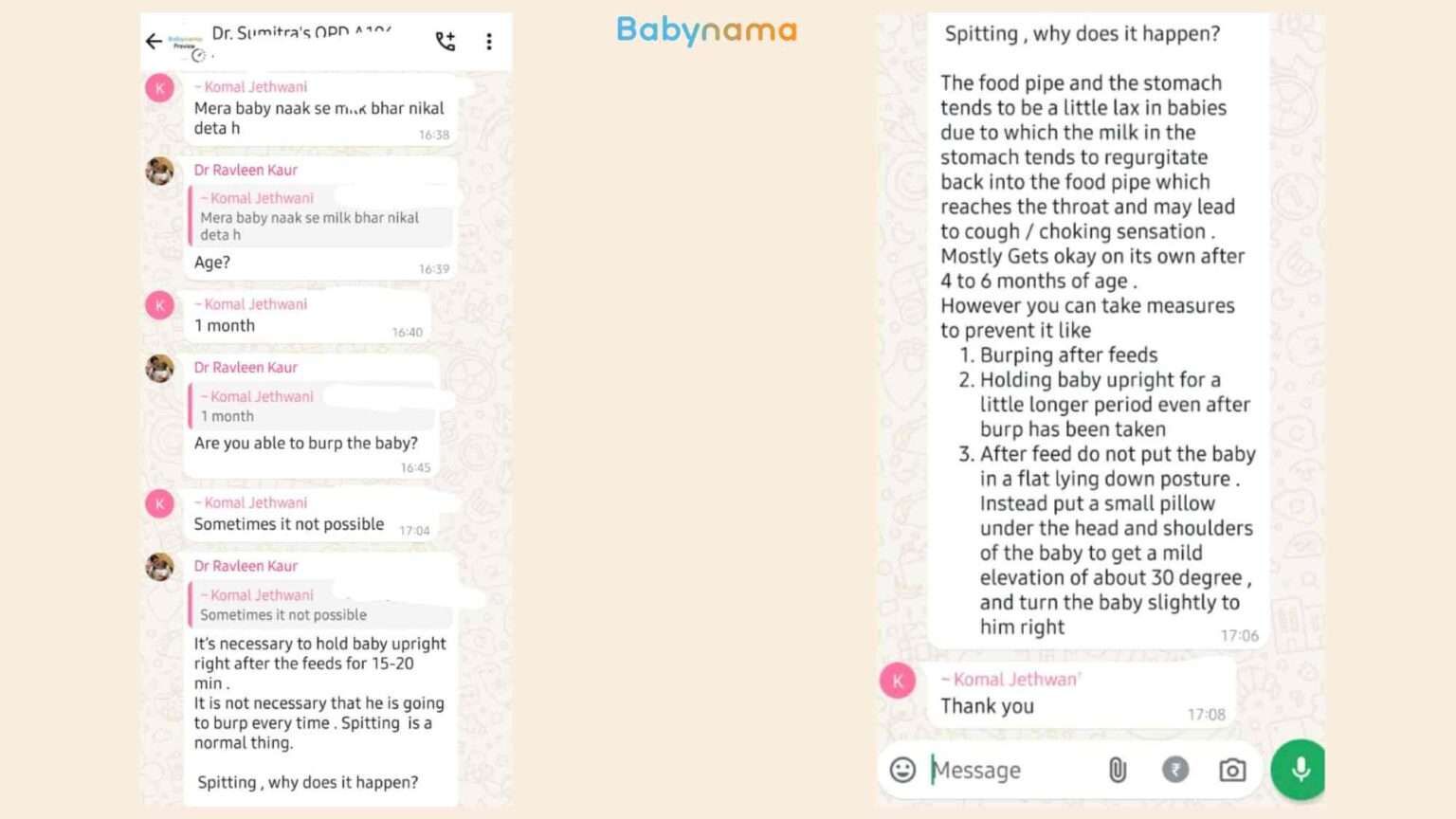
Relax, mamma - doodh naak se aana (milk coming out of baby’s nose) is very common and usually nothing to worry about. This happens because your baby’s mouth and nose are connected at the back of the throat. Almost every baby experiences this at some point, especially during or right after feeds. It looks alarming, but your baby is usually fine.

Why Does This Happen?
When babies feed, milk travels down from the mouth through the throat to the stomach. But because the passages to the nose and throat are connected, sometimes milk takes a detour and comes out through the nose. This is called nasal regurgitation.
Main Causes
1. Baby is Still Learning (0-3 months)
-
Newborns are learning to coordinate sucking, swallowing, and breathing
-
This is a developmental skill that improves with time
-
By 4 months, most babies get much better at this 2. Fast Milk Flow (Forceful Letdown)
-
Maa ka doodh sometimes flows too fast
-
Baby can’t swallow quickly enough
-
Excess milk finds its way out through the nose 3. Overfeeding or Gulping
-
Baby drinks too much too quickly
-
Small stomach can’t hold everything
-
Common with bottle feeding if nipple flow is too fast 4. Feeding Position
-
Lying flat while feeding increases nasal regurgitation
-
Milk pools at the back of throat
-
Easily fixed by adjusting position
How to Prevent Milk Coming Out of Nose
For Breastfeeding Mothers
Step 1: Position Baby Correctly
- Hold baby at 45-60 degree angle
- Head should be higher than tummy
- Try laid-back or reclined feeding position
- Never feed with baby lying completely flat Step 2: Manage Your Letdown
If you have fast milk flow:
-
Hand express a little before latching
-
Let the initial spray go into a cloth
-
Feed in reclined position (baby on top of you)
-
Unlatch when letdown starts, relatch after spray slows Step 3: Take Feeding Breaks
-
Let baby pause every few minutes
-
Watch for signs of fullness
-
Don’t push baby to feed longer than needed
For Bottle Feeding
Step 1: Use Correct Nipple
-
Choose slow-flow nipple for newborns
-
Baby should take 15-20 minutes to finish a bottle
-
If finishing in 5-10 minutes, nipple flow is too fast Step 2: Practice Paced Feeding
-
Hold bottle horizontally, not tilted down
-
Let baby draw milk (not pour into mouth)
-
Take breaks every 2-3 minutes
-
Watch for baby’s cues Step 3: Don’t Overfeed
-
Offer smaller amounts more frequently
-
Newborn stomach is only walnut-sized!
-
Stop when baby shows fullness signs
After Every Feed
- Burp thoroughly - Over shoulder, sitting, or on lap
- Keep baby upright for 20-30 minutes
- Avoid bouncing or tummy time immediately after feeding
- Don’t lay flat right after feeds
What to Do When It Happens
- Stay calm - Baby picks up on your stress
- Sit baby upright - Helps clear the nose
- Let baby cough/sneeze - Natural clearing reflex
- Gently wipe - Clean outside of nose only
- Don’t insert anything into nostrils
- Continue feeding if baby is still hungry
Tips for Success
- Keep muslin cloths handy during and after feeds
- Dress baby in easy-to-change clothes for feeds
- Track if certain positions cause more problems
- Ensure good latch - poor latch causes air swallowing
- Stay relaxed - tension can affect your letdown
Common Mistakes to Avoid
- Feeding baby lying flat - Always keep head elevated
- Using fast-flow nipples for young babies
- Forcing baby to finish bottle or breast
- Putting baby down immediately after feed
- Panicking and stopping the feed abruptly
- Inserting anything in baby’s nose to clean it
When to See a Doctor
Seek Immediate Care If:
🚨 If your baby turns blue, goes limp, or struggles to breathe, this is an emergency — call 112 (national emergency) or 108 (ambulance), or rush to the nearest hospital immediately.
-
Baby turns blue, goes limp, or struggles to breathe
-
Prolonged choking that doesn’t resolve
-
Baby seems in pain during feeds
-
Milk coming out is greenish or has blood
-
Baby has a fever (in a baby under 3 months, any fever of 100.4°F/38°C or higher is a same-day emergency — see a doctor immediately)
-
Baby is not gaining weight Schedule a Consultation If:
-
Happens with every single feed
-
Getting worse over time instead of better
-
Baby refuses to feed or is very fussy
-
Continues beyond 6 months of age
-
You’re worried about baby’s breathing during feeds
Frequently Asked Questions
Q: Mera baby har baar feed ke baad naak se doodh nikalta hai - kya ye normal hai?
A: Occasional nasal regurgitation is normal. However, if it happens with every single feed and in large amounts, consult your pediatrician. Check your feeding position first - this is the most common fixable cause.
Q: Will this affect my baby’s breathing?
A: Babies have natural protective reflexes. They will cough, sneeze, or gag to clear milk from airways. If baby seems to breathe normally between episodes and isn’t turning blue, it’s usually fine. Always supervise feeds and keep baby upright.
Q: Should I switch from breastfeeding to formula?
A: No! Maa ka doodh is not causing this - it’s about swallowing coordination and feeding technique. Breastfed babies often have LESS spit-up than formula-fed babies because breast milk is easier to digest.
Q: Kya naak mein doodh jaane se infection ho sakta hai?
A: Milk in the nasal passages occasionally is unlikely to cause infection. The nose naturally clears itself. However, chronic nasal milk exposure could theoretically increase ear infection risk, so keeping baby upright during feeds helps prevent this.
Q: When will my baby stop doing this?
A: Most babies significantly improve by 4-6 months as their swallowing coordination matures. If baby is otherwise healthy and gaining weight, be patient - this phase will pass!
This article was reviewed by Babynama Pediatricians. For persistent concerns, please consult your healthcare provider.
Need personalized guidance? Book a consultation with our pediatricians or explore our Care Plans for 24/7 expert support!
This article is for general informational purposes and reflects guidance relevant to families in India (IAP recommendations). It is not a substitute for an in-person evaluation by your pediatrician. In an emergency, call 112 (national emergency) or 108 (ambulance), or go to your nearest hospital.
Need Expert Breastfeeding Support?
Get personalized guidance from certified lactation consultants.
Explore Breastfeeding Program