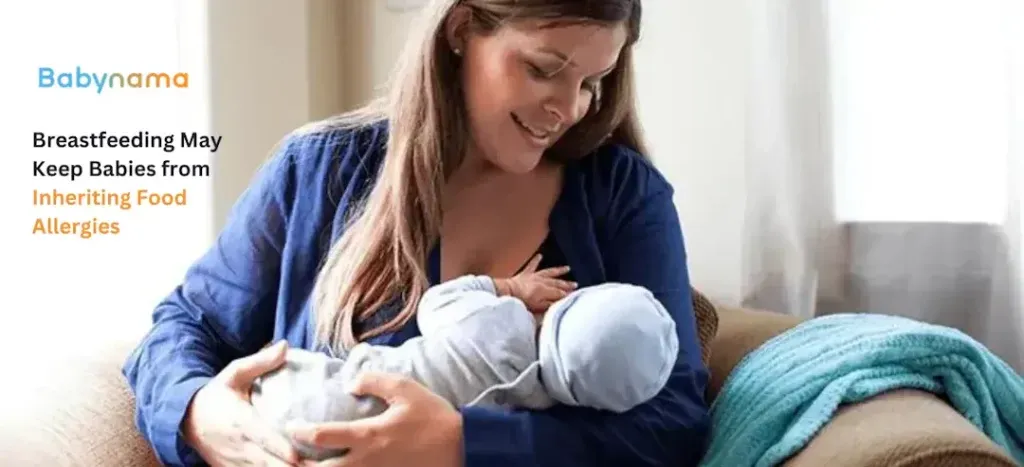
Quick Answer: Breastfeeding (stanpan) is recommended for many reasons and may modestly lower the risk of eczema and wheezing in early childhood. The evidence that it prevents true food allergy is limited and mixed — the strongest proven protection comes from introducing allergenic solids early (around 6 months), not from breastfeeding alone. So maa ka doodh gives your baby’s immune system a great start, but think of early allergen introduction — not breast milk alone — as the proven prevention step. (WHO recommends exclusive breastfeeding for the first 6 months; EAACI and Cochrane reviews find only weak, inconsistent evidence that breastfeeding prevents food allergy specifically.)
How Breastfeeding Protects Against Allergies
The Science Behind It
Breast milk contains special components that help your baby’s immune system develop properly:
| Component | How It Helps |
|---|---|
| Secretory IgA | Coats baby’s gut lining, preventing allergens from entering bloodstream |
| Prebiotics | Feeds good bacteria that train the immune system |
| Anti-inflammatory factors | Reduces allergic reactions in the gut |
| Immune cells | Passes mother’s immune experience to baby |
| Cytokines | Helps regulate immune responses |
What Research Shows
The evidence is stronger for some outcomes than others:
- Eczema (atopic dermatitis) — breastfeeding may modestly lower the risk in early childhood
- Asthma and wheezing — some evidence of a modest reduction in early childhood
- Food allergy specifically — evidence is limited and mixed; breastfeeding alone has not been shown to reliably prevent true food allergy (Cochrane review; EAACI food allergy prevention guidelines)
The single best-proven preventive step is early introduction of allergenic foods to your baby (around 6 months), shown in the LEAP and EAT trials — not breastfeeding on its own.
Reassurance for worried parents: Breastfeeding is worthwhile for many reasons, and introducing allergenic foods early gives your baby a real, evidence-based head start. You’re already doing something positive for your child.
Who Benefits Most from Breastfeeding’s Allergy Protection?
High-Risk Babies
A family history of allergies raises your baby’s baseline risk. Breastfeeding is still worthwhile for these babies, but the evidence does not let us put a precise number on how much it lowers food-allergy risk — and early allergen introduction matters most for higher-risk babies:
| Family History | Baby’s Risk Level | What Helps |
|---|---|---|
| One parent with allergies | Moderate risk | Breastfeed if you can; introduce allergens early |
| Both parents with allergies | Higher risk | Breastfeed if you can; introduce allergens early (talk to your pediatrician first if your baby has severe eczema or known egg allergy) |
| Sibling with allergies | Increased risk | Breastfeed if you can; introduce allergens early |
| No family history | Lower baseline risk | Breastfeed if you can; introduce allergens early |
Types of Allergies Breastfeeding May Help Prevent
- Food allergies - Peanut, egg, milk, wheat
- Eczema (atopic dermatitis) - Common in Indian babies
- Asthma - Wheezing and breathing problems
- Allergic rhinitis - Hay fever, runny nose
- General atopy - Tendency toward allergies
How Long Should You Breastfeed for Allergy Protection?
Recommended Duration
WHO and the Indian Academy of Pediatrics (IAP) recommend exclusive breastfeeding for the first 6 months, then continued breastfeeding alongside complementary foods. This is recommended for your baby’s overall health and nutrition — not specifically as a guaranteed allergy shield:
| Duration | Recommendation |
|---|---|
| First 6 months | Exclusive breastfeeding (WHO / IAP recommended) |
| 6-12 months | Continue breastfeeding while introducing solids, including allergenic foods early |
| Beyond 1 year | Continue breastfeeding as long as mother and baby wish |
Key point: Exclusive breastfeeding means no formula, no water, no solids - only breast milk for the first 6 months. (Nothing oral other than breast milk or formula before 6 months.)
Should You Avoid Allergenic Foods While Breastfeeding?
Current Guidelines (Updated)
Old advice: Avoid peanuts, eggs, fish during breastfeeding
New evidence: You do NOT need to avoid allergenic foods!
| Food | Current Recommendation |
|---|---|
| Peanuts/nuts | Safe to eat while breastfeeding |
| Eggs | Safe to eat |
| Fish | Encouraged (good for baby’s brain) |
| Dairy | Safe unless baby shows symptoms |
| Wheat | Safe to eat |
Important exception: If YOUR baby shows signs of allergy (blood in stool, severe eczema, vomiting after feeds), consult a doctor before eliminating foods.
When to Consider Elimination Diet
Only if baby shows:
- Blood or mucus in stool
- Severe eczema that doesn’t improve
- Excessive vomiting or diarrhea
- Poor weight gain
- Extreme fussiness after feeds
Note: Don’t eliminate foods without doctor guidance - you need nutrition for milk production!
Introducing Solids: Allergy Prevention Tips
When to Start Solids
- Around 6 months (not before 4 months)
- Continue breastfeeding alongside solids
- Don’t delay allergenic foods!
Modern Allergy Prevention Approach

| Old Advice | New Evidence-Based Approach |
|---|---|
| Delay peanuts until age 3 | Introduce peanuts around 6 months (smooth thinned paste) |
| Avoid eggs until 1 year | Introduce well-cooked whole egg around 6 months |
| Delay allergenic foods | Early introduction is the best-proven way to lower allergy risk (LEAP/EAT trials) |
How to Introduce Allergenic Foods
- Start one at a time - Wait 3-5 days between new foods
- Give small amounts - Tiny taste first
- Morning feeds - So you can watch for reactions
- Continue breastfeeding - May help tolerance
- Don’t avoid - Early exposure is protective!
Indian Context: Common Allergens
Traditional Indian Foods and Allergies
| Food | Allergy Risk | Tips |
|---|---|---|
| Peanuts (moongphali) | Common allergen | Introduce around 6 months as smooth, thinned peanut powder/paste mixed into khichdi or dahi — never whole nuts or thick blobs |
| Dairy (doodh, dahi) | Common in babies | Start with curd (dahi) after 6-8 months |
| Wheat (gehu) | Less common | Can start after 6 months (e.g. suji, dalia) |
| Eggs (anda) | Common allergen | Well-cooked whole egg (yolk and white together) from ~6 months — yolk only does not build tolerance to egg white and misses the prevention benefit |
| Fish (machli) | Varies | Introduce gradually after 6-8 months, well-cooked and deboned |
| Tree nuts (badam, kaju) | Common allergen | As smooth, thinned paste/powder around 6 months — never whole nuts (choking risk under 3-5 years) |
⚠️ Choking and high-risk babies: Always give peanut/tree nuts as a smooth, thinned powder or paste mixed into food — never whole nuts, large dollops of nut butter, or thick pastes, which are choking hazards under 3-5 years. If your baby has severe eczema or a known egg allergy, talk to your pediatrician before the first peanut introduction (these babies are higher-risk and benefit from medical guidance — per LEAP-derived guidance).
Traditional Indian Practices
- Ghee - Generally safe, not a common allergen
- Dal - Safe, good protein source
- Rice - Rarely allergenic, great first food
- Vegetables - Very low allergy risk
Signs of Allergic Reaction in Babies
Mild Reactions (Common)
- Rash or hives around mouth
- Minor swelling of lips
- Itchy skin
- Runny nose
Severe Reactions (Anaphylaxis — Medical Emergency)
🚨 Call 112 (national emergency) or 108 (ambulance), or go straight to the nearest hospital, if you see: difficulty or noisy breathing; swelling of the face, lips or tongue; widespread hives with vomiting; pale, grey or blue skin; floppiness or unresponsiveness; or a seizure. These can be a severe allergic reaction (anaphylaxis). If an adrenaline auto-injector has been prescribed, use it first, then go. Do not wait for a clinic appointment.
Frequently Asked Questions
Q: If I have food allergies, will my baby definitely get them?
A: No! Genetics increase risk, but breastfeeding and early allergen introduction can significantly reduce it. Many babies of allergic parents never develop allergies.
Q: Should I avoid peanuts while breastfeeding if allergies run in family?
A: Current research says NO — there is no need to avoid peanuts or other allergens while breastfeeding, and doing so is not recommended. But the proven prevention step is introducing these foods to your BABY early (around 6 months), not what you eat while breastfeeding.
Q: My baby has eczema. Does this mean they’ll have food allergies?
A: Eczema increases allergy risk but doesn’t guarantee it. Babies with eczema should be introduced to allergenic foods early (around 6 months) with doctor guidance.
Q: Can formula-fed babies develop allergy protection?
A: Formula doesn’t provide the same immune benefits as breast milk. However, early allergen introduction (after 4-6 months) can still help prevent allergies in formula-fed babies.
Q: My mother says I should avoid eggs and fish while breastfeeding. Is this true?
A: Old advice! Current research shows eating diverse foods, including eggs and fish, while breastfeeding may actually help prevent allergies in your baby.
Q: How will I know if my baby is allergic to something I ate?
A: Watch for: blood in stool, severe eczema flares, excessive vomiting, extreme fussiness. Most babies tolerate everything in mom’s diet without problems.
Key Takeaways
- Early introduction is the proven step - Introduce allergenic solids early, around 6 months
- Breastfeed if you can - Recommended for many reasons; may modestly lower eczema/wheezing, but is not a guaranteed food-allergy shield
- Exclusive for 6 months - WHO/IAP recommend only breast milk for the first 6 months
- Whole cooked egg, thinned nut paste - Use whole egg (not yolk only); give nuts only as smooth thinned paste (choking risk)
- Don’t avoid foods while breastfeeding - Unless your baby shows specific symptoms
- Know the emergency signs - Anaphylaxis needs an ambulance (112/108) and adrenaline, not a phone call
Sources
- WHO — Exclusive breastfeeding recommended for the first 6 months of life
- Indian Academy of Pediatrics (IAP) — Infant and young child feeding / complementary feeding guidance
- EAACI Guideline: Food allergy prevention (breastfeeding evidence strength, maternal diet, early introduction)
- Cochrane review — early additional food/fluids vs exclusive breastfeeding and allergy outcomes
- LEAP trial (NEJM 2015) and EAT trial (NEJM 2016) — early peanut/allergen introduction
- Early cooked whole-egg introduction studies for egg allergy prevention
This article was reviewed by Babynama Pediatricians. Last updated: June 2026
This article is general information for Indian parents, not a substitute for examination by your pediatrician. In an emergency, call 112 or 108.
Need personalized guidance? Book a consultation with our pediatricians or explore our Care Plans for 24/7 expert support!
Related Tools
Need Expert Breastfeeding Support?
Get personalized guidance from certified lactation consultants.
Explore Breastfeeding Program