
Quick Answer: Breast engorgement - when your breasts become painfully full, hard, and swollen - is very common around day 3-5 after delivery when your milk “comes in.” It’s uncomfortable but temporary, usually lasting 24-48 hours with proper management. The key is to empty your breasts frequently through feeding or pumping, and use cold compresses for relief. You’re not doing anything wrong - this is just your body adjusting to milk production!
What is Breast Engorgement?
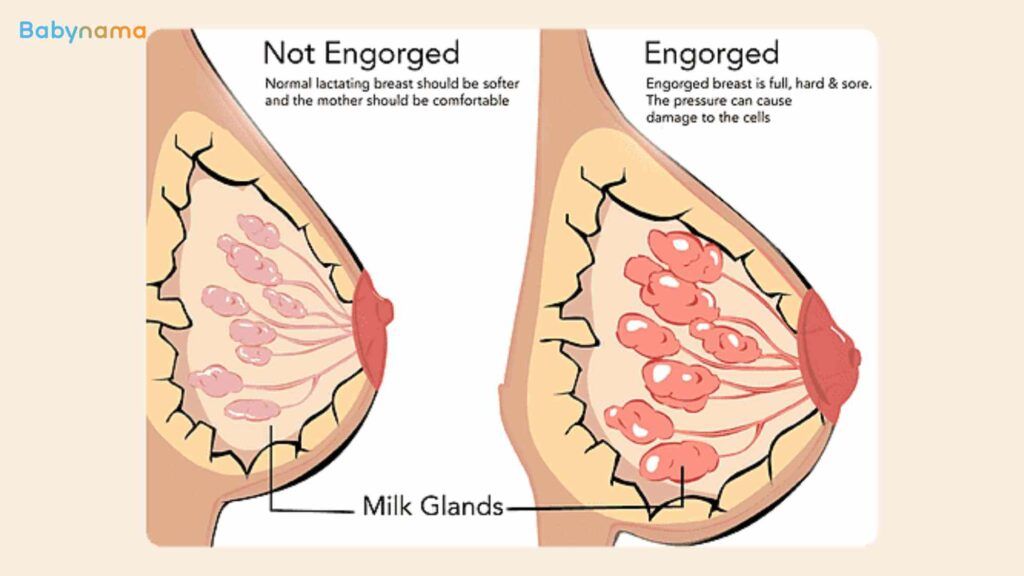
Breast engorgement happens when your breasts become overly full with milk, blood, and lymph fluid. It typically occurs:
- 3-5 days after delivery - When milk transitions from colostrum to mature milk
- When feeds are missed - Any time breasts aren’t emptied regularly
- During weaning - When gradually stopping breastfeeding
What Does Engorgement Feel Like?
| Symptom | What You May Notice |
|---|---|
| Swelling | Both breasts visibly larger, especially lower areas |
| Hardness | Breasts feel like rocks, very firm |
| Pain | Moderate to severe discomfort |
| Warmth | Breasts feel hot to touch |
| Tight skin | Skin may look shiny and stretched |
| Flat nipples | Areola becomes so firm that nipples flatten |
| Fever/chills | Low-grade fever possible (below 38°C) |
Reassurance for new mothers: Engorgement is uncomfortable but very common, and it usually means your milk is coming in. With proper management, relief comes within 24-48 hours.
Why Does Engorgement Happen?
The Science Behind It
Around day 3-5 postpartum:
- Prolactin (milk-making hormone) increases dramatically
- Extra blood flows to your breasts (hyperemia)
- Lymph fluid increases to support milk production
- All this fluid causes swelling and pressure
Common Causes
| Cause | Why It Happens |
|---|---|
| Milk “coming in” | Normal transition from colostrum |
| Delayed or infrequent feeding | Milk builds up in breasts |
| Poor latch | Baby can’t drain breast effectively |
| Supplementing with formula | Reduced demand = reduced drainage |
| Baby sleeping longer | Missed feeds at night |
| Scheduled feeding | Not responding to baby’s cues |
| Abrupt weaning | Sudden stop in milk removal |
Step-by-Step Relief for Engorged Breasts
Step 1: Feed or Pump Frequently
The most important thing is to empty your breasts!
- Feed baby every 2-3 hours (at least 8-12 times in 24 hours)
- Wake baby to feed if needed
- If baby can’t latch due to firmness, hand express or pump first to soften areola
- Don’t skip night feeds - engorgement worsens at night
Step 2: Soften the Areola Before Feeding
When breasts are very hard, baby can’t latch. Try:
Reverse Pressure Softening (RPS):
-
Place fingertips around areola (where baby’s mouth goes)
-
Apply gentle, steady inward pressure toward chest
-
Hold for 1-2 minutes
-
This pushes fluid back, softening the areola
-
Latch baby immediately after Hand express a little:
-
Express just enough to soften the areola
-
Don’t empty the breast - just enough for baby to latch
-
Too much expressing can signal body to make more milk
Step 3: Apply Cold Compresses After Feeding
After feeding (NOT before):
-
Cold cabbage leaves (from the fridge) are widely used; evidence is limited and they may help with hardness and pain, but are no better than other cold packs — discuss with your pediatrician or lactation consultant
-
Cold gel packs wrapped in cloth
-
Apply for 15-20 minutes
-
Reduces inflammation and provides relief Cabbage leaves method:
-
Keep green cabbage leaves in refrigerator
-
After feeding, place cold leaves inside bra
-
Replace when wilted (every 2-3 hours)
-
Stop if skin becomes irritated
Step 4: Gentle Warmth Before Feeding
ONLY before feeding (not after):
- Warm shower
- Warm compress for 2-3 minutes
- Helps milk flow more easily
- Don’t use heat for extended periods - increases swelling
Step 5: Supportive Care
- Wear a supportive (not tight) bra 24/7
- No underwire during engorgement
- Take pain relief if needed:
- Paracetamol (Crocin, Dolo) at the dose on the pack
- Ibuprofen (Brufen) - also reduces inflammation and is the preferred NSAID during breastfeeding (low levels in breast milk)
- Both are compatible with breastfeeding; check with your doctor or pharmacist if unsure
- Rest as much as possible
- Stay hydrated (don’t reduce fluids - doesn’t help!)
Breastfeeding Positions That Help
When breasts are engorged, some positions work better:
1. Laid-Back (Biological Nurturing)
- Recline with baby on top
- Gravity helps baby drain breast
- Less pressure on swollen breasts
2. Side-Lying
- Both lying on sides, facing each other
- Comfortable when breasts are sore
- Good for night feeds
3. Football Hold
- Baby tucked under arm
- Good visibility of latch
- Can control baby’s head position
What NOT to Do
Avoid these common mistakes:
| Don’t Do This | Why |
|---|---|
| Vigorous massage | Can worsen swelling and damage tissue |
| Over-pumping | Signals body to make MORE milk |
| Binding breasts | Increases mastitis risk |
| Reducing fluids | Doesn’t help and can cause dehydration |
| Skipping feeds | Makes engorgement worse |
| Using tight bras | Restricts flow, can cause blocked ducts |
| Prolonged heat | Increases blood flow and swelling |
Engorgement vs. Mastitis: Know the Difference
| Feature | Engorgement | Mastitis |
|---|---|---|
| Affected area | Both breasts equally | Usually one breast, wedge-shaped area |
| Fever | Low-grade or none | High fever (above 38.5°C) |
| General feeling | Uncomfortable | Flu-like symptoms (chills, body ache) |
| Appearance | Shiny, swollen | Red, hot patch |
| Duration | 24-48 hours if managed | Needs treatment, can worsen |
| Treatment | Self-care | Needs antibiotics |
If you suspect mastitis: See a doctor the SAME DAY. Continue breastfeeding - it helps!
When to Seek Medical Help
Contact your doctor or lactation consultant if:
- Fever above 38.5°C (101°F)
- Red, hot patches on breast
- Flu-like symptoms (body aches, chills)
- Engorgement not improving after 48 hours
- Cracked or bleeding nipples
- Baby unable to latch at all
- Severe pain that prevents feeding
Preventing Future Engorgement
After initial engorgement resolves:
- Feed on demand - Don’t wait for scheduled times
- Ensure good latch - Baby should drain breast effectively
- Don’t skip feeds - If baby sleeps long, pump lightly
- Empty one breast fully before switching
- Avoid sudden weaning - Wean gradually when ready
- Watch for blocked ducts - Treat promptly
Frequently Asked Questions
Q: Will engorgement affect my milk supply?
A: If managed properly, no. Keep feeding/pumping frequently. Unrelieved engorgement can signal your body to reduce supply, so don’t ignore it.
Q: Can I still breastfeed with engorged breasts?
A: Yes! In fact, you MUST keep breastfeeding. Soften areola first if baby can’t latch. Not feeding makes engorgement worse.
Q: How long does engorgement last?
A: With frequent feeding and proper management, relief usually comes within 24-48 hours. Some fullness may persist for a few days as supply regulates.
Q: My breast pump isn’t working well on engorged breasts. What should I do?
A: Hand express first to soften, then pump. Engorged tissue makes it hard for pump flanges to create proper seal.
Q: Is it okay to apply ice directly to breasts?
A: No, wrap ice/cold packs in cloth to prevent frostbite. Cold cabbage leaves work well and are gentler.
Q: Should I limit my fluid intake?
A: No! This is a myth. Continue drinking normally (3-4 liters daily). Dehydration doesn’t reduce engorgement and can affect your milk quality.
Key Takeaways
- Engorgement is common - Happens when milk “comes in” around day 3-5
- Feed frequently - Every 2-3 hours, don’t skip feeds
- Soften before feeding - Reverse pressure softening helps baby latch
- Cold after, warm before - Cold compresses after feeds, gentle warmth before
- Don’t over-pump - Just enough to soften and relieve
- Know the warning signs - Fever, red patches = see doctor immediately
General information for Indian parents, not a substitute for your pediatrician. In an emergency, call 112 or 108.
This article was reviewed by the Babynama Medical Team. Last updated: January 2026
Struggling with engorgement? Chat with our lactation experts on Babynama for personalized guidance!
Need personalized guidance? Book a consultation with our pediatricians or explore our Care Plans for 24/7 expert support!
Related Tools
Need Expert Breastfeeding Support?
Get personalized guidance from certified lactation consultants.
Explore Breastfeeding Program