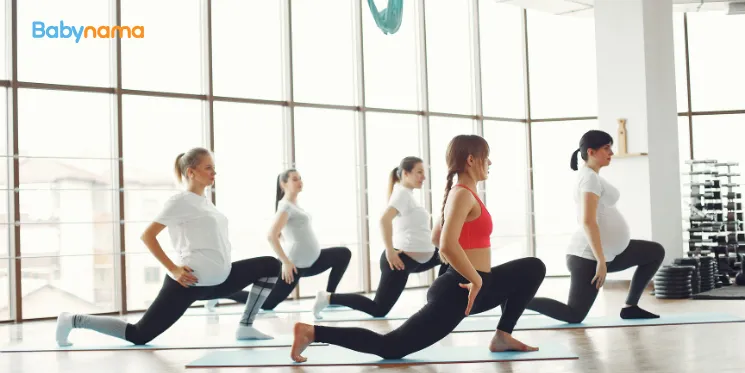
Quick Answer: For most uncomplicated pregnancies, staying active in the third trimester is generally beneficial. Focus on low-impact activities like walking, swimming, prenatal yoga, and pelvic floor exercises. Avoid lying flat on your back, high-impact activities, and anything with fall risk. Third trimester is the time to prepare your body for labor with squats, pelvic tilts, and breathing exercises. Always listen to your body, get your doctor’s clearance before starting, and stop if you experience warning signs.
Why Exercise in Third Trimester?
For most uncomplicated pregnancies, staying active in the third trimester helps prepare your body for labor and delivery, while also managing common late-pregnancy discomforts. Always get your obstetrician’s clearance before starting or continuing an exercise routine.
Benefits of Third Trimester Exercise
| Benefit | How It Helps |
|---|---|
| Easier labor | Better stamina and endurance |
| Reduced swelling | Movement helps circulation |
| Better sleep | Despite the belly! |
| Less back pain | Strengthens supporting muscles |
| Mood improvement | Reduces anxiety about birth |
| Faster recovery | Stronger body bounces back quicker |
| Gestational diabetes management | Helps control blood sugar |
Safe Exercises for Third Trimester
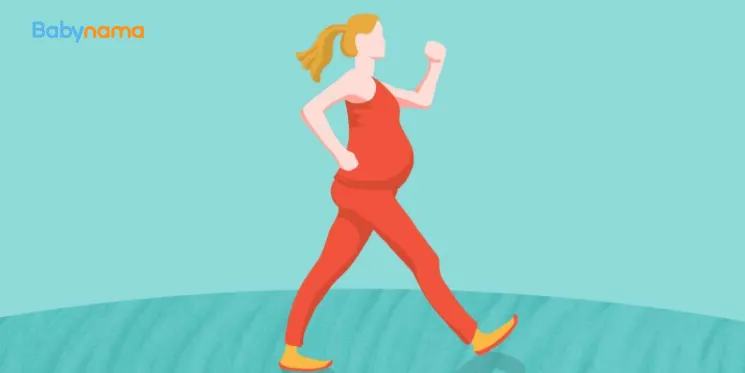
Walking
The simplest and most accessible exercise.
| Guideline | Recommendation |
|---|---|
| Duration | 20-30 minutes |
| Frequency | Daily or most days |
| Intensity | Comfortable pace (can talk) |
| Tips | Wear supportive shoes, flat surfaces |
Swimming and Water Exercise
Ideal for late pregnancy - water supports your body weight.
Benefits:
- Takes pressure off joints and back
- Reduces swelling
- Keeps you cool
- Full-body workout without strain
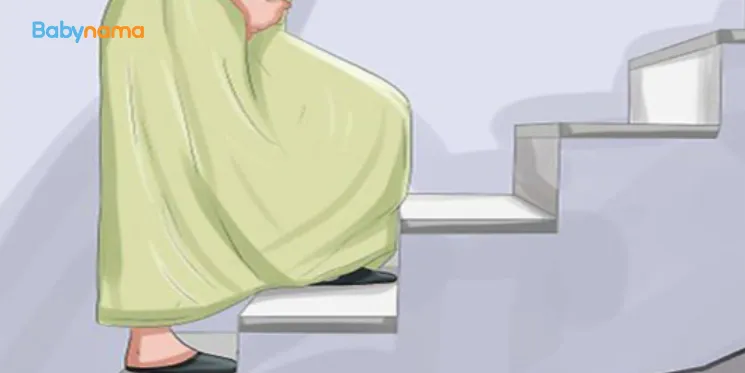
Prenatal Yoga
Focuses on flexibility, breathing, and relaxation.
| Safe Poses | Avoid |
|---|---|
| Cat-cow | Lying flat on back |
| Modified warrior | Deep twists |
| Side-lying positions | Hot yoga |
| Supported squats | Inversions |
| Child’s pose (modified) | Balancing poses |
Stationary Cycling
Safe cardio option with no fall risk.
| Tip | Why |
|---|---|
| Adjust seat height | Accommodate belly |
| Use recumbent bike | Better for balance |
| Keep intensity moderate | Don’t overexert |
Exercises to Prepare for Labor
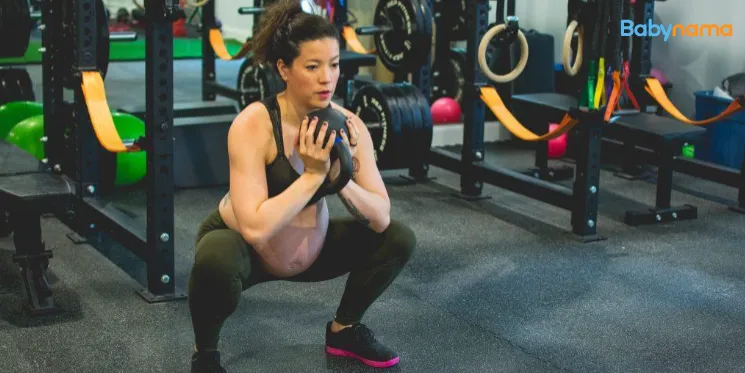
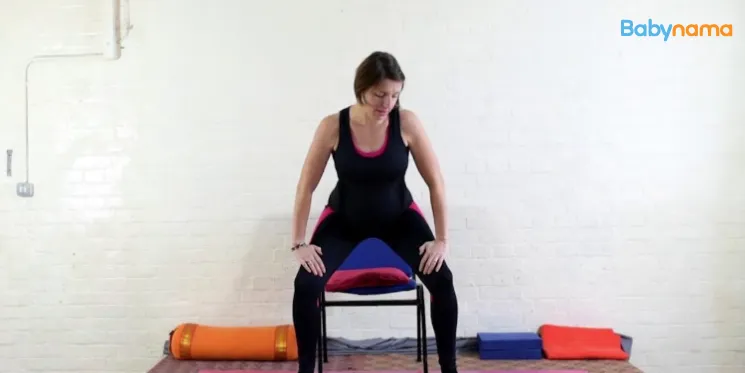
Squats
Squats open the pelvis and strengthen legs for pushing.
How to do safely:
- Stand with feet shoulder-width apart
- Hold onto chair or wall for balance
- Lower slowly, keeping back straight
- Go only as low as comfortable
- Rise slowly Do: 10-15 repetitions, 2-3 times daily
Pelvic Tilts
Relieves back pain and strengthens core.
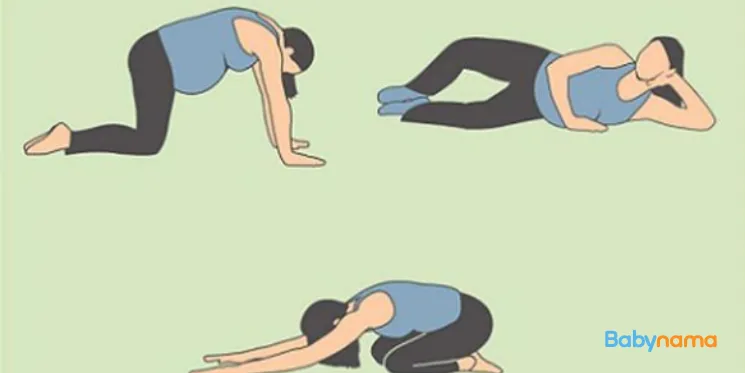
On all fours:
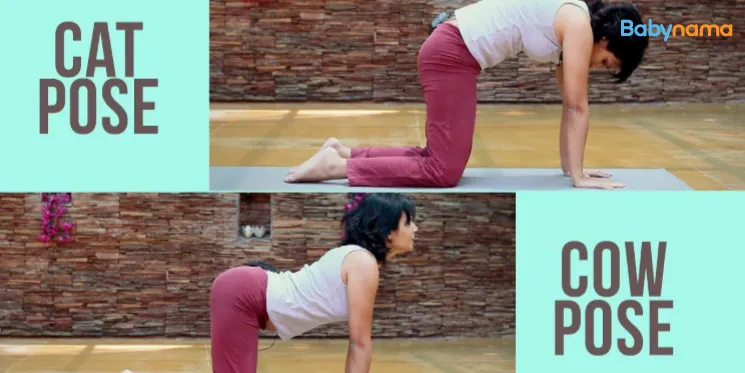
- Get on hands and knees
- Arch back like a cat (tilt pelvis up)
- Return to neutral
- Repeat 10-15 times
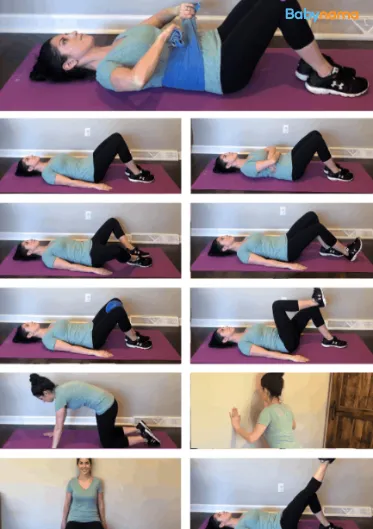
Kegel Exercises
Strengthens pelvic floor for delivery and recovery.
How to do:
-
Identify muscles (stop urine mid-stream)
-
Contract and hold for 5-10 seconds
-
Relax completely
-
Repeat 10-15 times, 3 times daily
Perineal Massage
Starting at 34 weeks, may reduce tearing during birth.
| Guideline | Details |
|---|---|
| When to start | 34-35 weeks |
| Frequency | 1-2 times per week |
| Duration | 5-10 minutes |
| Use | Natural oil (coconut, olive) |
Breathing Exercises
Practice breathing techniques for labor:
| Technique | When to Use |
|---|---|
| Slow breathing | Early labor |
| Light breathing | Active labor |
| Pushing breath | Second stage |
Third Trimester Modifications
What Changes Now

| Previous Exercise | Third Trimester Modification |
|---|---|
| Crunches | Seated core exercises or standing |
| Lunges | Supported lunges with chair |
| Running | Walking or swimming |
| Lying on back | Side-lying or inclined position |
| High-impact aerobics | Low-impact or water aerobics |
Exercises to Avoid
| Avoid | Why |
|---|---|
| Lying flat on back | Reduces blood flow to baby |
| Contact sports | Risk of abdominal injury |
| High fall risk | Balance is compromised |
| Hot environments | Risk of overheating |
| Jumping/bouncing | Stress on pelvic floor |
| Heavy lifting | Strain on abdominal muscles |
Sample Weekly Exercise Plan
Week Schedule
| Day | Activity | Duration |
|---|---|---|
| Monday | Walking + pelvic exercises | 30 min |
| Tuesday | Prenatal yoga | 30 min |
| Wednesday | Swimming or water walking | 30 min |
| Thursday | Walking + squats | 30 min |
| Friday | Prenatal yoga or rest | 30 min |
| Saturday | Gentle walk | 20 min |
| Sunday | Rest or stretching | - |
Daily Exercises (Do Every Day)
| Exercise | Repetitions |
|---|---|
| Kegels | 30-50 total (spread through day) |
| Pelvic tilts | 10-15 |
| Deep breathing | 5-10 minutes |
| Stretching | As needed |

Warning Signs to Stop Exercise
Stop Immediately If You Experience:
| Warning Sign | What to Do |
|---|---|
| Heavy vaginal bleeding | 🚨 Stop, lie down. Heavy bleeding is an emergency — call 112 (national emergency) or 108 (ambulance) or go to the nearest hospital |
| Vaginal bleeding (any) | Stop, lie down, call your doctor right away |
| Regular contractions | Stop, time them, call if regular |
| Fluid leaking | Stop, call doctor (could be water breaking) |
| Dizziness | Sit down, drink water; if it persists or you feel faint, call your doctor |
| Chest pain | 🚨 Stop. Call 112 or 108 or go to the nearest hospital |
| Severe shortness of breath | 🚨 Stop. If sudden or severe, call 112 or 108 or go to the nearest hospital |
| Headache that won’t go away | Stop, call your doctor (can be a sign of preeclampsia) |
| Calf pain/swelling (especially one leg) | 🚨 Stop. Could be a blood clot — call 112 or 108 or go to the nearest hospital |
Managing Third Trimester Challenges
Back Pain
| Exercise | How It Helps |
|---|---|
| Pelvic tilts | Relieves pressure |
| Cat-cow stretches | Loosens spine |
| Swimming | Takes weight off spine |
| Prenatal yoga | Strengthens back muscles |
Swelling
| Strategy | Why It Works |
|---|---|
| Walking | Improves circulation |
| Swimming | Water pressure reduces swelling |
| Ankle circles | Keeps fluid moving |
| Elevate feet after exercise | Helps fluid drain |
Breathlessness
| Adaptation | Details |
|---|---|
| Reduce intensity | Baby pressing on diaphragm |
| Take breaks | Listen to your body |
| Swimming | Easier to breathe in water |
| Seated exercises | Less strain |
Sleep Problems
| Exercise Timing | Effect on Sleep |
|---|---|
| Morning/afternoon | Best for sleep |
| Evening (gentle) | Relaxation helps |
| Avoid vigorous late | May keep you awake |
Frequently Asked Questions
Q: Is it safe to start exercising in the third trimester if I haven’t been active?
A: Yes, but start very gently. Walking and prenatal yoga are good starting points. Begin with 10-15 minutes and gradually increase. Always consult your doctor first.
Q: How do I know if I’m exercising too hard?
A: Use the talk test - you should be able to hold a conversation. If you’re too breathless to talk, slow down. Also watch for any warning signs like dizziness, pain, or contractions.
Q: Can exercise start labor?
A: Normal exercise doesn’t typically start labor before your body is ready. However, some believe activities like walking and squats can help labor progress once you’re at term. Don’t do anything extreme trying to induce labor.
Q: What if I have pregnancy complications?
A: If you have placenta previa, preeclampsia, shortened cervix, or other complications, exercise may be restricted. Always follow your doctor’s specific recommendations for your situation.
Q: How late into pregnancy can I exercise?
A: Most women can exercise until delivery if pregnancy is uncomplicated. You may need to reduce intensity and duration as you get closer. Listen to your body and your doctor.
Key Takeaways
- Keep moving - For uncomplicated pregnancies, staying active is generally beneficial (after doctor clearance)
- Low impact is best - Walking, swimming, prenatal yoga
- Prepare for labor - Squats, pelvic exercises, breathing practice
- Avoid lying flat - Modify to side-lying or inclined
- Listen to your body - Rest when needed
- Know warning signs - Stop if something feels wrong
- Stay hydrated - Drink plenty of water
- Consult your doctor - Especially with complications
This article was reviewed by the Babynama Medical Team. Last updated: January 2026
Questions about pregnancy exercise? Chat with our doctors on Babynama for personalized guidance!
Need personalized guidance? Book a consultation with our pediatricians or explore our Care Plans for 24/7 expert support!
Related Tools
Disclaimer: This article is for general informational purposes for parents and parents-to-be in India and does not replace individual medical advice. Every pregnancy is different — always consult your obstetrician or pediatrician before starting or changing an exercise routine. In an emergency, call 112 (national emergency) or 108 (ambulance), or go to your nearest hospital.