Low Body Temperature in Babies: Causes, Symptoms, and What to Do
Quick Answer: Low body temperature (hypothermia) in babies is temperature below 97.7°F (36.5°C). Newborns are especially vulnerable because they can’t regulate temperature well. Common causes include cold environment, illness, and inadequate clothing. Mild hypothermia can be treated with skin-to-skin contact and warm clothing. Severe or persistent low temperature, especially in newborns under 1 month, requires immediate medical attention as it can indicate serious infection.
What Is Low Body Temperature?
Babies, especially newborns, have difficulty maintaining their body temperature. Understanding what’s normal and when to be concerned is important for all parents.
Temperature Ranges in Babies
| Range | Classification |
|---|
| 97.7-99.5°F (36.5-37.5°C) | Normal |
| 96.8-97.6°F (36-36.4°C) | Mild hypothermia |
| 89.6-96.8°F (32-36°C) | Moderate hypothermia |
| Below 89.6°F (32°C) | Severe hypothermia |
Why Babies Are Vulnerable
| Factor | Explanation |
|---|
| Large surface area | Lose heat quickly |
| Less body fat | Less insulation |
| Immature regulation | Can’t shiver effectively |
| Can’t communicate | Can’t tell you they’re cold |
| Limited movement | Can’t generate heat through activity |
Causes of Low Body Temperature
Environmental Causes
| Cause | Details |
|---|
| Cold room | Room below 68-72°F (20-22°C) |
| Inadequate clothing | Not enough layers |
| Wet clothing/diaper | Evaporation causes cooling |
| After bathing | Especially without quick drying |
| Cold surfaces | Lying on cold beds/floors |
Medical Causes
| Cause | Why It Happens |
|---|
| Infection (sepsis) | Babies may have low temp instead of fever with infection |
| Hypoglycemia | Low blood sugar affects temperature regulation |
| Prematurity | Less developed temperature regulation |
| Thyroid problems | Affects metabolism and heat production |
| Birth complications | Asphyxia, low birth weight |
Important: In newborns, low temperature can be a sign of serious infection (sepsis). This is especially concerning in babies under 1 month old.
Signs and Symptoms
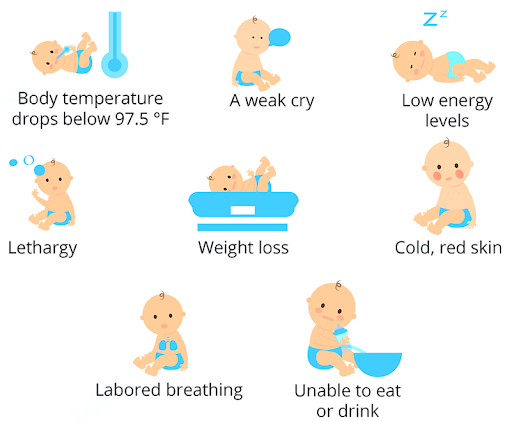
Signs Your Baby Is Cold
| Sign | What to Look For |
|---|
| Cold hands and feet | May be normal, but check body |
| Cold chest or back | More concerning than cold extremities |
| Pale or mottled skin | Reduced circulation |
| Lethargy | Less active than usual |
| Poor feeding | Not interested or weak suck |
| Weak cry | Less vigorous than normal |
| Shivering | Older babies may shiver |
| Sign | Action |
|---|
| Temperature below 96.8°F (36°C) | Seek medical care |
| Baby is limp or unresponsive | Emergency |
| Blue lips or fingers | Emergency |
| Difficulty breathing | Emergency |
| Very pale or mottled | Seek medical care |
| Won’t eat at all | Seek medical care |
| Baby under 1 month with any low temp | See doctor urgently |
What to Do If Baby’s Temperature Is Low
Mild Hypothermia (At Home)
| Step | How to Do It |
|---|
| Skin-to-skin contact | Place baby against your bare chest, cover both |
| Add layers | Extra clothing, warm blanket |
| Warm hat | Babies lose heat from head |
| Warm room | Increase room temperature |
| Check diaper | Change if wet |
| Feed baby | Breast milk or formula provides warmth |
| Recheck temperature | After 30-60 minutes |
Warming Techniques
| Do | Don’t |
|---|
| Skin-to-skin kangaroo care | Use heating pads (burn risk) |
| Add warm clothing layers | Use electric blankets |
| Warm the room | Put baby in hot bath |
| Use pre-warmed blankets | Rub skin vigorously |
| Keep baby dry | Overheat - causes other problems |
When Temperature Doesn’t Improve
If temperature stays low after 30-60 minutes of warming efforts, or if baby shows any concerning symptoms, seek medical attention.
Preventing Low Body Temperature
Room Temperature
| Guideline | Details |
|---|
| Ideal temperature | 68-72°F (20-22°C) |
| Not too cold | Baby can’t generate heat well |
| Not too hot | Increases SIDS risk |
| Use room thermometer | Don’t guess |
Clothing Guidelines
| Age/Situation | Guidance |
|---|
| General rule | One more layer than adults |
| Newborns | Onesie + sleeper + swaddle/blanket |
| Sleeping | Sleep sack rather than loose blankets |
| Summer | Still need light layer, especially with AC |
| Winter | Multiple thin layers better than one thick |
After Bathing
| Step | Why |
|---|
| Warm room | Prevent chill |
| Warm towel | Dry quickly |
| Dry head first | Where most heat is lost |
| Dress immediately | Don’t let baby stay exposed |
| Brief baths | Longer = more cooling |
Special Situations
Premature Babies
| Concern | Action |
|---|
| Less body fat | Extra warmth needed |
| May need incubator | In hospital |
| Careful monitoring | Check temperature regularly |
| Skin-to-skin very important | Helps regulate temperature |
Newborns (First Month)
| Concern | Why It Matters |
|---|
| Most vulnerable | Temperature regulation still developing |
| Low temp = possible infection | Don’t dismiss as just being cold |
| Check frequently | Especially in first week |
| Low threshold for doctor | When in doubt, get checked |
During Travel
| Tip | Details |
|---|
| Check car seat | Remove bulky coats, use blankets on top |
| Avoid over-bundling in car | Car can be warm |
| Frequent checks | Feel baby’s chest |
| Cold weather outings | Limit time outside |
How to Take Baby’s Temperature
Best Methods
| Method | Accuracy | Age |
|---|
| Rectal | Most accurate | All ages |
| Axillary (armpit) | Good for screening | All ages |
| Temporal (forehead) | Convenient | 3+ months |
| Ear | Variable | 6+ months |
For Low Temperature Concerns
- Rectal is most accurate
- Armpit works for screening
- If armpit is low, confirm with rectal
Frequently Asked Questions
Q: My baby’s hands and feet are always cold - should I worry?
A: Cold hands and feet alone are often normal in babies due to immature circulation. What matters is the core temperature. Check your baby’s chest or back - if warm, and baby is active and feeding well, cold extremities are usually fine.
Q: When should I be concerned about low temperature vs. just warming my baby?
A: If your baby is under 1 month old with any temperature below 97.7°F, contact your doctor. For older babies, mild low temperature that responds to warming is usually not concerning. Seek care if: temperature stays low despite warming, baby seems unwell, won’t feed, or is unusually sleepy.
Q: Can a sick baby have low temperature instead of fever?
A: Yes! This is especially true for newborns. A serious infection (sepsis) can cause LOW temperature in babies rather than fever. This is why low temperature in young babies needs to be taken seriously.
Q: How often should I check my newborn’s temperature?
A: You don’t need to check routinely if baby seems well. Check if baby feels unusually cool or warm, seems unwell, or if you’re concerned. Many parents check once daily in the first few weeks.
Q: Is it normal for temperature to be lower while sleeping?
A: Yes, body temperature normally drops slightly during sleep. A small dip is normal. However, a significant drop or a temperature below 97°F should prompt you to warm baby and recheck.
Key Takeaways
- Normal baby temperature is 97.7-99.5°F (36.5-37.5°C)
- Newborns are vulnerable - can’t regulate temperature well
- Cold environment is the most common cause
- But low temp can signal infection - especially in babies under 1 month
- Skin-to-skin warms effectively - best first-line treatment
- Recheck after warming - should improve within 30-60 minutes
- When in doubt, seek care - especially for young babies
- Prevention - appropriate clothing, warm room, keep dry
This article was reviewed by pediatricians at Babynama. Last updated: January 2026
Need personalized guidance? Book a consultation with our pediatricians or explore our Care Plans for 24/7 expert support!
Get 24/7 Expert Pediatric Care
Chat with top pediatricians anytime on WhatsApp.
Explore Care Plans