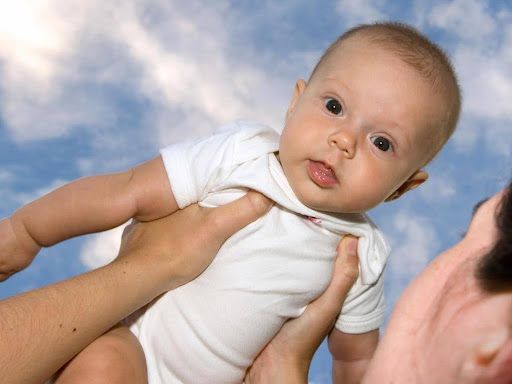
Quick Answer: Newborns stare because they’re actively developing their visual system and learning to make sense of the world. Their vision is limited to about 8-12 inches at birth, so everything is new and fascinating. Staring at faces, lights, and high-contrast objects is usually normal and essential for brain development. It’s a sign your baby is growing and learning — though it’s still worth knowing the visual red flags below.
Why Do Babies Stare So Much?
Babies stare because looking is their main way of learning. With focus fixed at about 8-12 inches and a visual brain that is still wiring itself, a baby has to study each new sight far longer than an adult does to make sense of it. So a long, intense gaze at your face, a ceiling fan, or a patch of light is almost always your baby’s visual system doing exactly what it should.
Staring doesn’t stop after the newborn weeks — it matures as their eyes and brain do:
- Newborn (0-1 month): Fixes on your face at close range and on bold light-dark edges.
- 1-3 months: Locks on and begins to follow faces and slow-moving objects.
- 3-6 months: Studies their own hands, reaches for what they stare at, and takes in colour and detail across the room.
- 6-12 months: Stares to investigate — tracking someone leaving the room, watching a dropped toy fall, and enjoying looking games like peek-a-boo.
If your main question is about behaviour — staring at strangers, “zoning out,” or staring as a sleep cue — our companion guide, Why Does My Baby Stare? A Parent’s Guide, covers those in depth. This article focuses on the vision behind the staring and the milestones to expect. The red flags worth a pediatrician’s attention are listed further below.
How Newborn Vision Works
Newborns don’t see the world the way adults do. Understanding their visual limitations explains why they stare so intently.
What Newborns Actually See
| Visual Ability | Newborn | Adult |
|---|---|---|
| Focus distance | 8-12 inches | Variable |
| Color vision | Limited (high contrast) | Full spectrum |
| Clarity | Blurry beyond arm’s length | Clear |
| Tracking | Jerky movements | Smooth |
| Peripheral vision | Limited | Wide |
Vision Development Timeline
| Age | Visual Milestone |
|---|---|
| Birth | Can see high contrast, limited focus |
| 1 month | Begins focusing on faces |
| 2 months | Tracks moving objects, sees more colors |
| 3 months | Reaches for things seen, smoother tracking |
| 4 months | Depth perception developing |
| 5-6 months | Full color vision emerging |
| 6-8 months | Object permanence (knows hidden things exist) |
| 12 months | Near adult visual acuity |
What these milestones mean in practice: Vision is one of the last senses to mature, and it develops in a predictable order — from sensing light and contrast, to focusing, to tracking, to depth and colour. These ages are typical ranges, not fixed deadlines; healthy babies reach them at slightly different times. What matters more than any single date is steady forward progress. A baby who could fix on your face at one month and is following a toy by three months is on track. For how vision fits alongside motor, hearing, and social skills, see our month-by-month baby milestones guide; and if progress seems to stall — or a skill your baby had is lost — read the warning signs of developmental delay and speak to your pediatrician.
Why Newborns Stare: The Science
Brain Development
Every moment of staring is learning:
| What They Stare At | What Their Brain Is Learning |
|---|---|
| Your face | Facial recognition, emotions, bonding |
| Patterns | Visual processing, contrast detection |
| Movement | Tracking skills, cause-and-effect |
| Lights | Light-dark differentiation |
| Hands | Body awareness, coordination |
Neural Connections
When babies stare, they’re building neural pathways:
- More than 1 million new neural connections form every second in the early years (Harvard Center on the Developing Child)
- Visual input creates and strengthens these connections
- Repetitive looking (staring) reinforces learning
- Each new sight adds to their understanding
What Attracts Newborn Attention
High-Contrast Objects
Newborns are drawn to high contrast because it’s easiest to see:
| High Contrast (Attracts Baby) | Low Contrast (Harder to See) |
|---|---|
| Black and white patterns | Pastel colors |
| Bold stripes | Subtle gradients |
| Sharp edges | Blurred boundaries |
| Light against dark | Similar tones |
Faces Are Special
Babies show preference for faces from birth:
Why faces captivate newborns:
- Perfect distance when held (8-12 inches)
- High contrast (eyes, mouth, hairline)
- Movement (talking, smiling)
- Multisensory (voice, warmth, smell combine)
- Evolutionary survival instinct
Movement
Moving objects are easier to see and track:
- Ceiling fans (common fascination)
- Mobiles
- Waving hands
- Walking people
- Shadows
Different Types of Newborn Staring
Intense Face Staring
Meaning: Recognition and bonding
Your newborn recognizes you by:
- Your face shape
- Voice combined with visual
- Smell
- The way you hold them
“Zoning Out” Staring
Meaning: Processing or tiredness
| Sign It’s Processing | Sign It’s Tiredness |
|---|---|
| After new experience | Yawning |
| Brief episodes | Rubbing eyes |
| Returns to engagement | Fussiness |
| Alert state otherwise | Slowed movements |
Staring at Lights/Fans
Meaning: Visual stimulation
| Object | Why It’s Fascinating |
|---|---|
| Ceiling fans | Movement + contrast |
| Windows | Bright light |
| Lamps | Point light source |
| TV | Movement + light (limit exposure) |
Supporting Visual Development
Activities by Age
| Age | Visual Activities |
|---|---|
| 0-1 month | Face time, high contrast cards |
| 1-2 months | Slowly moving objects, black/white images |
| 2-3 months | Colorful toys, tracking games |
| 3-4 months | Mirror play, reaching for objects |
| 4-6 months | Peek-a-boo, varied textures |
High Contrast Resources
Simple homemade options:
- Black paper with white shapes
- Striped fabric or images
- Simple face drawings
- Checkerboard patterns
You don’t need much to give your baby’s eyes a good workout. For more ideas, see our best baby toys by age and these three simple activities to do with your newborn. Floor play also helps: tummy time gives your baby a whole new set of things to look at and track.
Best Practices
| Do | Don’t |
|---|---|
| Plenty of face time | Excessive screen time |
| Varied visual experiences | Over-stimulation |
| Age-appropriate toys | Flash bright lights |
| Tummy time (different view) | Ignore developmental concerns |
When Staring Might Indicate Concern
Normal Staring vs. Concerns
Most staring is healthy, but watch for these red flags:
| Normal | Potential Concern |
|---|---|
| Interrupted when you speak | Cannot be interrupted |
| Makes eye contact | Never looks at faces |
| Follows objects | Eyes don’t track together |
| Variable duration | Prolonged unresponsive episodes |
| Responsive | Combined with jerking movements |
Visual Development Red Flags
Contact your pediatrician if:
- No eye contact by 2-3 months
- Doesn’t track objects by 4 months
- Eyes don’t move together
- Persistent eye turn (after 4 months)
- A white or cloudy reflection in the pupil (especially seen in photos) needs urgent pediatric/eye-specialist review — do not wait. This is the one sign here that can be time-sensitive (it can rarely signal a congenital cataract or retinoblastoma). Reassuringly, your pediatrician also checks for this “red reflex” routinely at birth and newborn visits, so it isn’t something you have to catch alone.
- Extreme light sensitivity
- Doesn’t reach for objects by 5-6 months
- Suddenly stops making eye contact, or loses a skill they already had — loss of an acquired skill (regression) always warrants a pediatrician review
Frequently Asked Questions
Q: Why does my newborn stare at the wall?
A: Newborns have limited focus and may be seeing shadows, light patterns, or contrast you don’t notice. Their visual world is very different from ours. They also sometimes “zone out” while processing all the new information they’re taking in.
Q: Is it normal for my baby to stare for a long time?
A: Yes, extended staring is normal for newborns. They process information slowly and need time to take things in. If your baby is otherwise responsive and meeting milestones, long staring sessions are fine.
Q: Should I worry if my newborn stares at lights?
A: Brief fascination with lights is normal - they’re visually stimulating. However, protect your baby from very bright direct light. If your baby seems fixated on light to the exclusion of other things, mention it to your pediatrician.
Q: Why does my newborn stare at strangers more than me?
A: New faces are novel and interesting! Your baby actually knows your face well, so strangers require more study. Don’t worry - this doesn’t mean they don’t know or love you. As they get older, this curiosity often flips into stranger anxiety, which is also a normal stage.
Q: My newborn’s eyes seem unfocused - is this normal?
A: Yes, newborn eyes often appear unfocused or even crossed sometimes. The eye muscles are still developing. Intermittent crossing is normal up to 4 months. If one eye turns consistently after 4 months, consult your doctor.
Key Takeaways
- Staring is learning - Every gaze builds brain connections
- Limited vision - Newborns see best at 8-12 inches
- High contrast wins - Black/white patterns are easiest to see
- Faces are fascinating - Babies are hardwired to study faces
- Movement attracts - Fans and mobiles captivate because they move
- Support development - Face time and varied visual experiences help
- Trust the process - Most staring is normal and healthy, but watch for the red flags above
Related Reading
- Why Does My Baby Stare? A Parent’s Guide — the behaviour side: strangers, zoning out, and staring as a sleep cue
- Baby Milestones Month by Month (0-12 Months)
- Developmental Delays: A Parent’s Guide to Warning Signs
- Foods for Good Eyesight in Kids
- Three Activities to Do With Your Newborn for Their Development
This article is general information for Indian parents, not a substitute for examination by your pediatrician. In an emergency, call 112 or 108.
This article was reviewed by Babynama Pediatricians. Last updated: January 2026
Need personalized guidance? Book a consultation with our pediatricians or explore our Care Plans for 24/7 expert support!
Continue with this topic
A useful next step
Browse child-development articlesExplore milestones, movement, speech, behaviour and learning across childhood.Have a question about your little one?
Join our free community for live Q&A with MD pediatricians — no cost to join.
Join the free community