Quick Answer
Yes, dietary therapy can help control seizures in some children with epilepsy - the ketogenic diet has been shown to reduce seizures by 50% or more in many children. Don’t worry, this is a well-established medical treatment (not a fad diet) used worldwide, including at major hospitals in India like AIIMS and Fortis. Your pediatric neurologist will guide you through the process safely.

What is the Ketogenic Diet for Epilepsy?
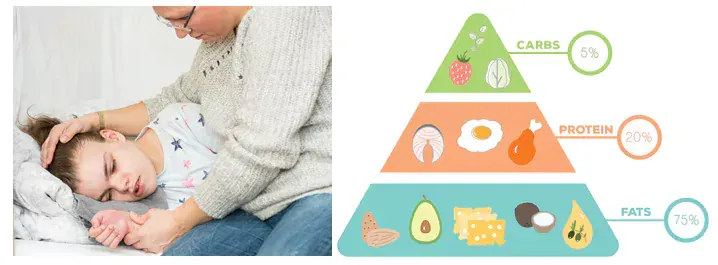
The ketogenic diet (keto diet) is a high-fat, low-carbohydrate medical diet that helps control seizures (mirgi ke daure) in children whose epilepsy doesn’t respond well to medications alone.
How It Works
| Normal Diet | Ketogenic Diet |
|---|---|
| Body uses carbs (roti, chawal) for energy | Body uses fat for energy |
| Glucose powers the brain | Ketones power the brain |
| Standard metabolism | Ketosis state |
When the brain uses ketones instead of glucose, seizure activity often decreases.
Types of Epilepsy Diets
| Diet Type | Fat:Protein+Carbs Ratio | Strictness | Best For |
|---|---|---|---|
| Classic Ketogenic | 4:1 or 3:1 | Very strict | Younger children, severe epilepsy |
| Modified Atkins | No fixed ratio | Less strict | Older children, teens |
| Low Glycemic Index | 60% fat | Moderate | School-age children |
| MCT Oil Diet | 60% MCT oil | Moderate | When classic diet not tolerated |
Who Can Benefit?
Children Who May Benefit
- Epilepsy not controlled by 2+ medications
- Certain epilepsy syndromes (Dravet, Lennox-Gastaut, infantile spasms)
- Children who want to reduce medication side effects
- Ages 1-18 years (most effective in younger children)
This Diet May NOT Be Suitable If Child Has
- Fatty acid oxidation disorders
- Carnitine deficiency
- Certain metabolic conditions
- Kidney or liver problems Always consult a pediatric neurologist before starting.
Starting the Diet: Step-by-Step
Step 1: Medical Evaluation
- Complete blood tests (lipid profile, liver function, kidney function)
- Urine tests
- ECG and other tests as needed
- Nutritional assessment
Step 2: Hospital Admission (3-5 days)
- Typically done at specialized centers (AIIMS Delhi, Fortis, Apollo, NIMHANS)
- Diet initiated under supervision
- Blood sugar monitoring
- Training for parents on meal preparation
Step 3: Learning Meal Planning
Sample Indian Keto Meal Ideas:
| Meal | Options |
|---|---|
| Breakfast | Paneer bhurji with ghee, coconut chutney |
| Lunch | Palak with cream and ghee, low-carb vegetable |
| Snack | Cheese cubes, nuts (as permitted) |
| Dinner | Egg curry with coconut oil, cauliflower rice |
Step 4: Ongoing Monitoring
- Monthly follow-ups initially
- Blood and urine tests every 3 months
- Growth monitoring
- Seizure diary maintenance
Indian Foods for Ketogenic Diet
Foods to Include (High Fat)
| Food | How to Use |
|---|---|
| Ghee (desi ghee) | Add to all meals liberally |
| Coconut oil (nariyal tel) | Cooking, adding to foods |
| Paneer | Main protein source |
| Cream (malai) | Add to vegetables, shakes |
| Eggs | Excellent fat and protein |
| Nuts (badam, akhrot) | As per diet plan |
| Cheese | Snacks and meals |
Foods to Avoid (High Carb)
| Avoid | Why |
|---|---|
| Roti, chapati, naan | High carbohydrate |
| Rice (chawal) | High carbohydrate |
| Sugar, gur, honey | Pure carbohydrates |
| Fruits (most) | Natural sugars |
| Potatoes (aloo) | Starchy |
| Most dals in large amounts | Moderate carbs |
Expected Results
| Timeframe | What to Expect |
|---|---|
| 1-2 weeks | Body entering ketosis |
| 1-3 months | Initial seizure reduction seen |
| 3-6 months | Significant improvement in 50%+ children |
| 1-2 years | May reduce medications |
Success rates:
- 50% of children: Seizures reduced by half or more
- 10-15% of children: Become seizure-free
- 30% of children: No significant improvement
Possible Side Effects
Common (Usually Manageable)
- Constipation (kabz) - Add fiber, MCT oil
- Initial fatigue - Resolves as body adapts
- Nausea initially - Usually temporary
- Weight changes - Monitored by dietitian
Less Common (Need Medical Attention)
- Kidney stones - Increase fluids, monitor
- High cholesterol - Regular blood tests
- Growth concerns - Careful monitoring
- Vitamin deficiencies - Supplements given
Tips for Success
- Work with a team - Neurologist + dietitian essential
- Keep a seizure diary - Track patterns and triggers
- Weigh foods accurately - Kitchen scale is essential
- Give supplements - Multivitamins, calcium as prescribed
- Avoid hidden carbs - Read labels carefully
- Plan for school - Pack keto-friendly tiffin
- Stay hydrated - Water is essential
When to See a Doctor Immediately
🚨 A seizure lasting 5 minutes or more is a medical emergency. Call 112 (national emergency) or 108 (ambulance), or go to the nearest hospital. If your neurologist has prescribed a rescue medicine (such as buccal midazolam), give it as instructed while help is on the way.
Seek urgent care if:
-
Prolonged seizure (5+ minutes), or one seizure after another without recovery in between
-
Repeated vomiting
-
Extreme lethargy or confusion
-
Signs of dehydration
-
Unusual behavior changes Schedule a follow-up if:
-
Seizures increasing
-
Child refusing to eat
-
Constipation not resolving
-
Growth concerns
Expert Insight: The ketogenic diet is a precise medical therapy, not a home diet — every gram of fat, protein and carbohydrate is calculated for your child. Always start and adjust it only under a pediatric neurologist and dietitian, never on your own.
FAQs
Q: How long does my child need to follow the ketogenic diet?
A: Typically 2-3 years if effective. After this, the diet is gradually discontinued under medical supervision. Some children may need it longer. Your neurologist will guide the weaning process based on seizure control.
Q: Is this diet safe for my child’s growth?
A: Yes, when properly supervised. Regular monitoring of height, weight, and nutritional markers is essential. Your child will receive vitamin and mineral supplements. Many children grow normally on this diet.
Q: Can we follow this diet at home in India?
A: Yes! Many Indian families successfully follow this diet. Key challenges include avoiding roti/rice (our staples) but ghee, paneer, and coconut oil are already part of Indian cooking. A trained dietitian can create an Indian meal plan.
Q: Will my child need to stay on anti-epileptic medicines?
A: Usually yes, at least initially. The diet is used alongside medications, not instead of them. Over time, if seizures are well-controlled, medications may be reduced under your neurologist’s guidance.
Q: What if the diet doesn’t work?
A: Not every child responds. If there’s no improvement after 3-6 months, the diet is usually discontinued. Other options include medication adjustments, epilepsy surgery evaluation, or newer treatments like VNS (Vagus Nerve Stimulation).
Q: How do I manage birthday parties and festivals?
A: Planning is key. Prepare keto-friendly versions of sweets (using stevia, almond flour). Explain to relatives that this is a medical treatment. Many families successfully navigate Diwali and Holi with preparation.
This article was reviewed by Babynama Pediatricians. Last updated: January 2025
A note for Indian parents: This article is general information for Indian families and is not a substitute for your own doctor’s advice. The ketogenic diet for epilepsy is a specialist-supervised medical treatment — it must be started, calculated and monitored only by a qualified pediatric neurologist and dietitian, and used alongside (not instead of) your child’s prescribed anti-epileptic medicines. Never change the diet or stop any medicine on your own. Drug doses, diet ratios and tests vary from child to child. When in doubt, speak to your treating pediatrician or neurologist.
Need personalized guidance? Book a consultation with our pediatricians or explore our Care Plans for 24/7 expert support!
Related Tools
Continue with this topic
A useful next step
Browse child-development articlesExplore milestones, movement, speech, behaviour and learning across childhood.Have a question about your little one?
Join our free community for live Q&A with MD pediatricians — no cost to join.
Join the free community