Quick Answer
If your first child was born with hypospadias, your concern about future pregnancies is completely understandable - but take heart. While there is an increased risk (studies estimate roughly 7-15% for a next son, compared with about 0.3-0.5% in the general population), the large majority of subsequent boys are born without this condition. There are several evidence-based steps you can take before and during pregnancy to reduce risk, though no method guarantees prevention since the exact cause is often unknown.
What is Hypospadias?
Hypospadias is a common congenital condition in boys where the urinary opening (meatus) is located on the underside of the penis rather than at the tip.
Key Facts:
- Occurs in approximately 1 in 200-300 boys
- Develops during early pregnancy (8-14 weeks)
- Can range from mild to severe
- Usually correctable with surgery
- NOT caused by anything parents did wrong Severity Levels:
| Type | Location of Opening | Treatment |
|---|---|---|
| Distal (mild) | Near tip | May not need surgery |
| Midshaft (moderate) | Middle of penis | Surgery usually needed |
| Proximal (severe) | Near scrotum | Surgery required |
Understanding Your Risk for Future Pregnancies
Family History Impact:
| Situation | Risk for Next Son |
|---|---|
| No family history | 0.3-0.5% (general population) |
| One affected son | ~7-15% (estimates vary by study; higher with severe/proximal cases) |
| Father has hypospadias | 8-10% |
| Two affected sons | Higher (discuss with geneticist) |
| Father + one son affected | Highest |
Important: While risk increases with family history, remember that even with one affected child, there’s a strong likelihood (roughly 85-90%+) that the next son will NOT have hypospadias.
What Causes Hypospadias?
The exact cause is often unknown (multifactorial), but may involve:
Genetic Factors:
-
Family history
-
Genetic mutations affecting hormone signaling Hormonal Factors:
-
Disruption of testosterone/DHT during development
-
Endocrine disruptors in environment Environmental Factors:
-
Certain chemical exposures
-
Some maternal medications
-
Possibly certain environmental pollutants Maternal Factors:
-
Advanced maternal age
-
Obesity
-
Fertility treatments (some studies)
-
Gestational diabetes (possibly)
Prevention Strategies: What You CAN Do
Before Pregnancy (Pre-Conception)
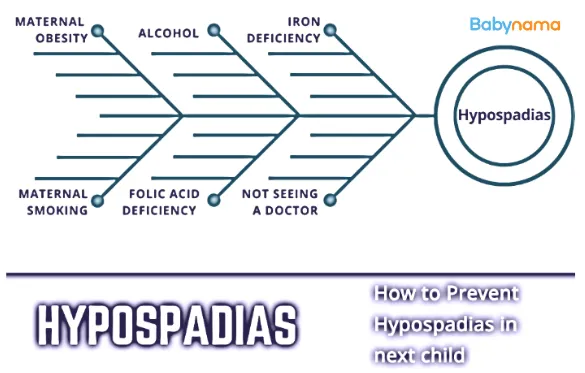
1. Achieve Healthy Weight
-
Maintain healthy BMI (18.5-24.9)
-
Maternal obesity is linked to higher risk
-
Work with doctor on weight loss if needed
-
Don’t crash diet - gradual, healthy changes 2. Start Folic Acid Early
-
Take 400-800 mcg daily at least 1-3 months before conception
-
Continue through first trimester
-
May help reduce risk of various birth defects
-
Available as supplements or in fortified foods 3. Quit Smoking
-
Smoking during pregnancy linked to hypospadias risk
-
Quit well before trying to conceive
-
Seek help if needed (nicotine replacement, counseling)
-
Partner should also quit (secondhand smoke) 4. Stop Alcohol
-
Alcohol exposure during early pregnancy may affect development
-
Since you won’t know immediately when pregnant, stop before trying
-
No “safe” amount during pregnancy 5. Review Medications with Doctor
-
Some medications may increase risk
-
Discuss all prescription and over-the-counter drugs
-
Never stop prescribed medications without doctor advice
-
Consider alternatives if needed 6. Medical Check-Up
-
Control any chronic conditions (diabetes, thyroid)
-
Check hormone levels if indicated
-
Discuss family history with doctor
-
Consider genetic counseling
During Pregnancy
1. Continue Folic Acid
-
Through at least first 12 weeks
-
Prenatal vitamins contain adequate amounts 2. Nutritional Balance
-
Eat balanced diet with adequate protein
-
Some studies suggest vegetarian diet may be associated with slightly higher risk - ensure adequate protein, iron, zinc
-
Include iron-rich foods (dals, rajma, chana, palak and other leafy greens, ragi, eggs/meat if non-vegetarian)
-
Adequate zinc intake (whole grains, dals, nuts, seeds, curd) 3. Avoid Environmental Exposures
-
Limit exposure to pesticides
-
Avoid unnecessary chemicals
-
Be cautious with plastics (avoid heating food in plastic)
-
Filter drinking water if concerned about quality 4. Regular Prenatal Care
-
Attend all scheduled appointments
-
Report any concerns to doctor
-
Follow all recommended tests 5. Manage Stress
-
Chronic stress may affect hormones
-
Practice relaxation techniques
-
Seek support when needed
What to AVOID
| Avoid | Why |
|---|---|
| Smoking | Linked to higher risk |
| Alcohol | May affect fetal development |
| Certain medications | Some may disrupt hormones (discuss with doctor) |
| Excessive soy products | Phytoestrogens (controversial, but moderation advised) |
| Pesticide exposure | Environmental hormone disruptors |
| BPA plastics | Endocrine disruptor (avoid microwaving plastic) |
| Recreational drugs | Various developmental effects |
| Extreme dieting during pregnancy | Nutritional deficiencies |
Genetic Counseling
Consider genetic counseling if:
-
Multiple family members affected
-
Both father and child have hypospadias
-
Other genital or urinary abnormalities in family
-
You want detailed risk assessment
-
You have questions about testing options What Genetic Counselors Can Offer:
-
Detailed family history analysis
-
Accurate risk calculation
-
Discussion of any genetic testing options
-
Emotional support and guidance
-
Connection to support groups
Early Detection During Pregnancy
- Hypospadias is sometimes visible on detailed ultrasound
- Not always detectable before birth
- If suspected, additional evaluation may be offered
- Early awareness helps with planning (though doesn’t change outcome)
If Your Next Child Has Hypospadias
Take Comfort:
- Modern surgery has excellent outcomes
- Most repairs are done as outpatient
- Boys with corrected hypospadias have normal urinary and sexual function
- You’ll have knowledge and experience from first child
- Surgeon familiarity with your family history
FAQs
Q: Mera pehla beta hypospadias ke saath paida hua - next baby mein kya chance hai?
A: If your first son has hypospadias, the chance of the next son having it is approximately 7-8% (compared to 0.3-0.5% in general population). This means there’s still a strong likelihood (around 85-90%+) that your next son will NOT have this condition. Taking preventive measures like folic acid, healthy weight, and avoiding smoking can help reduce risk further.
Q: Can eating meat during pregnancy prevent hypospadias?
A: Some studies have suggested that vegetarian diets during pregnancy may be associated with slightly higher rates of hypospadias, possibly due to phytoestrogens in soy or nutritional factors. However, this is not conclusive. The key is ensuring adequate protein, iron, and zinc regardless of diet type. If vegetarian, consider supplements and consult with your doctor.
Q: At what stage of pregnancy does hypospadias develop?
A: The penis develops and the urethra forms between 8-14 weeks of pregnancy. This is the critical window when hypospadias occurs. This is why pre-conception and early pregnancy measures (folic acid, avoiding harmful substances) are most important.
Q: Is there any test during pregnancy to detect hypospadias?
A: Hypospadias can sometimes be detected on detailed ultrasound (level II or anomaly scan), typically done around 18-20 weeks. However, mild cases may not be visible before birth. If there’s family history, your doctor may pay extra attention during ultrasound.
Q: If my husband has hypospadias, what is the risk for our children?
A: If the father has hypospadias, the risk for sons is approximately 8-10%. Combined with other family history, risk may be higher. Genetic counseling can provide more accurate assessment based on your specific situation.
Q: We’re planning IVF - does this affect hypospadias risk?
A: Some studies have shown slightly higher rates of hypospadias in pregnancies from assisted reproductive technology (ART/IVF). The reasons aren’t fully understood. If you’re undergoing IVF, discuss this with your fertility specialist and follow all pre-conception recommendations carefully.
This article was reviewed by Babynama Pediatricians.
Note for Indian families: This guide is for general information and follows IAP, ICMR and WHO guidance for India. It does not replace a consultation. Risk figures are estimates and vary between studies — your individual risk and care plan should be discussed with your obstetrician, pediatrician and, where relevant, a geneticist. In any emergency, call 112 (national emergency) or 108 (ambulance) or go to the nearest hospital.
Need personalized guidance? Book a consultation with our pediatricians or explore our Care Plans for 24/7 expert support!
Related Tools
Continue with this topic
A useful next step
Browse child-development articlesExplore milestones, movement, speech, behaviour and learning across childhood.Have a question about your little one?
Join our free community for live Q&A with MD pediatricians — no cost to join.
Join the free community