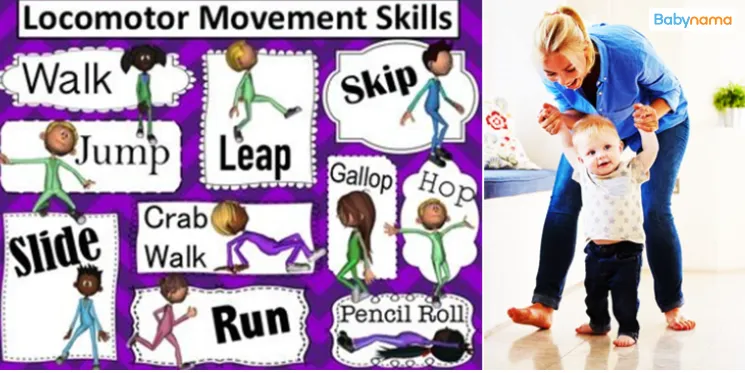
Quick Answer: Locomotor skills are movements that transport the body from one place to another - walking, running, jumping, hopping, skipping, galloping. These develop naturally but can be strengthened through play. Give your child plenty of floor time, outdoor play, and activities that encourage movement. Most children master basic locomotor skills by age 5-6, with refinement continuing through childhood.
What Are Locomotor Skills?
Locomotor skills are fundamental movements that help children move their bodies through space. They form the foundation for sports, dance, and everyday physical activities.
Types of Locomotor Skills
| Skill | Description | Age Typically Emerges |
|---|---|---|
| Walking | Alternating feet, upright | 9-15 months |
| Running | Fast walking with both feet off ground | 2-3 years |
| Jumping | Both feet leave and land together | 2-3 years |
| Hopping | One foot, single leg | 3-4 years |
| Galloping | Step-together pattern, one foot leads | 3-4 years |
| Skipping | Step-hop alternating feet | 4-6 years |
| Leaping | One foot takeoff, other foot landing | 4-5 years |
| Sliding | Sideways gallop | 4-5 years |
Why Locomotor Skills Matter
Physical Benefits
- Builds strength and coordination
- Develops balance
- Improves cardiovascular fitness
- Supports healthy weight
- Builds bone density
Developmental Benefits
- Enhances brain development
- Boosts confidence
- Prepares for sports and games
- Supports social play
- Builds independence
Activities by Age Group
Babies (0-12 months)
Focus: Floor time and movement exploration
| Activity | How It Helps |
|---|---|
| Tummy time | Strengthens muscles for crawling |
| Rolling games | First movement skill |
| Assisted standing | Prepares for walking |
| Cruising furniture | Pre-walking practice |
Toddlers (1-3 years)
Focus: Walking, early running and jumping
Activities:
-
Walking on different surfaces (grass, sand, carpet)
-
Push toys while walking
-
Simple obstacle courses
-
Dancing to music
-
Walking up/down gentle slopes
-
Soft play areas Games:
-
Follow the leader (walking)
-
Walk like animals (bear, crab, duck)
-
Jump over lines or ropes on ground
-
“Red light, green light”
Preschoolers (3-5 years)
Focus: Running, jumping, hopping, galloping
Activities:
-
Running races
-
Hopscotch
-
Jump rope (stationary rope first)
-
Galloping like horses
-
Skipping practice
-
Dance classes
-
Obstacle courses Games:
-
Tag games
-
Simon says (with movements)
-
Musical statues/freeze dance
-
Relay races
-
“The floor is lava”
-
Duck, duck, goose
School Age (5+ years)
Focus: Refining skills, combining movements
Activities:
- Organized sports
- Dance classes
- Gymnastics
- Swimming
- Cycling
- Hiking
- Playground activities
Fun Games to Practice Each Skill
Walking Practice
| Game | How to Play |
|---|---|
| Tightrope walk | Walk on tape line on floor |
| Animal walks | Stomp like elephant, tip-toe like mouse |
| Balance beam | Walk on low beam or sturdy plank |
| Scavenger hunt | Walk around finding hidden items |
Running Practice
| Game | How to Play |
|---|---|
| Chase games | Tag, shark, etc. |
| Relay races | Short sprints with teams |
| Musical movement | Run when music plays, stop when it stops |
| Race to the line | Sprint short distances |
Jumping Practice
| Game | How to Play |
|---|---|
| Puddle jumping | Jump over “puddles” (circles on floor) |
| Star jumps | Jump with arms and legs spread |
| How far can you jump | Measure longest jump |
| Jump the river | Jump over two ropes (gradually widen) |
Hopping Practice
| Game | How to Play |
|---|---|
| Hopscotch | Classic hopping game |
| One-legged races | Hop from start to finish |
| Bunny hops | Two-footed hops like a bunny |
| Hop to the beat | Hop to music rhythm |
Skipping Practice
| Game | How to Play |
|---|---|
| Skip to my Lou | Skip in circle, song helps rhythm |
| Skipping races | Race while skipping |
| Skip and freeze | Skip until music stops |
How to Support Development
Do’s
| Action | Why It Helps |
|---|---|
| Lots of floor time | Freedom to move and explore |
| Daily outdoor play | Space to run and jump |
| Let them fall (safely) | Builds coordination and confidence |
| Join in the play | Models movements |
| Celebrate efforts | Encourages trying |
| Provide variety | Different surfaces and environments |
Don’ts
| Avoid | Why |
|---|---|
| Excessive screen time | Reduces active play time |
| Over-protection | Need some safe risk-taking |
| Comparison | Every child develops differently |
| Forcing activities | Should be fun, not stressful |
| Structured-only play | Need free play too |
Creating Movement Opportunities at Home
Indoor Ideas
- Clear space for dancing
- Pillow obstacle courses
- “The floor is lava” - jump between cushions
- Dance party time
- Indoor hopscotch (tape on floor)
- Movement songs with actions
Outdoor Ideas
- Park visits (playground)
- Nature walks
- Backyard games
- Riding toys (scooters, bikes)
- Ball games
- Water play (running, jumping)
Equipment That Helps
| Basic | Extra |
|---|---|
| Balls of various sizes | Trampoline (with safety net) |
| Chalk for hopscotch | Balance beam or plank |
| Jump rope | Stepping stones |
| Music for dancing | Tunnel to crawl through |
| Open space | Ride-on toys |
Developmental Milestones
When to See Progress
| Age | Typical Skills |
|---|---|
| 12-18 months | Walking steadily |
| 2 years | Running (somewhat stiff) |
| 2-3 years | Jumping with two feet |
| 3-4 years | Hopping on one foot, galloping |
| 4-5 years | Skipping emerges |
| 5-6 years | All basic locomotor skills present |
| 6+ years | Skills become more refined, combined |
When to Be Concerned
Consult a doctor if:
- Not walking by 18 months
- Very clumsy compared to peers
- Seems afraid of movement
- Falls excessively after expected age
- One side of body seems weaker
- Regression of skills already learned
Frequently Asked Questions
Q: My child prefers sitting activities - how do I encourage movement?
A: Make movement fun! Dance together, play chase, use obstacle courses. Join them rather than directing. Start small - even 10 minutes of active play helps. Limit screen time to encourage activity.
Q: When should my child learn to skip?
A: Skipping is one of the more complex locomotor skills and typically emerges around age 4-6. Many children skip naturally by kindergarten, but some take longer. Practice galloping first as a stepping stone.
Q: Are organized sports necessary for locomotor development?
A: No! Free play, outdoor time, and family activities can develop these skills perfectly well. Organized sports are fine but not essential - the key is regular movement opportunities.
Q: My child seems clumsy - should I worry?
A: Some clumsiness is normal as children learn. Concerns arise if clumsiness is severe, persistent, or affecting daily life. Talk to your pediatrician if you’re worried - early intervention for motor delays is very effective.
Q: How much active play does my child need daily?
A: Toddlers need at least 180 minutes of varied activity daily. Preschoolers and school-age children need at least 60 minutes of moderate-to-vigorous activity plus plenty of other movement throughout the day.
Key Takeaways
- Locomotor skills develop naturally with opportunity and practice
- Play is the best teacher - make movement fun
- Outdoor play matters - space to run and explore
- Every child is different - don’t compare
- Join the play - model and participate
- Variety helps - different activities and surfaces
- Consult early if you notice significant delays
This article was reviewed by Babynama Pediatricians. Last updated: January 2026
Note: Milestone ages above are typical ranges, not strict deadlines — every child develops at their own pace. This article is for general guidance for Indian parents and does not replace a consultation with your pediatrician. If your child shows any red flag — not walking by 18 months, loss of skills already learned, or one side of the body that seems consistently weaker — see your pediatrician promptly.
In a medical emergency in India, call 112 (national emergency) or 108 (ambulance), or go to your nearest hospital.
Need personalized guidance? Book a consultation with our pediatricians or explore our Care Plans for 24/7 expert support!
Continue with this topic
A useful next step
Browse child-development articlesExplore milestones, movement, speech, behaviour and learning across childhood.Have a question about your little one?
Join our free community for live Q&A with MD pediatricians — no cost to join.
Join the free community