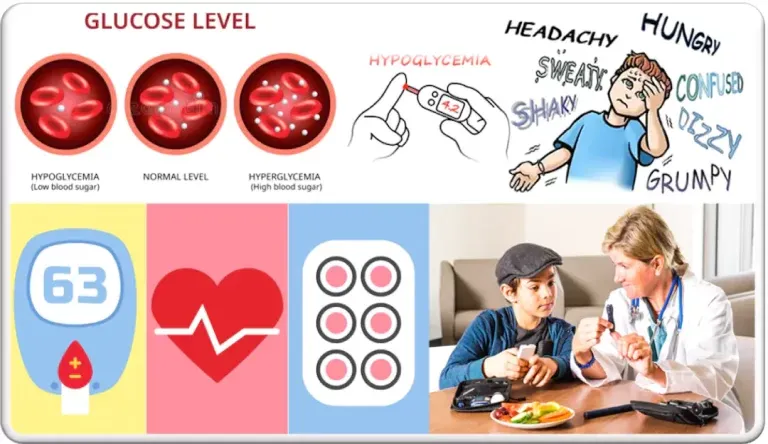
Quick Answer: Low blood sugar (below 70 mg/dL) requires immediate treatment. Follow the “Rule of 15”: give 15g of fast-acting carbs (juice, glucose tablets, or sugar), wait 15 minutes, recheck blood sugar, and repeat if still low. Always carry emergency supplies. For severe hypoglycemia (unconsciousness or seizure), don’t give food by mouth — 🚨 call 112 (national emergency) or 108 (ambulance), get to the nearest hospital, and use glucagon if you have it and are trained.
Understanding Hypoglycemia
Hypoglycemia (low blood sugar) is a common challenge for children with diabetes. Recognizing and treating it quickly prevents serious complications.
What Is Low Blood Sugar?
| Level | Category | Action |
|---|---|---|
| Below 70 mg/dL | Low | Treat immediately |
| Below 54 mg/dL | Very low | Treat urgently |
| Below 40 mg/dL | Severely low | Emergency |
Why Does It Happen?
Common Causes
| Cause | How It Happens |
|---|---|
| Too much insulin | Dose error or changed needs |
| Skipped/delayed meal | Insulin acting without food |
| Extra exercise | Burns glucose faster |
| Illness | Vomiting, not eating |
| Hot weather | Affects insulin absorption |
| Alcohol (teens) | Blocks liver glucose release |
High-Risk Situations
- After sports or physical activity
- During illness
- When meal timing changes
- After insulin dose adjustments
- During sleep (nighttime lows)
Recognizing Low Blood Sugar
Early Warning Signs
| Symptom | What It Feels Like |
|---|---|
| Shaky/trembling | Hands feel wobbly |
| Sweaty | Cold, clammy skin |
| Hungry | Sudden intense hunger |
| Pale | Face looks washed out |
| Fast heartbeat | Heart pounding |
| Dizzy/lightheaded | Room spinning |
| Irritable/moody | Sudden behavior change |
Moderate to Severe Signs
| Symptom | Action Needed |
|---|---|
| Confusion | Treat now, don’t wait |
| Slurred speech | May need help treating |
| Difficulty walking | Sit child down, treat |
| Blurred vision | Treat immediately |
| Drowsiness | Act fast |
| Unconscious | Emergency - use glucagon |
| Seizure | Emergency - use glucagon |
How Children May Describe It
Different ages express lows differently:
- Toddlers: Crying, clingy, tantrums, won’t eat
- School-age: “My tummy feels funny,” “I feel weird”
- Teens: Recognize symptoms but may deny them
The Rule of 15: Treatment Protocol
Step-by-Step Treatment
Step 1: Give 15g Fast-Acting Carbs
Choose ONE:
- 3-4 glucose tablets (check the label for grams)
- Half glass (about 120 ml) fruit juice (Real, Tropicana, or fresh)
- Half glass regular (not diet) soft drink
- 1 tablespoon sugar or glucose powder (Glucon-D) dissolved in water
- 1 tablespoon honey (only for children over 1 year — never give honey under 1 year)
- Glucose gel packet
Step 2: Wait 15 Minutes
- Stay with child
- Keep them calm
- Don’t give more food yet
Step 3: Recheck Blood Sugar
- If still below 70: repeat Step 1
- If above 70: give a snack if next meal is more than 1 hour away
Step 4: Follow Up Snack
If blood sugar is now normal but next meal is far:
- Roti with a little curd or paneer
- Whole-wheat bread sandwich
- A glass of milk with biscuits or a banana
What NOT to Do
| Don’t | Why |
|---|---|
| Give chocolate | Fat slows sugar absorption |
| Give large amounts | Can cause rebound high |
| Wait to see if it improves | Can progress rapidly |
| Give food if unconscious | Choking risk |
| Panic | Child needs calm help |
Treating Severe Hypoglycemia
When It’s an Emergency
Severe hypoglycemia means:
- Child is unconscious
- Child is having a seizure
- Child cannot swallow safely
🚨 This is a life-threatening emergency. Call 112 (national emergency) or 108 (ambulance) and get to the nearest hospital right away. Give glucagon if you have it and are trained, but do not delay calling for help.
Glucagon: Emergency Treatment
What is Glucagon?
A hormone that raises blood sugar by releasing stored glucose from the liver.
How to Give:
| Type | How to Use |
|---|---|
| Injectable glucagon | Mix powder and liquid, inject into muscle |
| Nasal glucagon | Spray into one nostril |
| Auto-injector | Follow device instructions |
Emergency Steps
- Position child safely - On side if vomiting risk
- Don’t put anything in mouth - No food, no drinks
- Give glucagon - Follow package instructions
- Call 112 or 108 - Even if child improves, get medical help
- Once conscious - Give fast-acting carbs, then snack
- Report to doctor - All severe episodes need review
Prevention Strategies
General Prevention
| Strategy | How It Helps |
|---|---|
| Check blood sugar regularly | Catch lows before symptoms |
| Don’t skip meals | Food balances insulin |
| Adjust for exercise | Reduce insulin or add carbs |
| Carry treatment | Always have glucose ready |
| Wear medical ID | Helps others help you |
Before, During, After Exercise
| When | What to Do |
|---|---|
| Before | Check blood sugar; eat snack if below 100 |
| During | Check every 30-60 min for long activity |
| After | Check; may need extra carbs for hours |
Nighttime Lows

Prevent overnight hypoglycemia:
- Check blood sugar at bedtime
- Have a bedtime snack if needed
- Set alarm to check during night if concerned
- Talk to doctor about insulin adjustments
Emergency Kit Essentials
What to Carry Always
| Item | Purpose |
|---|---|
| Glucose tablets | Fast treatment |
| Juice box | Alternative treatment |
| Glucagon kit | Severe emergencies |
| Blood glucose meter | Confirm low |
| Medical ID card | Information for others |
Keep Supplies In
- Child’s backpack
- Your purse/bag
- Car
- School nurse’s office
- Grandparents’ house
- Sports bag
Teaching Others to Help
What Caregivers/Teachers Need to Know
Provide written instructions for:
- Signs of low blood sugar
- How to treat mild lows
- When to call you
- When to call 112 (national emergency) or 108 (ambulance)
- How to use glucagon (if trained)
Information Card Template
[Child's Name] has diabetes

LOW BLOOD SUGAR SIGNS:

Shaky, sweaty, pale, confused, irritable

WHAT TO DO:

- Give juice/glucose tablets immediately
- Wait 15 minutes
- Call parent if not improving
EMERGENCY (unconscious/seizure):

Do NOT give food

Give glucagon if trained

Call 112 or 108 (emergency/ambulance)

Call parents
When to Seek Medical Help
See Doctor If:
- Frequent lows (more than 2-3 per week)
- Lows without explanation
- Nighttime lows
- Severe low requiring glucagon
- Lows before meals/at same time daily
- Fear of lows affecting daily life
Adjust Treatment Plan
Work with your diabetes team to:
- Review insulin doses
- Check timing of insulin
- Evaluate food intake
- Discuss exercise patterns
- Consider continuous glucose monitoring
Frequently Asked Questions
Q: How low is too low for a child?
A: Any blood sugar below 70 mg/dL needs treatment. Below 54 is urgent. Below 40 or with severe symptoms is an emergency.
Q: Can my child tell they’re having a low?
A: Many children learn to recognize their symptoms. Some don’t feel lows (“hypoglycemia unawareness”). Frequent monitoring helps catch these.
Q: Should I wake my child to check blood sugar at night?
A: Discuss with your doctor. Some situations warrant nighttime checks: after exercise, illness, insulin changes, or a history of nighttime lows.
Q: What if my child refuses treatment during a low?
A: Confusion and irritability are symptoms of low blood sugar. Stay calm, be gentle but firm. If child won’t cooperate and is conscious, give whatever fast carbs you can. If unconscious, use glucagon.
Q: Is it okay to give extra sugar “just in case”?
A: Check blood sugar first if possible. Unnecessary treatment causes high blood sugar. If you can’t test and child has symptoms, treat.
Key Takeaways
- Act fast - Don’t wait; treat lows immediately
- Rule of 15 - 15g carbs, wait 15 minutes, recheck
- Fast-acting carbs - Juice, glucose tablets work quickly
- Know severe signs - Confusion, unconsciousness, seizure
- Use glucagon for emergencies - Know how before you need it
- Always carry supplies - Glucose and glucagon everywhere
- Teach others - Caregivers need to know what to do
This article was reviewed by the Babynama Medical Team. Last updated: January 2026
General information for Indian parents, not a substitute for your pediatrician. In an emergency, call 112 or 108.
Need personalized guidance? Book a consultation with our pediatricians or explore our Care Plans for 24/7 expert support!
Continue with this topic
A useful next step
Browse child-development articlesExplore milestones, movement, speech, behaviour and learning across childhood.Have a question about your little one?
Join our free community for live Q&A with MD pediatricians — no cost to join.
Join the free community