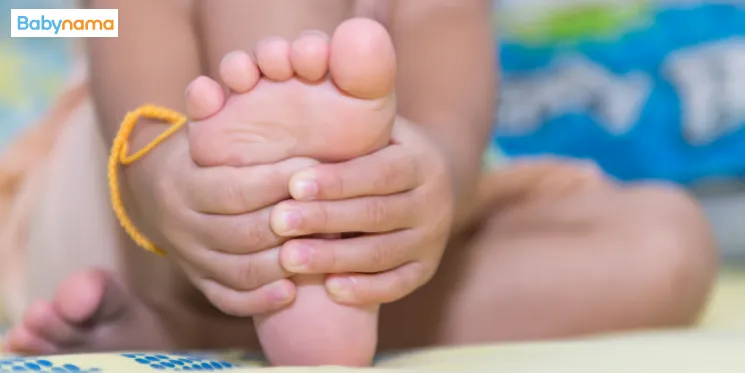
Quick Answer: Foot pain in children is common and usually not serious. Most cases are due to growing pains, overuse from activities, or poorly fitting shoes. However, persistent pain, limping, swelling, or pain after injury needs medical evaluation. Treatment depends on the cause - rest, proper footwear, and stretching help most cases. See a doctor if pain is severe, lasts more than a week, or affects walking.
Common Causes of Foot Pain in Children
By Age Group
| Age | Most Common Causes |
|---|---|
| Toddlers (1-3) | Learning to walk strain, flat feet (normal) |
| Preschool (3-5) | Overactivity, growing pains |
| School age (5-12) | Growing pains, sports injuries, Sever’s disease |
| Teens (12+) | Sports injuries, stress fractures, overuse |
The Top Causes
1. Growing Pains
What it is: Aching pain in legs and feet, typically at night
| Feature | Details |
|---|---|
| When | Usually evening/night |
| Location | Both feet/legs (not one-sided) |
| Age | 3-12 years |
| Pattern | Comes and goes, gone by morning |
Treatment:
- Massage
- Warm compress
- Gentle stretching
- Pain relief if needed
2. Sever’s Disease (Calcaneal Apophysitis)
What it is: Heel pain caused by inflammation at the growth plate
| Feature | Details |
|---|---|
| Who gets it | Active children 8-14 years |
| Location | Back of heel |
| When worse | During/after sports, walking |
| Exam finding | Tender when heel is squeezed |
Treatment:
- Rest from high-impact activities
- Heel cushions/cups
- Stretching exercises
- Ice after activity
- Good supportive shoes
3. Plantar Fasciitis
What it is: Inflammation of the tissue connecting heel to toes
| Feature | Details |
|---|---|
| Location | Bottom of heel |
| When worse | First steps in morning |
| Who | Older children, especially active ones |
Treatment:
- Stretching exercises
- Arch support
- Rest from aggravating activities
- Ice
4. Flat Feet
What to know:
- Normal in babies and toddlers
- Most children develop arches by age 6
- Flat feet rarely cause pain
- If painful, may need orthotics
5. Ingrown Toenails
What it is: Nail edge growing into skin
Signs:
-
Red, swollen toe
-
Pain along nail edge
-
May have pus Treatment:
-
Soak in warm water
-
Keep clean and dry
-
Trim nails straight across
-
May need doctor if infected
6. Overuse/Sports Injuries
Common in active children:
- Stress fractures
- Tendinitis
- Muscle strains
Signs to Watch For
Concerning Signs (See Doctor)
| Sign | Possible Meaning |
|---|---|
| Limping | Something structural may be wrong |
| Swelling | Injury or inflammation |
| Redness/warmth | Infection or inflammation |
| Night pain that wakes child | May not be growing pains |
| Pain in one specific spot | Possible fracture |
| Refusal to walk | Needs evaluation |
| Pain after injury | May need imaging |
Red Flags (Seek Urgent Care)
- Severe pain out of proportion to injury
- Unable to bear weight
- Visible deformity
- Signs of infection (fever, spreading redness)
- Pain not improving after 7-10 days
🚨 For a visibly deformed or open injury, sudden inability to bear weight after trauma, or spreading redness with high fever, go to the nearest hospital. If you cannot, call 112 (national emergency) or 108 (ambulance).
Diagnosis: What to Expect
Doctor’s Examination
- Watch child walk
- Check range of motion
- Look for swelling, redness
- Press on different areas
- Examine shoes
Tests (If Needed)
| Test | When Used |
|---|---|
| X-ray | Suspected fracture, bone abnormality |
| MRI | Soft tissue injury, unclear diagnosis |
| Blood tests | If infection or inflammation suspected |
Treatment Options
Home Care
| Approach | How to Do It |
|---|---|
| Rest | Reduce high-impact activities |
| Ice | 15-20 minutes, several times daily |
| Elevation | When resting |
| Massage | Gentle massage of affected area |
| Stretching | Calf and foot stretches |
Footwear
| Good Shoes | Bad Shoes |
|---|---|
| Proper fit (thumb width at toe) | Too tight or too loose |
| Good arch support | Flat flip-flops |
| Cushioned sole | Hard, thin soles |
| Appropriate for activity | Worn-out shoes |
Medical Treatment (When Prescribed)
- Pain relievers (paracetamol or ibuprofen) — paracetamol is dosed by weight at about 15 mg/kg per dose, every 4–6 hours, not exceeding 60 mg/kg in 24 hours; check the syrup strength on the label and confirm the dose with your pediatrician. Give ibuprofen with food.
- Custom orthotics
- Physical therapy
- Casting (for fractures)
- Surgery (rare)
Prevention Tips
Proper Footwear
- Measure feet regularly (kids’ feet grow!)
- Replace worn shoes
- Activity-appropriate shoes
- Avoid hand-me-down shoes that are molded to another child’s foot
For Active Children
- Warm up before sports
- Increase activity gradually
- Cross-train (vary activities)
- Listen to pain - rest when needed
- Proper technique in sports
General
- Maintain healthy weight
- Regular physical activity
- Stretching as part of routine
- Trim toenails straight across
When to See a Specialist
Pediatric Orthopedist
- Persistent pain not responding to treatment
- Structural abnormalities
- After significant injury
- Concern about bone or joint problems
Podiatrist
- Ongoing foot-specific issues
- Need for custom orthotics
- Ingrown toenails requiring procedure
Frequently Asked Questions
Q: My child’s feet hurt after walking a lot. Is this normal?
A: Some discomfort after unusual activity can be normal. If it happens regularly with normal activity, or if there’s limping, have it evaluated. Proper footwear often helps.
Q: At what age should flat feet be treated?
A: Flat feet are normal in young children. If they’re painless, no treatment is needed. Painful flat feet or flat feet persisting past age 6-8 should be evaluated.
Q: Should my child wear orthotics?
A: Only if recommended by a doctor for a specific condition. Most children don’t need orthotics. Well-fitting, supportive shoes are usually sufficient.
Q: Can foot pain be from the knee or hip?
A: Yes! Pain can “refer” from other areas. Hip problems, for example, can cause knee or foot pain. Your doctor will examine the whole leg.
Q: How do I know if it’s growing pains or something else?
A: Growing pains typically: affect both legs, occur at night, disappear by morning, and don’t cause limping. If pain is one-sided, present during the day, causes limping, or has swelling, see a doctor.
Key Takeaways
- Most foot pain is not serious - Growing pains and overuse are common
- Proper shoes matter - Fit, support, and condition are important
- Rest helps most cases - Reduce activity if pain is overuse-related
- Watch for red flags - Limping, swelling, severe pain need evaluation
- Growing pains are bilateral - One-sided pain suggests something else
- Prevention works - Proper footwear, warm-ups, gradual increases
This article was reviewed by Babynama Pediatricians. Last updated: January 2026
General information for Indian parents, not a substitute for your pediatrician. In an emergency, call 112 or 108.
Need personalized guidance? Book a consultation with our pediatricians or explore our Care Plans for 24/7 expert support!
Continue with this topic
A useful next step
Browse child-development articlesExplore milestones, movement, speech, behaviour and learning across childhood.Have a question about your little one?
Join our free community for live Q&A with MD pediatricians — no cost to join.
Join the free community