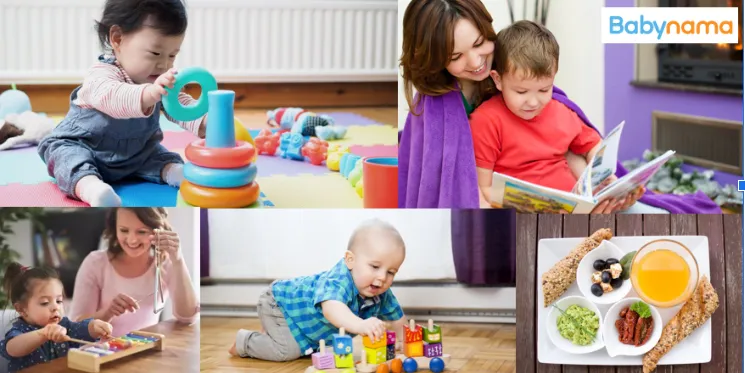
Quick Answer: You can naturally support your baby’s memory and concentration through simple activities: talking and reading daily, playing peek-a-boo (teaches object permanence), ensuring quality sleep, and providing proper nutrition. Babies’ brains develop rapidly in the first 3 years - your interactions matter more than any toy or app! Focus on connection, repetition, and responsive parenting rather than flashcards or “brain training” products.
Understanding Baby Brain Development
Your baby’s brain is incredible:
- At birth: about 100 billion neurons (brain cells)
- By age 3: Brain is 80% of adult size
- First 1000 days: Most critical for brain wiring | Age | Memory Development | | — | — | | 0-3 months | Recognizes familiar faces, voices | | 3-6 months | Remembers simple patterns, anticipates routines | | 6-12 months | Object permanence develops (things exist when hidden) | | 1-2 years | Short-term memory improves, follows simple instructions | | 2-3 years | Can recall events, stories, sequences |
Activities That Build Memory (By Age)
0-6 Months
| Activity | How It Helps Memory |
|---|---|
| Face-to-face interaction | Baby learns to recognize and remember faces |
| Narrating your day | Exposes brain to language patterns |
| Singing the same songs | Repetition builds neural pathways |
| Tummy time | Physical development supports cognitive growth |
6-12 Months
| Activity | How It Helps Memory |
|---|---|
| Peek-a-boo | Teaches object permanence - things exist when hidden |
| Hide and seek toys | Encourages baby to remember where objects are |
| Reading board books | Same books repeatedly build familiarity |
| Simple routines | Predictable patterns help memory develop |
| Pointing and naming | Connects words to objects in memory |
1-2 Years
| Activity | How It Helps Memory |
|---|---|
| Following instructions | “Get your shoes” - retrieval practice |
| Sorting games | Categories help organize memory |
| Puzzles (2-4 pieces) | Spatial memory and problem-solving |
| Recalling the day | “What did we do at the park?” |
| Nursery rhymes | Rhythmic memory is powerful |
2-3 Years
| Activity | How It Helps Memory |
|---|---|
| Memory matching games | Direct memory training |
| Storytelling | Sequencing and recall |
| Pretend play | Uses working memory |
| Following 2-step instructions | “Get your cup and bring it here” |
| Remembering names | Friends, family, characters |
The Power of Repetition
Babies LOVE repetition - and their brains need it!
Why Repetition Matters
- Each repeat strengthens neural connections
- Predictability builds security AND memory
- “Boring” to you = fascinating to baby’s developing brain
What to Repeat
- Same bedtime book every night
- Same songs during diaper changes
- Same phrases for routines (“Time for bath!”)
- Same games (peek-a-boo never gets old)
Tip: When you’re tired of the same book for the 100th time, remember: your baby’s brain is building highways of neural connections each time!
Building Concentration (Focus)
Realistic Expectations
| Age | Typical Attention Span |
|---|---|
| 6-12 months | 1-2 minutes |
| 1-2 years | 3-6 minutes |
| 2-3 years | 6-8 minutes |
| 3-4 years | 8-12 minutes |
How to Support Focus
Do:
-
Follow baby’s lead - let them explore what interests them
-
Reduce distractions during play
-
One toy/activity at a time
-
Join their play without taking over
-
Wait patiently for responses Don’t:
-
Interrupt focused play
-
Overstimulate with too many toys
-
Expect adult-like attention spans
-
Force “learning” activities
-
Use screens to “teach” (passive, not engaging)
Nutrition for Brain Development
Key Nutrients
| Nutrient | Why It Matters | Best Sources |
|---|---|---|
| DHA (Omega-3) | Brain structure | Fatty fish, fortified foods |
| Iron | Cognitive function | Meat, lentils, spinach |
| Choline | Memory | Eggs, meat |
| Protein | Neurotransmitters | Eggs, dairy, meat, legumes |
| Zinc | Brain growth | Meat, nuts, seeds |
Best Brain Foods for Babies (6+ months)
Before 6 months, babies need nothing but breast milk (or formula) — no water, no solids, no other foods. Once your pediatrician confirms your baby is ready for solids at around 6 months, these are good brain-supporting options:
- Mashed dal and khichdi (dal-rice)
- Ragi (finger millet) porridge
- Egg yolk (well cooked)
- Suji (semolina) porridge
- Curd / dahi (plain, unsweetened)
- Curd rice
- Mashed banana and avocado
- Sweet potato
- Spinach / palak (well cooked, mashed)
- Soft-cooked fish (deboned), once introduced
What to Avoid
- Excess sugar (affects concentration)
- Processed foods (low in nutrients)
- Juice instead of whole fruits
Sleep: The Memory Superpower
Sleep is when baby’s brain processes and stores memories!
Sleep Needs
| Age | Total Sleep (24 hrs) |
|---|---|
| 0-3 months | 14-17 hours |
| 4-12 months | 12-16 hours |
| 1-2 years | 11-14 hours |
| 3-5 years | 10-13 hours |
How Sleep Supports Memory
- Consolidates learning from the day
- Clears “brain waste” products
- Restores energy for learning tomorrow
- During REM sleep: memory processing happens
Tips for Better Sleep
- Consistent bedtime routine
- Dark, quiet room
- No screens 1-2 hours before bed
- Adequate daytime activity
- Watch for sleep cues
What DOESN’T Help (Skip These)
| Marketing Claim | Reality |
|---|---|
| “Brain training” apps | Passive screens don’t build memory |
| Baby flashcards | Babies learn through play, not drills |
| Mozart/classical music | Nice, but not proven to boost IQ |
| Educational DVDs | Babies learn better from real interactions |
| Expensive “smart” toys | Simple toys often work better |
What Actually Works
- Your presence - Responsive caregiving
- Conversation - Talk to baby constantly
- Reading - Simple books, repeatedly
- Play - Especially open-ended play
- Routine - Predictability aids memory
- Sleep - The brain’s filing system
Warning Signs to Watch
Talk to your pediatrician if:
- No recognition of familiar faces by 3-4 months
- No response to name by 9-12 months
- No pointing or gesturing by 12 months
- Loss of previously learned skills at any age
- Extreme difficulty following simple instructions (age 18+ months)
- No interest in playing or interacting
Frequently Asked Questions
Q: Should I use flashcards with my baby?
A: Not recommended for babies! Flashcards are passive and don’t engage babies the way interaction does. Pointing to objects in real life, reading books together, and naming things during daily routines are far more effective.
Q: Will screen time help my baby learn?
A: No. AAP recommends no screen time under 18 months (except video calls). Babies learn best from face-to-face interaction. Screens can actually delay language development.
Q: My toddler can’t sit still. Should I be worried about ADHD?
A: Probably not! Toddlers are naturally very active with short attention spans. True ADHD isn’t diagnosed until later (usually 4+). Provide plenty of active play and don’t expect sitting still.
Q: How much should I read to my baby?
A: Any amount helps! Even 10-15 minutes daily makes a difference. It’s not about quantity but quality - interactive reading where you point, make sounds, and engage is best.
Q: Does bilingualism confuse babies?
A: No! Babies exposed to multiple languages develop normally and may have better cognitive flexibility. The early years are the best time for language exposure.
Key Takeaways
- Your interaction matters most - Talk, read, play with your baby daily
- Repetition builds memory - Same songs, books, games are good!
- Sleep is critical - Memory consolidation happens during sleep
- Feed the brain - Eggs, fish, iron-rich foods support development
- Skip the products - No app, flashcard, or toy beats real interaction
- Follow baby’s lead - Let their interests guide play
- Be patient - Brain development takes time
This article was reviewed by Babynama Pediatricians. Last updated: January 2026
Need personalized guidance? Book a consultation with our pediatricians or explore our Care Plans for 24/7 expert support!
General information for Indian parents, not a substitute for your pediatrician. In an emergency, call 112 or 108.
Continue with this topic
A useful next step
Browse child-development articlesExplore milestones, movement, speech, behaviour and learning across childhood.Have a question about your little one?
Join our free community for live Q&A with MD pediatricians — no cost to join.
Join the free community