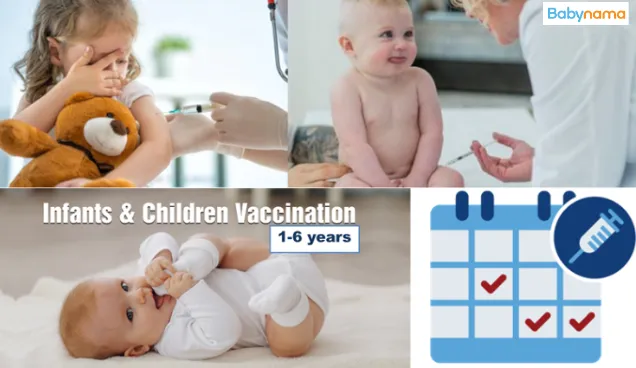
Quick Answer
YES — vaccines are very safe and highly effective, and they protect your baby against serious, sometimes life-threatening diseases. Serious reactions are rare, and the benefits far outweigh the small risks. Vaccines (teeka) work by training your baby’s immune system to fight diseases. Following the recommended schedule is one of the most important things you can do to protect your child’s health.
Why Vaccines are Important
How Vaccines Work:
- Introduce weakened/inactive form of germ
- Body learns to recognize and fight it
- Creates protective antibodies (memory)
- If exposed later, body fights it off quickly Benefits of Vaccination:
| Benefit | Explanation |
|---|---|
| Prevents serious diseases | Polio, diphtheria, measles can be fatal |
| Herd immunity | Protects those who can’t be vaccinated |
| Eradicates diseases | Smallpox eliminated globally |
| Cost-effective | Prevention cheaper than treatment |
| Very safe | Thoroughly tested and monitored; serious reactions are rare |
Indian Vaccination Schedule (IAP Recommended)
Based on the Indian Academy of Pediatrics (IAP) ACVIP Recommended Immunization Schedule, 2025 (iapindia.org). Vaccine timing can vary slightly by clinic and by which combination products are used — always go by the schedule and vaccination card your own pediatrician gives you.
Birth:
-
BCG (for TB)
-
Hepatitis B - Birth dose
-
OPV 0 (Oral Polio) 6 Weeks:
-
DTwP/DTaP 1 (Diphtheria, Tetanus, Pertussis)
-
IPV 1 (Injectable Polio)
-
Hib 1 (Haemophilus influenzae)
-
Hepatitis B 1 (after the birth dose)
-
Rotavirus 1
-
PCV 1 (Pneumococcal)
Note: DTwP/DTaP, Hib and Hepatitis B are usually given together in a single pentavalent (or hexavalent) injection, so your baby gets fewer pricks. After the birth dose, Hepatitis B is given at 6, 10 and 14 weeks as part of this combination.
10 Weeks:
-
DTwP/DTaP 2
-
IPV 2
-
Hib 2
-
Hepatitis B 2
-
Rotavirus 2
-
PCV 2 14 Weeks:
-
DTwP/DTaP 3
-
IPV 3
-
Hib 3
-
Hepatitis B 3
-
Rotavirus 3
-
PCV 3 6 Months:
-
OPV 1
-
Influenza (Flu) - First dose (first-time flu vaccination needs 2 doses 4 weeks apart, then 1 dose every year — see note below) 9 Months:
-
MMR 1 (Measles, Mumps, Rubella)
-
OPV 2 12 Months:
-
Hepatitis A 1
-
PCV Booster 15 Months:
-
MMR 2
-
Varicella 1 (Chickenpox) 16-18 Months:
-
DTwP/DTaP Booster 1
-
Hib Booster
-
IPV Booster 18 Months:
-
Hepatitis A 2 4-6 Years:
-
DTwP/DTaP Booster 2
-
OPV (supplemental dose)
-
MMR — only if a previous dose was missed (catch-up; IAP routinely recommends 2 MMR doses)
-
Varicella 2
Note: OPV here is a supplemental dose given per IAP / Pulse Polio guidance; OPV dose numbering can vary between charts, so follow your clinic’s card.
10-12 Years:
- Tdap (Tetanus, Diphtheria, Pertussis)
- HPV (for girls and boys)
A note on the flu vaccine: For children aged 6 months to 8 years getting the flu vaccine for the first time, two doses are needed, given 4 weeks apart — then one dose every year. A single dose is not enough the first time.
A note on government vs IAP vaccines: India’s free Universal Immunization Programme (UIP) covers the core vaccines (such as BCG, OPV, pentavalent, IPV, MR/measles, and — in many states now — rotavirus and PCV). It now also includes a free HPV vaccine for girls aged 9–14 where the programme has rolled it out. Several vaccines on this fuller IAP list (for example Hepatitis A, varicella/chickenpox, and influenza, and PCV/rotavirus where the state programme hasn’t introduced them) may still only be available privately. Ask your pediatrician which ones your child still needs.
Government (Free) vs Private Clinic Vaccines — 2026 Quick Guide
A quick reference for Indian parents: which vaccines you can get free at government health centers under the Universal Immunization Programme (UIP), and which ones to consider from private clinics.
✅ Free at government health centers (UIP):
| Age | Vaccines |
|---|---|
| At birth | BCG, OPV, Hepatitis B |
| 6, 10 & 14 weeks | Pentavalent, OPV, Rotavirus, PCV |
| 9 months | MR + Vitamin A (then Vitamin A every 6 months as advised) |
| 15 months & 4–6 years | MMR |
| 16–24 months & 5 years | DPT and Polio boosters |
| 10 & 16 years | Td (Tetanus-diphtheria) |
| Girls 9–14 years | NEW: HPV vaccine — now free |
➕ Consider these from private clinics:
| Vaccine | When |
|---|---|
| Influenza (flu) | From 6 months, every year |
| Typhoid | 9–12 months |
| Hepatitis A | 12–24 months |
| Chickenpox (Varicella) | 15 months |
The newly added free HPV vaccine for girls aged 9–14 is being rolled out through the government programme — ask your local health center whether it’s available in your state yet. Vaccine availability under UIP varies by state, so always confirm the current list with your pediatrician or nearest government health center.
Managing Side Effects
Common Reactions (Normal):
| Reaction | Management |
|---|---|
| Fever (bukhar) | Paracetamol — but only if fever or pain actually develops (see dosing below); not before the vaccine |
| Injection site pain | Cold compress, gentle movement |
| Mild swelling/redness | Cold compress, usually resolves in 2-3 days |
| Fussiness | Extra comfort, feeding on demand |
| Mild rash | Usually self-resolving |
What Helps:
- Breastfeed before/after vaccination
- Dress baby comfortably
- Keep hydrated
- Let baby rest
Paracetamol — how to dose it: Paracetamol is dosed by your baby’s weight, not age: 15 mg/kg per dose, no more often than every 4–6 hours, maximum 4 doses (60 mg/kg) in 24 hours. Syrup strengths differ — Calpol/Crocin come as 120 mg/5 ml and 250 mg/5 ml, so always check the bottle. Do not give to a baby under 3 months without a doctor seeing them first. Confirm the exact mL with your pediatrician.
Important: Give paracetamol only to treat fever or pain if it actually occurs — do not give it before vaccination or routinely to prevent fever. Giving paracetamol pre-emptively can slightly reduce how well the vaccine works.
When to Worry (Red Flags)
⚠️ In a baby under 3 months, ANY fever of 100.4°F (38°C) or higher is a medical emergency — see a doctor the same day, even at night. Do not give paracetamol and wait. This applies even after a vaccine.
🚨 Call 112 (national emergency) or 108 (ambulance), or go straight to the nearest hospital, if you see: difficulty or noisy breathing; swelling of the face, lips or tongue; widespread hives with vomiting; pale, grey or blue skin; floppiness or unresponsiveness; or a seizure. These can be a severe allergic reaction (anaphylaxis). If an adrenaline auto-injector has been prescribed, use it first, then go. Do not wait for a clinic appointment. (This is exactly why your baby is observed at the clinic for 15–30 minutes after a vaccine — to catch any immediate allergic reaction.)
Also see a doctor the same day if:
- High or persistent fever, or fever lasting more than 3 days
- Inconsolable crying for more than 3 hours
- Unusual drowsiness or hard to wake
- Severe swelling at the injection site
Note: Serious reactions are rare. The benefits of vaccination far outweigh the small risks — but watch for the danger signs above.
What You Can Do
Before Vaccination:
-
Keep vaccination card updated
-
Note any previous reactions
-
Inform doctor about any current illness
-
Don’t miss appointments After Vaccination:
-
Stay at clinic for 15-30 minutes for observation
-
Monitor baby for reactions
-
Keep vaccination record safe
-
Schedule next appointment Track Your Schedule:
-
Use reminder apps
-
Mark calendar
-
Set phone reminders
-
Ask doctor for written schedule
Government vs Private Vaccines
| Aspect | Government | Private |
|---|---|---|
| Cost | Free | Paid |
| Core UIP vaccines | Free | Available |
| Additional IAP vaccines | Limited (varies by state) | More options |
| Quality | Same efficacy | Same efficacy |
| Convenience | Fixed schedule/location | Flexible timing |
Both are effective. The government UIP provides the core vaccines free — and now also a free HPV vaccine for girls aged 9–14 where it has been rolled out. Several other vaccines on the fuller IAP list (e.g. Hepatitis A, varicella, influenza, and PCV/rotavirus where the state programme hasn’t introduced them) may still only be available privately. Discuss with your pediatrician which ones your child still needs.
Frequently Asked Questions
Q: Mera bachcha ka bukhar ho gaya vaccination ke baad - kya karun?
A: Mild fever (100-102°F) after vaccination is common and usually shows the immune system is responding. Give paracetamol only if your baby is uncomfortable — dosed by weight (15 mg/kg per dose), confirmed with your doctor, not before the vaccine. Keep baby hydrated with breastmilk, dress lightly, and offer extra comfort. See your pediatrician the same day if the fever is high or persistent, lasts more than 3 days, or baby seems very unwell. If your baby is under 3 months, any fever of 100.4°F (38°C) or higher needs same-day medical review — do not wait, even at night.
Q: Can I delay vaccines if my baby is slightly unwell?
A: Minor illnesses like a mild cold don’t usually require delaying vaccination. However, if baby has moderate/high fever or a more serious illness, postpone until recovered. Always consult your doctor - they will advise based on baby’s condition. Catching up on delayed vaccines is important!
Q: Vaccines mein bahut pain hota hai - kaise comfort karun?
A: You can help: breastfeed immediately after (natural pain relief), distract with a toy or singing, hold baby close for comfort, and use a cold compress on the injection site. Some doctors apply numbing cream before. The brief discomfort is worth the lifelong protection!
Q: Is it safe to give multiple vaccines at once?
A: Yes — this is well-studied and considered very safe. Babies’ immune systems handle thousands of antigens every day. Combination vaccines reduce the number of injections while providing the same protection, and studies show multiple vaccines together don’t overwhelm the immune system. Serious reactions are rare. Following the schedule ensures timely protection.
Q: What if we missed some vaccines - can we catch up?
A: Yes! A catch-up schedule can be created. Consult your pediatrician who will recommend a schedule to get your child up to date. It’s never too late to vaccinate. Starting late is better than not vaccinating at all.
This article was reviewed by Babynama Pediatricians. Schedule based on the IAP ACVIP 2025 immunization recommendations and the government UIP (including the newly added free HPV vaccine for girls 9–14). Last updated: June 2026.
This article is general information for Indian parents, not a substitute for examination by your pediatrician. In an emergency, call 112 or 108.
Need personalized guidance? Book a consultation with our pediatricians or explore our Care Plans for 24/7 expert support!
Related Tools
Continue with this topic
A useful next step
Child vaccination guide for IndiaUnderstand the schedule, common questions, side effects and catch-up guidance.Have a question about your little one?
Join our free community for live Q&A with MD pediatricians — no cost to join.
Join the free community