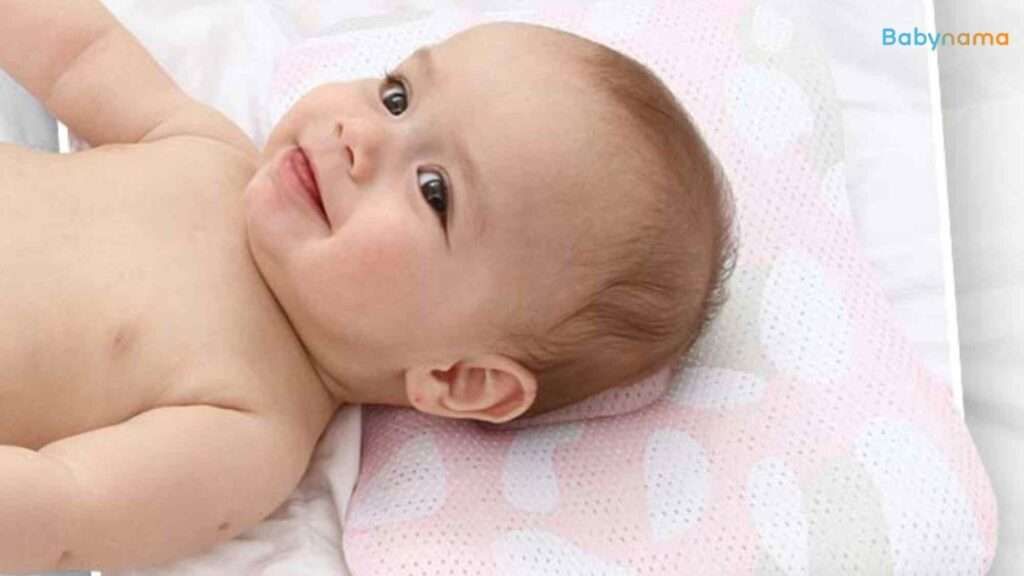
Quick answer
Sarso or rai pillows are not recommended for infants. They have no proven head-shaping or sleep benefit, and a flexible pillow filled with loose seeds can conform around a baby’s face or leak small seeds, creating suffocation and choking hazards. Keep every pillow out of an infant’s sleep space and do not use one to position the head.
For a flat spot, use supervised tummy time on a firm floor, vary the baby’s position while awake, and ask a pediatrician to assess marked, worsening, or persistent asymmetry.
What is a sarso ka pillow?
A sarso ka takiya is a small pillow filled with mustard seeds. It is also called a rai ka takiya or mustard-seed pillow. Many Indian families pass down claims that the shifting seeds keep a baby warm, improve sleep, or make the head round.
These are traditions, not proven medical benefits. A natural filling is not automatically safer: loose granular filling and a flexible cover can mould around the nose and mouth, and escaped seeds can become a choking hazard.
Traditional claims versus the evidence
| Traditional claim | What parents should know |
|---|---|
| It makes the head round | No good evidence shows that a mustard-seed pillow prevents or treats positional head flattening. Do not use a positioning pillow. |
| It keeps the baby warm | Extra warmth is not a reason to put a pillow in the sleep space. Overheating should also be avoided. |
| It improves sleep | There is no proven sleep benefit, while pillows add an avoidable suffocation risk. |
| Natural filling is safer | Loose seeds can leak, and a flexible pillow can conform around a baby’s face. |
In 2024, the US Consumer Product Safety Commission specifically warned consumers to stop using an infant pillow containing lavender and mustard seeds because its flexible covering and loose filling could conform to an infant’s face and create a suffocation hazard.
The safe-sleep recommendation
For every sleep, place your baby:
- On their back
- On a firm, flat, non-inclined mattress made for an infant cot, crib, or bassinet
- In a separate infant sleep space, ideally in the parents’ room
- With only a fitted sheet—no pillows, loose blankets, quilts, toys, bumpers, positioners, or seed-filled products
This advice applies to naps as well as overnight sleep. Supervision does not make a pillow safe in a cot or on another sleep surface: an adult can become distracted, and an infant’s airway can be obstructed silently.
Do not use a sarso pillow during tummy time either. Tummy time should happen while the baby is awake and closely watched, on a firm floor mat without a pillow under or around the face.
Safer ways to reduce pressure on the back of the head
Always keep back-sleeping for safety. While your baby is awake, you can:
- Give regular, closely supervised tummy time on a firm surface
- Alternate the arm used for feeding and carrying
- Change where you stand or place interesting objects so the baby turns both ways
- Limit unnecessary awake time in car seats, swings, and bouncers
- Encourage free movement on a safe floor space
Do not reposition a sleeping baby onto the side or stomach and do not use a head-shaping pillow, rolled towel, or positioner.
When should a flat spot be assessed?
Ask your pediatrician or health visitor to examine your baby if:
- The flattening is marked, worsening, or not improving
- The forehead, ears, or face look uneven
- The baby strongly prefers looking in one direction
- Neck movement seems restricted
- You are worried about the head shape or growth
A clinician can distinguish common positional flattening from less common skull problems and can check for torticollis. Physiotherapy or specialist assessment may help some babies; a pillow is not the treatment.
How to talk about the tradition with family
You can respect the intention behind the custom while choosing the safer option:
“I know the pillow was meant to protect the baby’s head. Current infant-sleep guidance says the safest space is completely flat and empty, so we are not putting any pillow near the baby. We will use tummy time and ask the pediatrician to check the head shape.”
Frequently asked questions
Can I use a very thin sarso pillow while watching the baby?
No. Thickness, tight stitching, a cotton cover, or supervision does not remove the risk of a flexible pillow conforming around the face or seeds leaking. Keep it away from the baby’s sleep and floor-play spaces.
Which pillow is best for a newborn?
No pillow. A newborn should sleep on their back on a firm, flat infant mattress with a fitted sheet and nothing else in the sleep space.
Does a sarso pillow fix a flat head?
There is no good evidence that it does. Keep back-sleeping, add supervised tummy time and varied awake positioning, and seek an assessment if asymmetry is marked, persistent, or accompanied by limited neck movement.
Can I introduce a pillow after the first birthday?
A pillow is not necessary at 12 months, and this article does not recommend a particular age or product. If you are considering bedding for an older child, discuss the child’s development and sleep setup with their pediatrician.
Sources
- American Academy of Pediatrics: 2022 safe-sleep policy
- US CPSC: warning about an infant pillow containing mustard seeds
- CDC: helping babies sleep safely
- NHS: flat head syndrome
This article is general information, not a substitute for medical care. For urgent breathing difficulty or an unresponsive baby, call 112 or 108 in India and begin first aid if trained.
Questions about your baby’s sleep setup or head shape? Book a consultation with a Babynama pediatrician.
Continue with this topic
A useful next step
Baby sleep chart and safe routinesCheck age-wise sleep ranges, nap patterns, safe sleep and when to seek help.Want Better Sleep for Your Baby?
Our sleep training program helps babies and parents rest better.
Explore Sleep Training