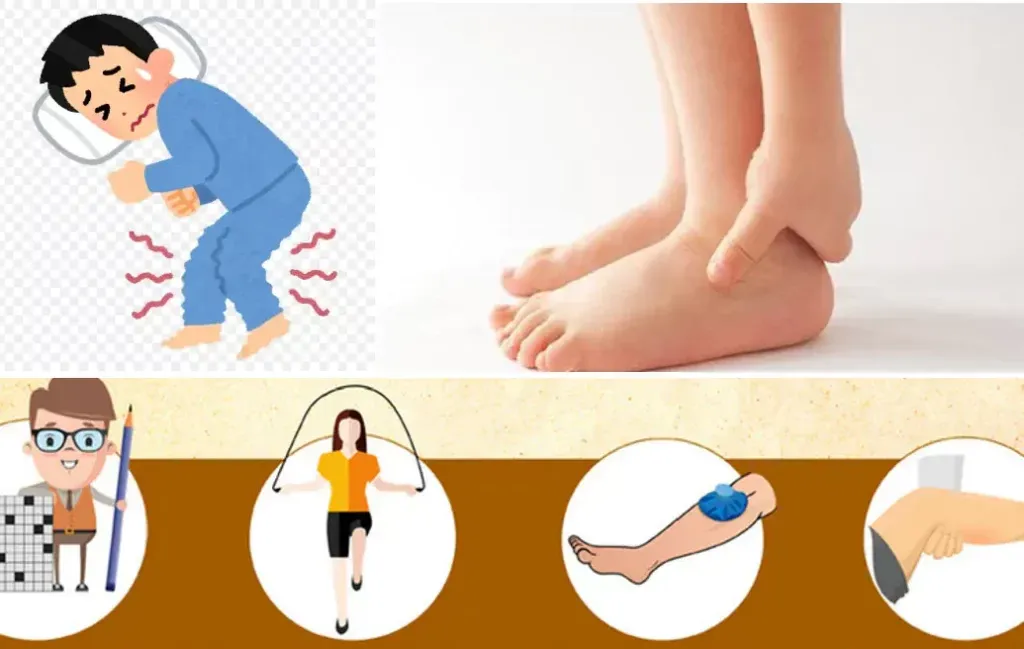
Quick Answer
YES, Restless Legs Syndrome (RLS) in children is real and treatable! If your child complains of uncomfortable leg sensations at bedtime, can’t keep still, and struggles to fall asleep (neend nahi aati), they may have RLS. The good news: it can be managed with simple measures, and treating the underlying cause (often iron deficiency) can bring significant relief. Your bachcha can sleep better!
What Is Restless Legs Syndrome? (RLS Kya Hai)
Understanding RLS
RLS is characterized by:
- Uncontrollable urge to move legs
- Uncomfortable sensations in legs (creepy-crawly, tingling)
- Symptoms worse at rest, especially bedtime
- Relief with movement
- Disrupts sleep significantly In simple terms: Child’s legs feel “uncomfortable” when lying still, making it hard to fall asleep.
RLS vs Growing Pains - Know the Difference
| Feature | RLS | Growing Pains |
|---|---|---|
| Timing | Bedtime, when lying still | Can be any time, often after activity |
| Sensation | Urge to move, restlessness | Deep aching pain |
| Relief | Movement helps | Massage, heat helps |
| Sleep impact | Can’t fall asleep | May wake from sleep with pain |
| Age | Any age | Typically 3-12 years |
| Location | Inside legs, hard to describe | Usually calves, thighs |
Both can coexist in the same child!
Why Does This Happen?
Common Causes
| Cause | How It Affects | Solution |
|---|---|---|
| Iron deficiency | Most common cause in children | Iron supplements, iron-rich foods |
| Genetics | Runs in families (80% have family history) | Management strategies |
| ADHD connection | Many children with ADHD have RLS | Treat both conditions |
| Other deficiencies | Vitamin D, B12, folate | Check levels, supplement |
| Medications | Some can worsen RLS | Review with doctor |
Important: Up to 30% of children with ADHD also have RLS!
Symptoms to Watch For
What Children Describe
Children may say:
- “My legs feel funny/weird”
- “Pair mein keede chal rahe hain” (bugs crawling in legs)
- “I can’t stop moving my legs”
- “My legs want to run”
- “It’s uncomfortable inside”
What Parents See
- Child can’t lie still at bedtime
- Constantly moving/kicking legs
- Gets up repeatedly
- Takes long time to fall asleep (sone mein bahut time lagta hai)
- Irritable and restless
- May not be able to describe sensations well
Additional Symptoms
- Daytime sleepiness (from poor sleep)
- Difficulty concentrating at school
- Mood changes
- Rubbing or stretching legs
- Poor school performance
When to Worry (Red Flags)
See Doctor If:
- Symptoms happen most nights
- Significant sleep disruption
- Daytime problems (sleepiness, focus issues)
- Child very distressed by symptoms
- Impact on school performance
- Symptoms not improving with basic measures
Get Iron Levels Checked If:
- Symptoms match RLS pattern
- Child has poor appetite
- Child doesn’t eat iron-rich foods
- Family history of anemia
- Heavy periods (older girls)
What You Can Do (Ghar Pe Kya Karein)
Immediate Relief
Before bedtime:
-
Warm bath
-
Gentle leg massage (malish)
-
Stretching exercises for legs
-
Heating pad on legs
-
Relaxation techniques At bedtime:
-
Cool, comfortable room
-
Consistent sleep schedule
-
Limit screen time before bed
-
Avoid heavy exercise close to bedtime
-
May allow gentle leg movement while falling asleep
Diet Changes
Iron-rich foods:
| Food | How to Give |
|---|---|
| Palak (spinach) | In dal, paratha, sabzi |
| Beetroot (chukandar) | Juice, salad, halwa |
| Pomegranate (anaar) | Fruit, juice |
| Jaggery (gur) | With roti, in sweets |
| Rajma, chana | In curries |
| Eggs | Scrambled, boiled |
| Chicken liver | If non-veg |
| Ragi | Porridge, roti |
Pair iron-rich foods with Vitamin C (orange, amla, lemon) for better absorption!
Avoid giving iron foods with:
- Tea/chai
- Milk (wait 2 hours after iron food)
- Calcium supplements
Sleep Hygiene
- Same bedtime every night (even weekends)
- Bedtime routine (brushing, reading, quiet time)
- No screens 1 hour before bed
- Cool, dark room
- Physical activity during day (not too close to bedtime)
- Avoid caffeine (cola, chocolate in evening)
Treatment Options
If Iron Deficiency Found
Iron supplementation:
- Doctor will prescribe dose based on levels
- Give on empty stomach for best absorption
- May need 3-6 months of treatment
- Recheck levels after treatment
- Continue iron-rich diet
Medical Treatment (If Needed)
| Treatment | When Used | Notes |
|---|---|---|
| Iron supplements | Most common, if deficiency | First-line treatment |
| Vitamin D | If deficient | Often low in Indian children |
| Gabapentin | Severe cases | Prescription only |
| Clonazepam | Rarely in children | Only for severe RLS |
Most children improve significantly with iron alone!
ADHD and RLS
If your child has both:
- Treat iron deficiency first
- Managing RLS often improves ADHD symptoms
- Some ADHD medications can worsen RLS
- Discuss with child’s doctor
Prevention and Long-Term Management
Daily Habits
- Regular physical activity
- Iron-rich diet
- Good sleep schedule
- Limit caffeine (cola, chocolate)
- Regular check-ups
When Symptoms Persist
- Keep symptom diary
- Note triggers (certain foods, activities)
- Regular iron level monitoring
- Consider sleep study if needed
Age-Specific Tips
| Age | Key Points |
|---|---|
| Toddlers | May not describe symptoms; watch for restlessness at bedtime |
| Preschoolers | May call it “growing pains” or “funny legs” |
| School-age | Can describe better; watch for sleep/school impact |
| Teens | May have more severe symptoms; check iron especially in menstruating girls |
Frequently Asked Questions
Q: Bachche ko raat ko sote time pair mein problem hoti hai. RLS hai kya?
A: Could be! RLS signs: uncomfortable leg sensations (creepy-crawly), urge to move, worse when lying still, relief with movement. Different from growing pains which are more like deep aching. If happening regularly at bedtime and disrupting sleep, see doctor. Simple blood test for iron (ferritin) can help diagnose. Most cases improve with iron treatment!
Q: RLS aur growing pains mein kya farak hai?
A: Growing pains: deep aching pain in legs, can happen any time (not just bedtime), massage/heat helps, child doesn’t feel urge to keep moving. RLS: restless “uncomfortable” feeling, happens at bedtime when lying still, child MUST move legs for relief, can’t describe exactly what hurts. Both can exist together. RLS is often linked to iron deficiency.
Q: Iron deficiency se RLS hota hai?
A: YES, iron deficiency is the #1 cause of RLS in children! Iron is needed for dopamine function in brain, which controls movement. Even low-normal iron levels can cause RLS. Get FERRITIN level checked (not just hemoglobin). If ferritin is low (commonly below 50 ng/mL), your pediatrician may try iron supplements, which often help significantly. Also give iron-rich foods: palak, beetroot, jaggery, eggs.
Q: RLS theek ho sakta hai?
A: Yes, especially in children! If caused by iron deficiency, treating it often relieves symptoms substantially or fully. Even genetic RLS can usually be well-managed. Many children see improvement within weeks of starting iron supplements. Some may need ongoing management, but symptoms often improve as child grows. Key is identifying and treating the cause.
Q: ADHD aur RLS ka connection hai?
A: Yes, strong connection! 30-50% of children with ADHD also have RLS. The restless sleep from RLS can worsen ADHD symptoms (inattention, hyperactivity). Treating RLS often improves ADHD symptoms. Both may be related to dopamine function. If your child has ADHD and sleep problems, ask doctor to check for RLS and iron levels.
This article was reviewed by Babynama Pediatricians. Last updated: January 2025
A note for Indian parents: This article is general information, not a substitute for medical advice. Iron supplements should be started only on a doctor’s prescription after a ferritin/blood test — do not self-medicate iron, as excess iron is harmful. RLS can overlap with growing pains, ADHD, and other conditions, so please have your child evaluated by your pediatrician. For any sudden severe symptom or emergency, call 112 (national emergency) or 108 (ambulance) or go to your nearest hospital.
Child having trouble sleeping due to restless legs? Babynama’s pediatricians can help evaluate symptoms and guide treatment. Chat with us on WhatsApp!
Need personalized guidance? Book a consultation with our pediatricians or explore our Care Plans for 24/7 expert support!
Continue with this topic
A useful next step
Baby sleep chart and safe routinesCheck age-wise sleep ranges, nap patterns, safe sleep and when to seek help.Want Better Sleep for Your Baby?
Our sleep training program helps babies and parents rest better.
Explore Sleep Training